
From Pressure to Perspective – The Journey of Basketball Icons
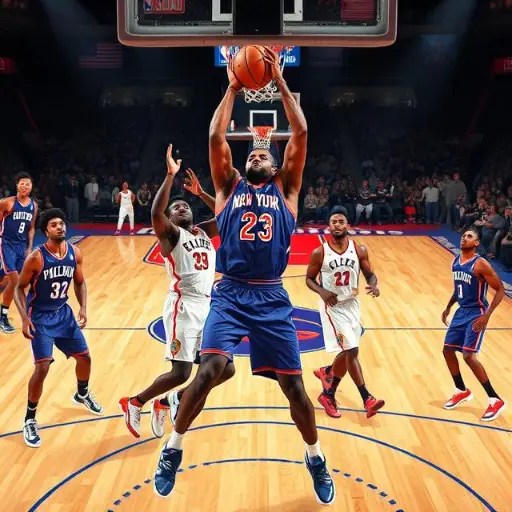
In the world of professional basketball, fame comes with both rewards and challenges. Michael Cooper, a former NBA Defensive Player of the Year and Hall of Famer, reflects on how the pressures of public life have shaped his journey. From being a key player on the Showtime Lakers to coaching the WNBA’s Los Angeles Sparks, Cooper has experienced the highs and lows of being in the spotlight. “With fame comes consequences,” he says. “You have to take the good and the bad.”
Cooper, who was inducted into the Naismith Basketball Hall of Fame in 2024, recalls his time with the Lakers in the 1980s, where he played a vital role as a sixth man. Unlike some of his teammates, such as Magic Johnson, who often bore the brunt of media scrutiny, Cooper found a unique balance. “I felt famous, but as a team,” he explains. “The team was very good, and people appreciated that. When I was walking down the street, if people knew basketball, they knew who I was. But they didn’t see me as an individual [star] – it was more the team.”
However, this changed when he transitioned to coaching. “All that changes when you become a coach,” he says. “Coaching – you can’t hide.” His experience with the Sparks, where he fell short of a championship in 2000, was a humbling moment. “People said, ‘Coop, you’re supposed to be this great coach. And you can’t get the Sparks over the hump.’” Despite the criticism, Cooper used it as motivation. “It made me a better coach the following season,” he says. In 2001, the Sparks finally won their first WNBA title, and Cooper was able to prove his critics wrong.
For some, like Kenny Anderson, the scrutiny began at a young age. Growing up in New York City, Anderson was thrust into the limelight at just 13 years old. Despite the pressure, he found support from mentors and family, which helped him navigate the challenges of fame. “I was a humble kid,” Anderson recalls. “A humble young man, that’s just how I grew up.” He credits his mentors, including the family of fellow New York point guard Kenny Smith, for guiding him through the pressures of being a young star.
Anderson, who was raised by his mother, Joan, says he looked to the family of Kenny Smith, who was also a point guard and an All-American, as an example. Smith, who is five years older than Anderson, was able to succeed in the city’s pressure-packed scene and went on to star at the University of North Carolina and make the NBA. It was Smith’s family, along with several other coaches and local figures, who helped show the future Georgia Tech star and No. 2 pick what to do. “His family was very important to me,” Anderson says. “I saw how he was growing up, saw how he was raised.”
Robert Parish, a four-time NBA champion and Hall of Famer, also faced the challenges of public recognition. “I still think it’s flattering and it’s a compliment that people recognize me and what I accomplished,” he says. However, he also acknowledges the intrusive nature of fame, where fans can follow him to his home, games, and even the airport. “I didn’t feel threatened,” Parish says. “I just thought they were taking it too far – it’s not that serious!”
For Cooper, the beauty of working in sports lies in the opportunity to bounce back from losses. After a tough season with the Sparks, he learned from his mistakes and led his team to victory the following year. “There is always a chance to make up for your losses,” he says. “You lose a game one night, you can come back and score 30 and people will forget.”
As the journey of these basketball icons shows, navigating fame is a complex and personal experience, shaped by individual resilience, support systems, and the ever-changing dynamics of public life. Whether as players or coaches, they have all learned to balance the pressures of fame with the rewards of success on and off the court. Their stories highlight the importance of humility, mentorship, and the ability to adapt in the face of scrutiny, proving that even in the spotlight, personal growth and redemption are always within reach.




 The Tower Post