From Celebrities to Casualties, the Quarterback’s Role in American Sports
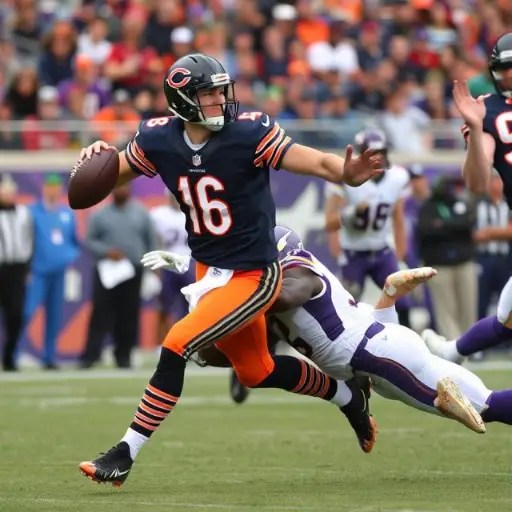
Seth Wickersham’s American Kings: A Biography of the Quarterback offers a deep dive into the storied and complex legacy of the quarterback, a position that has become synonymous with both athletic prowess and celebrity status in American sports. In this lively and informative book, Wickersham, a senior writer at ESPN, interviews some of the most iconic quarterbacks, including Tom Brady, John Elway, Warren Moon, and Steve Young, while tracing the evolution of the position from its early days in 1906 to the modern era, highlighted by Peyton Manning’s record-breaking 2013 season, in which he threw 55 touchdown passes.
Wickersham argues that the quarterback is not only the most physically and mentally demanding position in sports but also one that comes with the pressures of being a public figure. He highlights how quarterbacks are expected to perform under immense pressure, both on and off the field, while also being media darlings. The book explores the phenomenon of quarterbacks being drafted by struggling teams, often setting them up for failure, and questions whether being selected early in the draft is always the best path for a quarterback’s success.
For example, in the 2024 NFL draft, Caleb Williams was selected first overall by the Chicago Bears, a team that had a 7-10 record in 2023. This trend of top-drafted quarterbacks going to underperforming teams has been a recurring issue, with Wickersham noting that at least 37 of the 69 first-round quarterbacks drafted since 2000 have failed to live up to expectations. He contrasts this with the success of Tom Brady, who was chosen in the sixth round and went on to become one of the greatest quarterbacks in NFL history.
While American Kings offers a wealth of anecdotes and insights, it lacks a cohesive structure, often feeling like a collection of quotes and stories without a clear narrative thread. The book is described as a “notebook turned upside down,” with facts and quotes cascading from one topic to another. Despite this, the book provides a fascinating look at the lives and legacies of the men who have shaped the game of football from the pocket to the spotlight.
Wickersham also touches on the cultural impact of the quarterback, noting that the NFL’s revenue has skyrocketed from $1 billion in 1972 (in 2025 dollars) to $23 billion in recent years, largely due to the rise of television and the celebrity status of quarterbacks. He even offers a football-viewing tip: to truly appreciate the game, viewers should keep their eyes off the ball, as much of the action occurs away from it.
In American Kings, Wickersham captures the essence of the quarterback’s role in American sports, from the pressures of being a celebrity to the challenges of leading a team on the field. While the book may not be a tightly structured narrative, it is a rich and engaging exploration of the men who have worn the crown of the gridiron.




 The Tower Post