A Call for Reskilling and Adaptation in the Face of Technological Change

Walmart’s CEO, Doug McMillon, has issued a stark warning about the future of work, stating that artificial intelligence is poised to transform every job across the company. In a recent address at Walmart’s Bentonville headquarters, McMillon emphasized that AI will not only eliminate certain roles but also reshape the nature of work itself. As the world’s largest private employer, Walmart is preparing for this shift by closely examining how AI will affect its workforce, with a focus on identifying which roles will decrease, increase, or remain stable.
According to McMillon, the transformation will be gradual, with some jobs being eliminated and others created. The company has already begun integrating AI into various operations, including the development of chatbots, supply chain management, and product trend analysis. Walmart has also hired experts in AI, such as Daniel Danker from Instacart, to oversee these initiatives and guide the workforce transformation.
McMillon acknowledged that while some jobs will be lost to automation, new roles will emerge, such as “agent builders,” who develop AI tools for merchants. The company is also expanding roles in high-touch customer service, home delivery, and in-store maintenance. For example, Walmart has created an “agent builder” position last month, which involves building AI tools to help merchants. The company expects to add people in areas like home delivery or in high-touch customer positions, such as its bakeries.
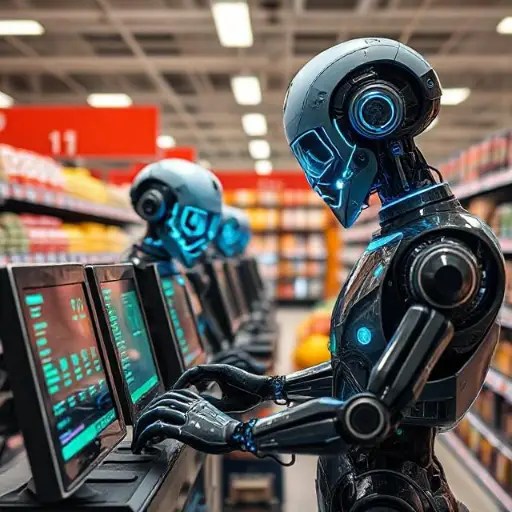
However, McMillon noted that the adoption of AI will be gradual, with certain tasks, like customer service, becoming more reliant on AI in the coming years. He also pointed out that companies have recently pitched humanoid robot workers to Walmart, but the company has decided against it, prioritizing human interaction.
As the pace of AI integration accelerates, Walmart and other corporations are urging employees to embrace reskilling and adapt to the changing landscape. Executives from companies like Bank of America and Blackstone have emphasized the importance of soft skills, resilience, and the ability to evolve in the face of technological disruption. Courtney della Cava, senior managing director and global head of portfolio talent and organizational performance at Blackstone, noted that essential human qualities, like the ability to connect with others and develop meaningful relationships, will become even more important.
While there is concern about the potential for job displacement, many leaders remain optimistic that the U.S. labor market will continue to adapt and thrive. Joe Baratta, global head of Blackstone’s private-equity business, pointed out that the history of technology innovation has shown that people can re-skill and find gainful employment in other areas of the economy.
The drumbeat of warnings about AI-related job cuts has increased in recent months, with companies like Accenture and Ford Motor warning about the impact of AI on employment. However, Walmart and other corporations are taking proactive steps to address the issue, investing in AI training and upskilling programs for their employees.
As the future of work continues to evolve, Walmart and other companies are urging employees to be adaptable and open to change. According to Omri Yoffe, CEO of Vi, a roughly 115-person AI company that focuses on healthcare, employees need to think of the current moment in almost Darwinian terms. Those who fail to evolve, learn new skills, and create higher-value roles for themselves might be left behind.
In the end, Walmart’s CEO, Doug McMillon, emphasized that the key to success lies in embracing the moment and adapting to the changing landscape. As he put it, “I think the history of technology innovation is that people have re-skilled and have found gainful employment in other aspects of the economy.”




 The Tower Post