
Between vetoes and lifelines: Gaza, Ukraine and the argument over whether the United Nations still matters
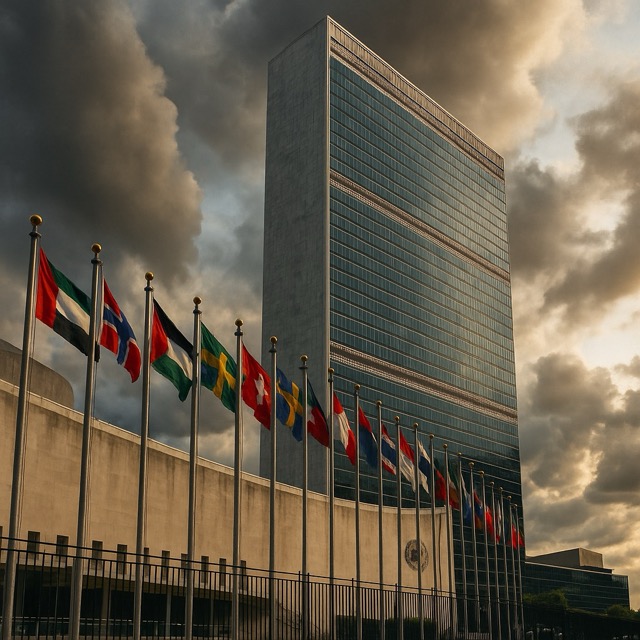
“L’Onu dimezzata”—a halved United Nations. The phrase has ricocheted through diplomatic circles this year as wars grind on in Gaza and Ukraine. To many, the 80‑year‑old institution looks stuck: high on speeches, low on leverage. They ask a blunt question: What is the U.N. for, if it can’t stop these wars?
That critique flared again on September 18, when the Security Council—at its 10,000th meeting—failed to adopt a resolution calling for an immediate ceasefire in Gaza and the release of hostages. The text fell to the veto arithmetic that has long defined the Council’s deadlocks. Days later, in New York’s General Assembly week, leaders alternated between appeals for reform and finger‑pointing—a reminder that the U.N. is only as decisive as its most powerful members allow.
Ukraine tells a parallel story. In 2022, when Russia vetoed Security Council action after its full‑scale invasion, the General Assembly stepped in to condemn the aggression and demand withdrawal by overwhelming margins. Those votes shaped the diplomatic narrative but did not stop the war, which still rages across the front as winter looms once more. For skeptics, this is proof that the U.N.’s moral megaphone cannot substitute for hard power.
And yet dismissing the U.N. as “useless” misses half the picture. While the Council stalls, the wider U.N. system—agencies, funds and programs—keeps millions alive. In Gaza, UNRWA and partner agencies run shelters, deliver water and basic sanitation to vast displaced populations, and keep a threadbare education and health network functioning amid bombardment. U.N. human rights experts and investigators document violations that may form the evidentiary backbone of future accountability efforts. In Ukraine, U.N. operations have facilitated aid convoys, supported de‑mining, and helped refugees navigate a continent‑wide displacement.
Listen closely to diplomats this week and you hear two arguments that are both true. First, the Security Council’s veto—wielded most recently on Ukraine and repeatedly on Gaza—has crippled crisis decision‑making. Second, removing the U.N. from the world’s toughest problems would make them worse, not better. The institution’s mixed record reflects what it is: a stage, a toolbox, and a set of rules that major powers use, ignore, or try to change depending on interest.
Take Gaza in late September. Bombardment continues; hospitals and clinics report impossible caseloads; aid flows are sporadic. Washington floated a new ceasefire framework; Israel’s leadership signaled it would fight on; Hamas sent conflicting signals. Inside the U.N., member states pushed for an enforceable truce while agencies warned that famine‑like conditions were spreading. The Council could not compel a halt. But U.N. entities helped coordinate corridors, negotiated access, and set minimum standards for humanitarian operations—even as those standards were repeatedly violated on the ground.
Ukraine illustrates the other pole: when a permanent Council member is a party to the conflict, the veto becomes a shield against binding action. Here, the General Assembly’s emergency sessions have mattered in a different way—by clarifying the legal and political baseline. Those votes stiffened sanctions coalitions, underwrote war‑crimes investigations, and sustained diplomatic isolation of aggression. That is not peace, but it is the scaffolding of a future settlement and the historical record that will shape it.
So, is the U.N. “halved”? In one sense, yes. The Charter’s peace‑and‑security machinery is only partially functioning. In another sense, the system is doing exactly what its founders designed it to do when great‑power consensus collapses: keep talking, keep documenting, keep people alive, and keep options open until politics change.
What would it take to be whole again? Three tracks dominate this year’s reform talk. First, Security Council reform—expanding permanent and elected seats, curbing veto abuse, and strengthening the new requirement that any veto be debated in the General Assembly—has regained momentum, particularly from Africa, Latin America and South Asia. Second, resourcing: agencies like UNRWA cannot absorb unprecedented caseloads while weathering politicized funding freezes and demands that outstrip their mandates. Third, protection of civilians: clearer red lines and monitoring, including on siege tactics and the use of starvation as a method of warfare, could make Council silence less decisive in practice.
None of this will turn the U.N. into a world government, and that is the point. The U.N. is a platform where power meets law in public. Its failures are visible because it works in daylight. Its quiet successes—vaccinations, grain shipments, safe water, cross‑border aid, election support—rarely trend on social media, but they stack up into lives saved and norms preserved.
The hardest truth in 2025 is that the U.N. cannot end wars that the belligerents, and their patrons, choose to continue. But it can set the terms on which those wars are fought and remembered; it can limit the damage; it can trap future negotiators in the amber of resolutions and reports they will one day cite. That is not nothing. For Gazans seeking a pause in the sky, and for Ukrainians bracing for another winter, it may be the difference between despair and endurance.
Call it “L’Onu dimezzata” if you like. A halved U.N. is still carrying half the world on its back—and it could carry more, if member states lifted with it.
Editor’s note: This analysis references Security Council records, UN press briefings, recent General Assembly debates on veto use and reform, and field updates from U.N. humanitarian agencies, as well as independent reporting from wire services present at the 80th UNGA in September 2025.

 The Tower Post