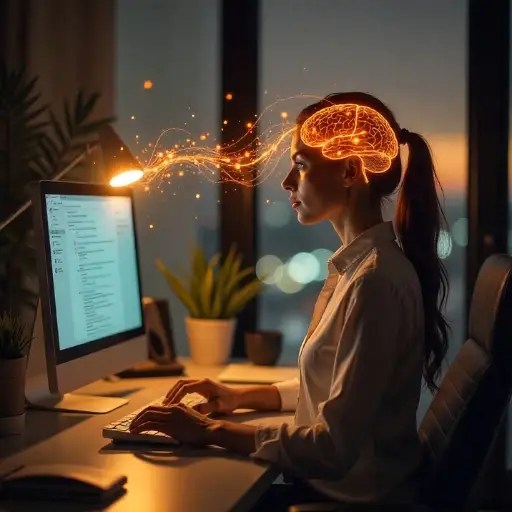
From Paralysis to Possibility — One Man’s Story of Innovation and Hope
Eighteen months after becoming the first human to receive a brain-computer interface from Neuralink, Noland Arbaugh is living proof that science fiction can become reality. Once paralyzed from the shoulders down following a 2016 swimming accident, Noland now uses a coin-sized chip implanted in his brain to control his environment, play video games, and study neuroscience — all with his thoughts.
The implant, which involved thousands of ultra-fine threads placed in his motor cortex during a two-hour robotic surgery at the Barrow Neurological Institute in Phoenix, has transformed Noland’s life. The chip, developed by Elon Musk’s Neuralink, is wireless and compact, though it requires charging every few hours. With it, he scrolls the web, plays Mario Kart, reads about the brain, and operates his smart home — all without moving a muscle. This level of control has given him a new kind of independence that few imagined possible just a few years ago.
Noland’s journey has not been without challenges. As the first human to test this technology, he faced intense media scrutiny and even a SWAT team raid at his home due to a hoax call. Despite the stress, he remains an advocate for the project, sharing his story through public speaking engagements and inspiring others with his message: it’s not just technology that creates change, but the human spirit that drives innovation.
Noland has also returned to school, studying neuroscience — the very field that helped change his life. He spends up to ten hours a day using the chip to study, engage with others, and plan his future. His new career in public speaking allows him to share his experience with audiences around the world, highlighting the emotional and psychological power of restored autonomy.
Founded by Elon Musk, Neuralink’s ultimate goal is to build seamless communication between the brain and external devices. Whether helping someone with paralysis control a prosthetic limb or giving a voice to those unable to speak, the technology aims to bridge the gap between thought and action. While there are still technical hurdles to overcome — from battery life to signal fidelity — Noland’s success offers a compelling glimpse of what’s possible.
As the line between human and machine blurs, Noland’s story raises profound questions about identity, autonomy, and the kind of future we want to build. Would you plug into the future? As these interfaces evolve, they could also spark entirely new ways of interacting with the world — not just for those with disabilities, but eventually for anyone who wants to extend their cognitive abilities or communicate differently.
Noland’s journey is not just a tale of technological breakthroughs, but a deeply human story of resilience, hope, and the power of innovation to change lives — one thought at a time.
In addition to his personal transformation, Noland’s experience has provided critical real-world data for Neuralink’s ongoing research and development. Engineers and scientists are using his feedback to refine the chip’s performance, improve signal accuracy, and enhance user experience. His story has also sparked public interest and debate about the ethical, social, and psychological implications of such technology.
As Neuralink continues to push the boundaries of what is possible, Noland Arbaugh stands as a symbol of the potential that lies at the intersection of human will and technological innovation. His journey is a testament to the idea that the future is not just something we build — it is something we live, one thought at a time.




 The Tower Post