Six months after a Washington embrace, Argentina faces another balance‑of‑payments scare—and the United States readies an extraordinary lifeline
LEDE
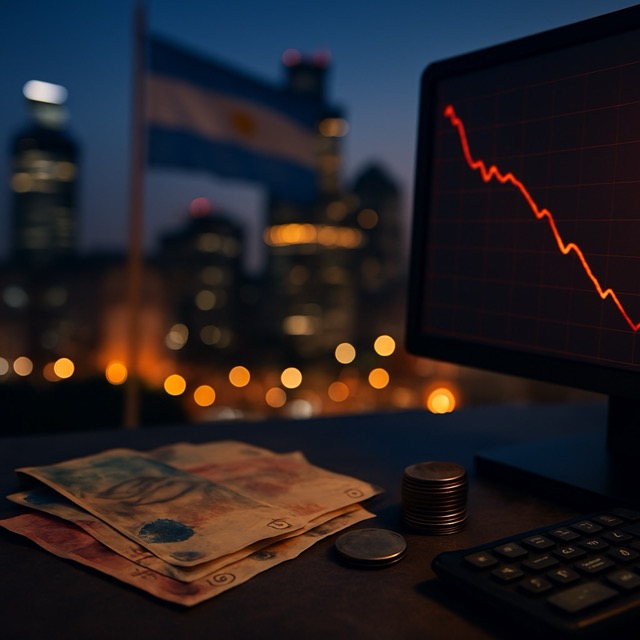
Less than six months ago, U.S. Treasury Secretary Scott Bessent stood in Buenos Aires and praised Javier Milei’s shock‑therapy reforms for “bringing Argentina back from the precipice.” This week, the South American nation is again teetering—and Washington is openly preparing a rescue. Talks for a roughly $20 billion dollar swap line, possible U.S. purchases of Argentine sovereign bonds, and a standby credit via the Exchange Stabilization Fund are on the table as the peso whipsaws and investors flee.
Markets turn on Milei
The turn has been swift. In early September, Argentine assets slumped after Milei’s libertarian coalition suffered a bruising defeat in Buenos Aires’ local vote, while a string of corruption headlines stoked political noise. The peso tumbled intraday and stocks sank double digits, a reminder of how shallow confidence remained after last year’s initial reform bump.
A Washington backstop—if conditions are met
Bessent confirmed this week that the U.S. is negotiating a $20 billion swap facility with Argentina’s central bank and is “ready to do what is needed” to stabilize markets. Officials have also signaled openness to purchasing Argentine dollar bonds in the secondary market to narrow risk spreads and buy time. People familiar with the talks say any help may be conditioned on further progress with the IMF program and, geopolitically, on reducing reliance on Argentina’s existing swap line with China.
What changed between April and September
When Bessent visited Buenos Aires in April, he hailed Milei’s early moves—deep spending cuts, deregulation, tariff diplomacy—and the government’s successful engagement with the IMF. Inflation was decelerating from the triple‑digit peaks, the fiscal math was improving, and markets were willing to look past the social costs in anticipation of a quick normalization. But the reform narrative collided with real‑economy strain and politics. Output sagged in the second quarter, consumption slipped, and reform fatigue set in.
Liquidity, not just ideology
Argentina’s latest wobble is, at root, a liquidity squeeze. The central bank’s usable reserves remain thin. A complicated currency regime—part crawling bands, part capital controls—left the peso vulnerable to speculative bursts. Analysts say the peso had even looked overvalued after rallying on reform enthusiasm, making any shock more destabilizing. Meanwhile, farmers and exporters hoarded harvest dollars amid tax uncertainty, starving the market of foreign exchange.
A stop‑gap from the Pampas
In a scramble for dollars, the government temporarily suspended export taxes on soy, corn, wheat, beef, and poultry through late October or until a target of declared exports is met. The move unlocked inventory and sparked a short‑lived rally in the peso and bonds, but producers blasted it as a patch, not policy—another sign the administration is leaning on transactional fixes while it fights fires.
Why investors lost patience
Investors who piled into Argentine assets last year priced in a fast march to currency unification and a credible path to dollarization or a hard peg. Instead, they watched the timetable slip. Legislative setbacks slowed Milei’s agenda; coalition management proved messy; and the administration’s communications were often combative rather than confidence‑building. By September, a run on the peso—and fears of a step devaluation—became a self‑fulfilling trade. Even supportive Washington officials warned that market psychology, once broken, takes more than rhetoric to repair.
What a U.S. backstop would and wouldn’t do
A U.S. swap line and bond buys could calm disorderly markets, narrow spreads, and anchor expectations into the October midterms. But it is a bridge, not a destination. Without a clear sequence to consolidate disinflation, rebuild net reserves, and simplify the exchange‑rate regime, Argentina risks returning to the brink—again. Any U.S. support will likely come tethered to IMF conditionality and milestones on reserve accumulation and fiscal discipline.
The politics of rescue
For Washington, the bailout calculus mixes economics and geopolitics. The United States wants to see a friendly reformer survive—and to check Beijing’s influence in the Southern Cone. But bailouts are politically fraught at home and abroad. In Argentina, they can look like foreign tutelage; in the U.S., like throwing good money after bad. Supporters argue that a Mexico‑style 1995 backstop could pay off; skeptics note Argentina’s serial crises rarely end on schedule.
What Milei can still do
The playbook isn’t complicated: clarify the exchange‑rate path; codify the fiscal anchor; de‑politicize central bank decision‑making; and offer predictability—especially to the farm belt that earns the dollars. Communication matters: fewer improvisations, more road maps. If the administration can swap market theatrics for steady execution, investors will likely give it another look.
Bottom line
Milei did not so much “lose” the markets as run out of time to convince them he could bend Argentina’s macro math before politics bent him. A U.S. backstop may steady the boat. Only policy clarity and institutional stamina will keep it from drifting back to the edge.



 The Tower Post