After a failed White House summit with President Trump and congressional leaders, funding talks enter a frantic final day with a 12:01 a.m. deadline
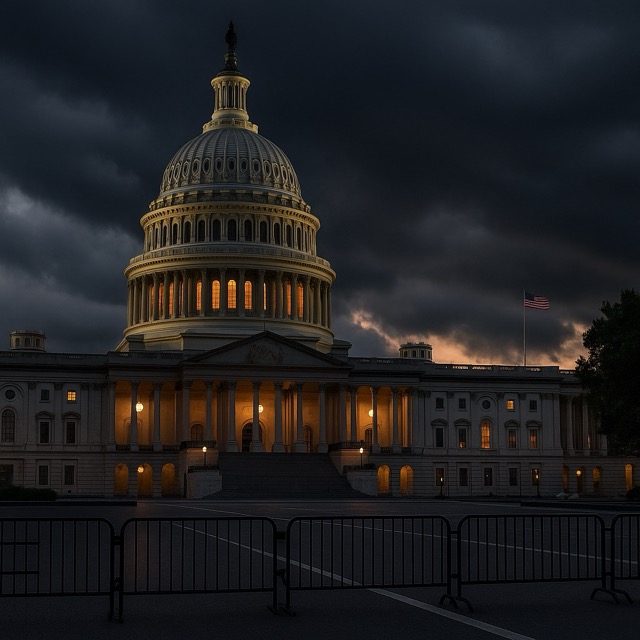
WASHINGTON — United States Vice‑President JD Vance warned Tuesday that the federal government was “headed to a shutdown,” hours after a negotiating session at the White House failed to yield a compromise on spending, leaving Congress with little time to act before funding lapses at 12:01 a.m. Wednesday.
Vance’s stark assessment followed a meeting Monday evening with President Donald Trump and congressional leaders from both parties. Participants described the conversation as candid and, at times, tense. By daybreak on Tuesday, staff‑level talks had resumed, but no deal had emerged on a short‑term continuing resolution to keep agencies open while longer‑term appropriations are debated.
The standoff, familiar to budget watchers yet shaped by new political dynamics, has narrowed to a handful of issues: how long a stopgap should last, whether it should include automatic spending cuts if full‑year bills are not enacted by late autumn, and which policy riders—if any—will be allowed to ride along with a funding patch.
Democrats have pushed for what they call a “clean CR,” a measure that temporarily extends current funding levels without cuts or unrelated provisions. Republicans have sought to pair a short bridge with trims to non‑defense spending and several regulatory riders. Each side accuses the other of moving the goal posts.
On Capitol Hill, leaders choreographed a day of rapid‑fire huddles and procedural moves. Senate leaders explored pathways to assemble sixty votes for a bipartisan measure that could speed through the chamber, while House leaders counted noses within their respective conferences. Even with a narrow Senate Republican majority, any deal needs Democratic votes to clear the filibuster threshold.
Across Pennsylvania Avenue, agencies dusted off contingency plans first drafted years ago and updated many times since. The Office of Management and Budget prepared to issue guidance to department heads in the event the clock runs out. Union representatives for federal workers urged Congress to avert furloughs and back pay disruptions that have become a recurring feature of modern governance.
What would a shutdown look like? Essential operations—air‑traffic control, border security, and the processing of Social Security and Medicare payments—continue during funding gaps. But many other services slow or stop. National parks typically curtail access; routine food‑safety inspections and environmental enforcement are reduced; passport and visa processing can be delayed; and new small‑business loans through the Small Business Administration pause until funding resumes.
Federal employees in ‘non‑excepted’ roles would be furloughed, while those designated essential would be required to report to work without immediate pay, to be made whole once Congress passes a funding measure. Government contractors—particularly in technology, construction and professional services—often experience cascading delays as project milestones slip. Local economies around federal hubs feel the pinch quickly.
Economists say a brief funding lapse typically has limited macroeconomic consequences, though the effects compound with time. The interruption delays the release of key economic data that markets and the Federal Reserve watch closely, and it tends to dampen consumer confidence and business sentiment the longer it drags on. A prolonged closure can also increase costs for taxpayers through back pay and the inefficiencies of restarting halted programs.
The politics are as fraught as the policy. Republicans argue that Democrats are refusing to acknowledge fiscal realities after years of elevated deficits; Democrats counter that Republicans are using a must‑pass bill to force through unrelated policy changes that could not survive on their own. In dueling press conferences, each side telegraphed its preferred narrative of blame should the lights dim on non‑essential services at midnight.
Inside the Capitol, attention focused on a handful of tactical options. One was a short extension—two or three days—to buy negotiators additional time without allowing a longer shutdown to take hold. Another was a month‑long patch into November paired with a trigger for across‑the‑board cuts if Congress fails to complete the full‑year appropriations process by a date certain. A third approach, favored by some in both parties, would marry a clean CR with targeted add‑ons for disaster relief and emergency needs.
Investors, for their part, mostly looked through the brinkmanship. Stocks were little changed Tuesday morning, even as bank and defense analysts warned clients that a closure lasting beyond a week would create measurable headwinds for sectors dependent on federal permits, reimbursements or discretionary spending. Travel and tourism operators braced for park closures and reduced staffing at federal sites, while nonprofits reliant on grant disbursements reviewed cash reserves.
For millions of Americans, the most tangible impacts would be practical irritations. Families planning fall trips to national parks may find reservations scrapped. Scientists awaiting grant decisions could see timelines slip. Homebuyers counting on IRS verification letters or flood‑insurance renewals may be told to wait. The ripples are uneven, but they are real—and they intensify with each day of uncertainty.
As lawmakers mapped out the day, parliamentary math loomed large. In the Senate, a single member can slow the process with amendment demands that consume precious hours. In the House, leaders must balance the demands of fiscal hawks, swing‑district moderates and a Democratic minority that has little incentive to rescue a bill it views as larded with partisan riders.
The White House, mindful of the political risks inherent in visible brinkmanship, kept the president’s public schedule light while dispatching aides to shuttle between the Capitol and West Wing. Officials said they remained confident a deal was possible, but they declined to speculate about timing or contents. Vance, meanwhile, sharpened his message, casting the dispute as a test of resolve over federal spending priorities and insisting that Republicans would not abandon calls for restraint.
Whatever shape a deal ultimately takes, the fundamental trade remains the same: Democrats seek continuity and the removal of policy riders; Republicans want spending reductions and benchmarks that nudge Congress toward completing the full‑year appropriations bills. Between those poles lies a narrow, politically perilous path—and a dwindling number of hours.
If the deadline passes without action, agencies will begin an orderly shutdown: notices issued, websites updated, and out‑of‑office messages posted by workers told to stay home. Negotiations will continue, perhaps with new urgency once the real‑world consequences become harder to ignore. The question confronting Washington today is not whether a shutdown is cost‑free—it is not—but whether leaders can muster enough consensus to avoid testing, yet again, the tolerance of the public for manufactured crises.
By Tuesday evening, the options were clear even if the outcome was not. A clean stopgap would keep services running while substantive fights resume in the coming weeks. A partisan patch would likely stall in one chamber or the other. And no action at all would mean Americans wake up Wednesday to shuttered services, frayed nerves and a capital city once again arguing over who is to blame.
For now, the clock ticks. The deadline is fixed. And the fate of the government’s basic operations rests on whether a few dozen lawmakers can stitch together the narrowest of coalitions before the minute hand strikes midnight.



 The Tower Post