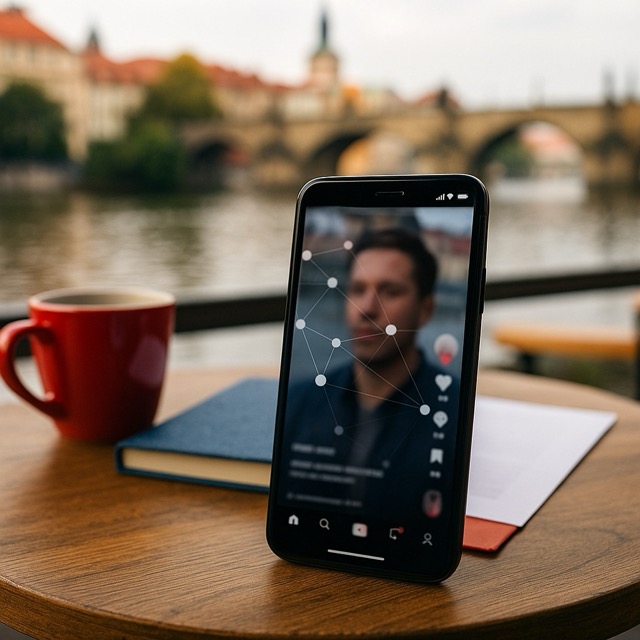
Nearly 300 anonymous accounts amplify fringe parties SPD and Stačilo! as Czech elections near, officials open an investigation

Prague — Czech authorities have opened an investigation into a network of nearly 300 TikTok accounts suspected of coordinated inauthentic behavior that pushes pro-Russian narratives and boosts anti-system parties, chiefly Freedom and Direct Democracy (SPD) and Stačilo!, according to people familiar with the probe and local media reports. The inquiry comes just days before the Czech Republic’s October 3–4 parliamentary elections, elevating concerns that orchestrated influence operations on short-form video platforms could sway undecided voters.
The probe, described by officials as “urgent,” follows research published this week by the Czech group Online Risk Labs identifying 286 anonymous TikTok accounts that behave like a coordinated network — mutually amplifying videos, recycling identical talking points, and steering audiences toward a mix of far-right and far-left content. Their output garners an estimated 5–9 million weekly views, a reach that rivals or exceeds mainstream party leaders online, according to the study.
While researchers did not assert direct control by a foreign actor, the accounts consistently promote themes aligned with Kremlin narratives — questioning Western support for Ukraine, urging Czech withdrawal from NATO and the EU, and framing sanctions as the root of economic hardship. Multiple videos explicitly encourage support for SPD and Stačilo!, two parties that have campaigned on anti-establishment platforms and are polling strongly enough to influence post-election coalitions.
Czech telecoms regulator ČTÚ said it had received complaints about the accounts and conveyed its concerns to the European Commission, which has primary oversight of very large online platforms under the EU’s Digital Services Act. ČTÚ added it is in contact with TikTok. The Interior Ministry has not publicly commented on the investigation. TikTok, for its part, said in a recent transparency update that it is expanding moderation and labeling around state-controlled media and political content across EU markets.
The discovery echoes patterns seen elsewhere in Europe. In Romania last year, officials alleged that Russian-linked activity on TikTok distorted the information environment ahead of a key vote — a charge Moscow denied. Analysts say short-form video platforms have become fertile terrain for influence campaigns: they reward emotionally charged content, compress context, and make it difficult for average users to judge authenticity or provenance.
“What stood out in the Czech case is the scale and the discipline,” said a Prague-based disinformation researcher who requested anonymity to discuss ongoing monitoring. “You see clusters of accounts that post within minutes of one another, using near-identical captions, effects, and soundbeds. They cross-post clips from a handful of core ‘creators’ who act like hubs. It looks less like organic fandom and more like an engagement farm with a political brief.”
Online Risk Labs’ analysis highlights how the network blends content styles to evade detection: kombucha recipes sandwiched between geopolitical takes; street interviews cut to viral audio; pundit monologues overlaid with gaming footage. Many accounts avoid overt party logos but use slogans and symbolism associated with SPD and Stačilo!. Several popular clips attack military aid to Ukraine and portray Brussels as an unelected overlord, messages that resonate with a slice of the Czech electorate frustrated by inflation and energy prices.
Legally, Czech authorities face a narrow path. Coordinated inauthentic behavior can breach platform rules and, in some cases, national laws on election integrity or foreign interference. But simply voicing unpopular or controversial views — even those aligned with Moscow — is protected speech. Investigators are therefore focusing on suspected automation, deceptive account networks, and undisclosed funding or direction — areas where the Digital Services Act and domestic statutes give regulators leverage.
For parties named in the research, plausible deniability is built in. Reuters reported that the study did not claim candidates were aware of the support, and analysts say that is common in influence operations. Campaigns benefit from the exposure without leaving fingerprints. SPD and Stačilo! have long argued that their positions reflect genuine grassroots skepticism of the country’s Western orientation.
The timing is sensitive. Polls show Andrej Babiš’s opposition ANO party leading, with SPD and Stačilo! positioned to play kingmaker if the result is fragmented. Social media dynamics could matter at the margins: in a low-trust information climate, highly shareable videos criticizing the incumbent coalition’s Ukraine policy or cost-of-living record may sway late deciders.
TikTok, owned by China’s ByteDance, already faces heightened scrutiny in Prague. In 2023, the National Cyber and Information Security Agency (NÚKIB) warned public bodies to remove TikTok from devices accessing critical systems, citing security risks. Since then, Czech officials have pressed platforms to comply with EU obligations on risk assessments and mitigation measures for systemic risks, including disinformation.
What happens next? If investigators verify large-scale coordinated manipulation — especially with foreign direction — they could seek rapid platform takedowns under the DSA’s risk-mitigation framework, and refer potential criminal violations. Separately, election authorities may step up voter information efforts to explain how to spot synthetic or coordinated content, and civil society groups are already circulating media-literacy tips tailored to short-form video.
Experts caution against overcorrection. Heavy-handed moderation can backfire by feeding censorship narratives that radical actors exploit. Transparency, they argue, is key: platforms should disclose when networks are removed, explain patterns of coordination, and label state-affiliated content clearly. Independent researchers, meanwhile, need consistent data access to audit platform claims.
For now, Czech voters face a familiar but fast-evolving information challenge: an endless vertical feed where authentic dissent, satire, and coordinated propaganda often collide. With ballots due in days, the question is less whether the network exists — investigators say it does — than whether the combined effect of its millions of views will translate into seats for the parties it boosts.
Sources
• Reuters, Sept. 28, 2025: Study finds 286 anonymous TikTok accounts backing radical parties including SPD and Stačilo!, with 5–9 million weekly views; CTU contacted the European Commission.
• Deník N (via Prague Morning and others), Sept. 29–30, 2025: Authorities identified ~300 TikTok bot accounts and opened an investigation; network promotes pro-Russian narratives and boosts SPD, Stačilo! (and PRO).
• TikTok EU Disinformation Code/DSA Transparency Update, Sept. 25, 2025: Company details moderation and labeling efforts across EU markets.
• NÚKIB warning on TikTok for government-linked devices, Mar. 8, 2023.



 The Tower Post