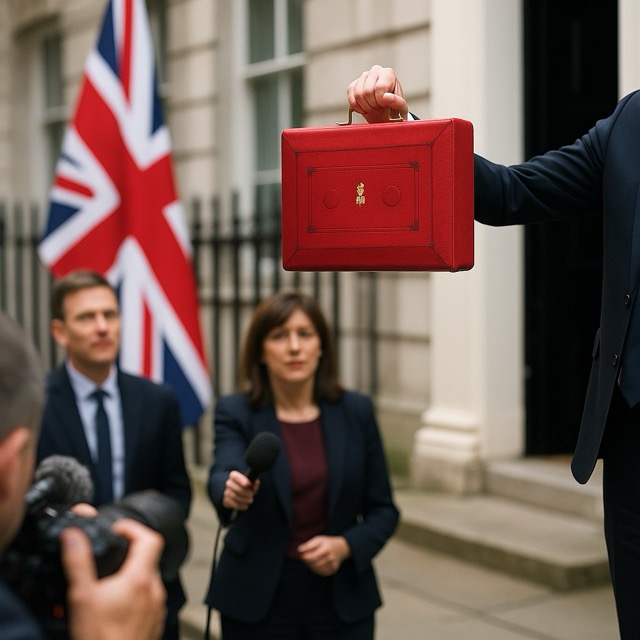
With a £30bn fiscal gap looming and a 26 November Budget ahead, Labour confronts the political cost of breaking its 2024 tax-rate pledge

LIVERPOOL — Prime Minister Keir Starmer will tell Labour this week that Britain’s renewal will demand choices that are “not cost‑free or easy,” a blunt message calibrated for a party conference overshadowed by fiscal arithmetic. The remarks, trailed ahead of his keynote, set the stage for Chancellor Rachel Reeves’s first full Budget on 26 November — and intensify speculation that she will abandon Labour’s 2024 manifesto pledge not to raise the headline rates of income tax, national insurance or VAT.
At the heart of the dilemma is a prospective £30bn hole in the public finances created by weaker productivity and higher borrowing costs, according to officials and independent forecasters. Upgraded Office for Budget Responsibility numbers, due alongside the Autumn Budget, are expected to confirm what ministers already know: the current fiscal rules leave little room for manoeuvre without either new revenue or hard‑edged spending restraint.
Reeves has hardened her language in recent days. In broadcast interviews she has declined to repeat categorical guarantees on the big three tax rates, while signalling that any steps would be designed to protect “working people.” She has pointed to global headwinds — wars, trade tensions and elevated interest rates — as the backdrop to her choices, even as she insists Labour will keep market confidence by sticking to its debt‑falling rules.
The politics are treacherous. The 2024 election platform asserted that Labour would not raise taxes on working people and specifically ruled out increases to VAT, national insurance and income tax rates. That promise helped neutralise Conservative attacks but boxed the party in once in office, especially after ministers discovered what one official describes as a “thin” inheritance in public services and capital budgets. To break the pledge now would be a profound moment — and one that Starmer appears to be preparing members for.
Inside government, scenarios have been canvassed that range from modest rises in higher‑rate income tax bands to reversing part of the previous national insurance cut. A narrower, more politically palatable path would load the burden elsewhere: closing reliefs and allowances, tightening non‑dom rules, equalising capital gains with income for top earners, or targeted levies on sectors such as gambling and tobacco. Reeves has floated the latter, hinting at higher duties on betting companies to fund addiction services and community sport. Yet officials concede that such niche measures cannot, on their own, bridge a structural gap of the size now being discussed.
Business, which largely welcomed Labour’s promise of stability after the turbulence of recent years, is urging clarity more than leniency. Executives fret that rumours about VAT or payroll taxes ricochet rapidly through pricing decisions and pay deals. The Confederation of British Industry has openly said the time for “tinkering” is over, and a number of City economists argue that broad‑based tax rises — however unpalatable — are preferable to salami‑sliced departmental cuts that hobble growth‑enhancing investment.
Within Labour, tensions are raw. Mayors and backbenchers to the party’s left want Reeves to loosen the fiscal corset, arguing that cheap public investment in housing, green industry and transport will pay for itself. The Treasury counters that credibility once lost is hard to regain; Reeves’s team still bears the scar tissue of the 2022 gilt‑market crisis and believes their mandate rests on competence first, ambition second. Starmer, for his part, is expected to argue that the country’s founder‑stone virtues — decency, security, service — are incompatible with wish‑lists written on overdrafts.
The arithmetic of the public realm is unforgiving. Schools and local councils face post‑pandemic cost pressures that outstrip current settlements. The NHS is battling rising demand and a maintenance backlog. Prisons are nearing capacity. Net zero infrastructure remains under‑financed relative to the government’s own pathway. Without fresh revenue, departments will either ration services more aggressively or defer investment, both of which risk depressing the very productivity the Treasury hopes to revive.
One avenue under review is the definition of “working people.” The manifesto’s phraseology was politically potent but legally and economically fuzzy. Officials say a refined framework could try to honour the spirit of the promise while adjusting the letter — for example by safeguarding thresholds and personal allowances for low‑ and middle‑income households even if headline rates inch up at the top. Such an approach would still invite charges of bad faith from opponents, but Starmer’s advisers argue that voters will judge the outcome by perceived fairness, not semantic purity.
Markets, for now, are giving Labour the benefit of the doubt. Sterling and gilts have been steady on expectations that Reeves will pair any rises with pro‑growth reforms: planning liberalisation to unlock housing and energy projects; streamlined visa routes for high‑skill sectors; and a revived industrial strategy anchored in grid upgrades and supply‑chain security. Downing Street believes that a credible medium‑term plan could actually lower the risk‑free rate over time — a dividend on discipline that would ease pressure on the Budget’s arithmetic.
None of this resolves the basic political problem: a tax rise, however carefully designed, is a tax rise. Starmer’s warning is therefore as much about expectations management as it is about policy. He will tell delegates that renewal demands trade‑offs and that a government of service must sometimes choose the hard thing now to avoid the impossible thing later. If the pledge is diluted or ditched, he will own the choice — and the consequences — rather than pretend circumstances have not changed.
Reeves’s immediate task is choreography. The Treasury wants to keep options open until the OBR closes its books next month. Officials are drafting multiple scorecards to test combinations of measures against the fiscal rules: what happens to debt‑to‑GDP by year five; how much headroom remains for shocks; how sensitive receipts are to growth assumptions. Parallel work is under way on distributional tables and household impact analysis — the spreadsheet proof that any pain lands progressively, not punitively.
Yet policy is also narrative. Labour staked its case for power on growth through stability, a decade‑long effort to make Britain investable again. A messy retreat from the tax pledge would challenge that story unless framed as part of a broader renewal bargain: targeted relief for low earners, reform of business rates, a long‑term capital allowance, and reforms that unblock the supply side so the private sector can carry more of the load. If Reeves can show that every extra pound taken now is leveraged into productivity‑raising reforms, she may keep the coalition that put Labour in government.
Whatever emerges on 26 November, the next eight weeks will be a test of message discipline for a party not always known for it. There will be leaks and scare stories. There will be back‑bench letters and front‑page fury. But Starmer’s calculation is that telling difficult truths early is cheaper than paying compound interest on wishful thinking. He is, in effect, asking Labour to accept that governing is a sequence of bargains — and that the price of renewal is honesty about who pays, how much, and why.


 The Tower Post