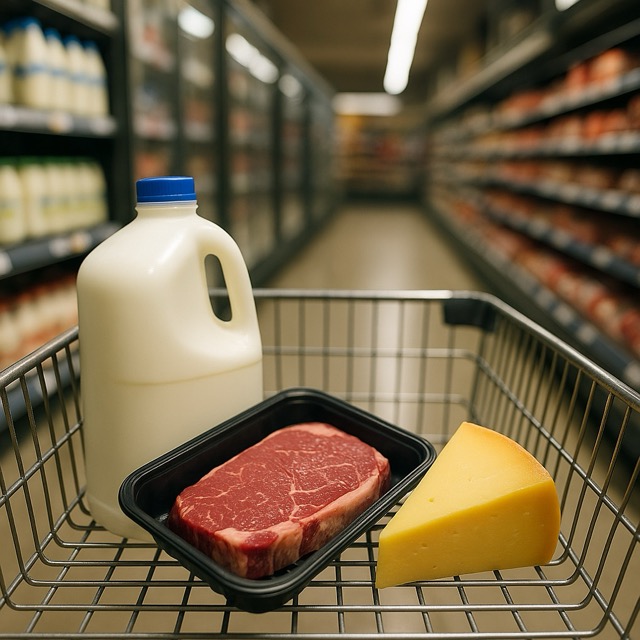
Beef and dairy keep tills ringing as September’s BRC-NIQ reading climbs to 1.4%, intensifying pressure on household budgets
LONDON — UK shop price inflation accelerated in September to 1.4% year on year, the highest reading in 18 months and up from 0.9% in August, according to the latest British Retail Consortium–NielsenIQ index. The pick‑up, driven by stubbornly high food costs and a fading bout of non‑food deflation, arrives just as families confront the expensive tail‑end of summer and back‑to‑school spending.
Behind the headline number sits a familiar duo of culprits: beef and dairy. Retailers and supply‑chain analysts say farm‑gate costs have remained elevated through 2025, reflecting a constrained cattle supply, higher feed and energy bills, and wage pressures across the meat and dairy supply chains. Those forces have kept fresh food inflation sticky—food prices overall were still up 4.2% on the year in early September—even as retailers rolled out promotions in other aisles.
Non‑food prices, which had been falling for much of the past year, are no longer pulling the overall index down. The BRC’s measure of non‑food inflation printed at −0.1% year on year in September, a sharp moderation from the −0.8% decline recorded in August. Discounts on laptops and some back‑to‑school categories helped, but were offset by firmer prices for DIY and gardening products after a busy summer season. The result is that shop prices are again moving in one direction: up.
For households, the turn is immediately tangible. Elevated dairy tags—milk, cheese and butter—combine with pricier beef cuts to push the cost of a typical basket higher just as heating bills begin to edge up heading into winter. Retail analysts report that shoppers are increasingly splitting baskets across multiple supermarkets and discounters, trading down to own‑label where possible and substituting away from premium cuts of meat. Meal planners that once built around mince or steak are stretching protein with pulses and pasta, while cheese boards are giving way to cheaper spreads.
Why are beef and dairy so sticky? On the beef side, the UK’s cattle herd has been tight, and producers have faced rising input costs and labour shortages. That has constrained slaughter volumes and kept wholesale prices elevated, a dynamic expected to persist into the second half of 2025. Dairy markets, meanwhile, continue to absorb higher costs for energy, packaging and logistics, even as global milk supply has improved only unevenly. Processors and retailers have been reluctant to pass through every increase, but the scope for further absorption is narrowing.
The policy backdrop also matters. Retailers warn that cumulative domestic cost pressures—from higher employer national insurance contributions to sector‑specific levies—are filtering into shelf prices. A new packaging‑waste charge due to take effect in October is widely expected to add incremental pressure, particularly on categories with complex packaging or chilled chains. While the magnitude is likely to be modest compared with the global energy shock of 2022–23, it arrives at a delicate moment for consumer confidence.
None of this is occurring in a vacuum. The Bank of England, which targets 2% CPI inflation, has cautioned that headline inflation could firm again in September on base effects and administered prices before easing gradually in 2026. For now, supermarket aisle dynamics are doing more of the day‑to‑day work in shaping how inflation feels than the Bank’s reference basket. When shoppers see milk back above familiar price points, perceptions of inflation harden—regardless of whether TVs or tablets are cheaper than a year ago.
Retailers are responding with a well‑worn playbook: shorter promotion cycles, expanded value ranges and multi‑buy offers that pull price‑sensitive customers into store. Loyalty‑card pricing remains a key weapon, though its effectiveness fades as competitors match offers. Private‑label penetration has risen again in 2025, but growth is slowing as bargain hunting meets brand loyalty in categories like coffee, chocolate and premium yoghurts. The battleground this autumn is likely to be the chilled aisle, where switching barriers are lower and weekly habits can be nudged by end‑cap deals.
The macro picture is a study in cross‑currents. On one hand, wages have continued to outpace prices in many sectors, helping some households rebuild real spending power. On the other, mortgage resets, stealth taxes and high essential bills are squeezing discretionary budgets. The result is a K‑shaped consumer: resilient spenders at the top, careful calculators in the middle, and a sizeable cohort cutting back at the bottom. For retailers, that dispersion complicates ranging and assortment decisions just as supply chains remain vulnerable to weather and geopolitics.
What could bend the food‑price curve lower from here? Two developments bear watching. First, if cattle availability improves and wholesale beef prices soften into the winter, retailers could pass through relief quickly—protein is among the most visible prices in the shop. Second, if energy markets avoid a winter spike, processors and hauliers would see cost bases stabilize, allowing more aggressive promotions in dairy and chilled foods. Against that, any further increases in labour or compliance costs—such as packaging‑scheme fees—could trim the headroom for markdowns.
There are also structural shifts. Shoppers who embraced scratch cooking and bulk buying during the 2022–23 crisis have kept some of those habits, leaning on slow cookers and air fryers to stretch meat and dairy in stews, sauces and batch cooks. Online grocery share has plateaued but remains above pre‑pandemic levels, with ‘click and collect’ a favourite of budget‑conscious families managing fuel costs. Discounters continue to open stores, putting price pressure on the big four supermarkets, but urban convenience formats are capturing mission‑based trips for top‑ups and fresh items.
Looking ahead to the crucial ‘golden quarter’, retailers face a delicate choreography. Christmas ranges are being planned with tighter SKU counts, a greater emphasis on entry‑price points, and clearer good‑better‑best ladders in meat and dairy. The hope is that a promotional crescendo in late November and December can lift volumes without triggering a margin‑sapping race to the bottom. Much will depend on how quickly non‑food categories re‑establish genuine deflation; if that doesn’t materialize, total shop price inflation could hover uncomfortably around current levels.
Policymakers, for their part, are watching the BRC‑NIQ index for signals about how inflation is filtering through the real economy. With the government preparing its late‑November Budget, trade bodies have urged ministers to avoid new cost burdens that feed directly into shelf prices. Retailers argue that stability—in business rates, employer taxes and regulatory schemes—would support investment in productivity, from warehouse automation to demand forecasting, which ultimately lowers costs for shoppers.
For consumers, the immediate tactics are pragmatic rather than heroic: plan meals, compare prices across formats, and lean on seasonal produce to offset higher‑ticket items. Beef and dairy will remain the defining pressure points into the winter, but the trajectory from here will hinge on supply‑side relief and whether retailers can revive the deflationary pulse in non‑food. For now, the return of shop‑price inflation is a reminder that the UK’s long disinflationary unwind is not yet complete—and that the weekly shop is where macroeconomics feels most personal.
Sources: British Retail Consortium–NielsenIQ; Financial Times; Reuters; Bloomberg; The Grocer; AHDB; FDF.




 The Tower Post