
Despite a late surge, critical errors and poor pairings left the Americans in an insurmountable deficit at Bethpage Black.
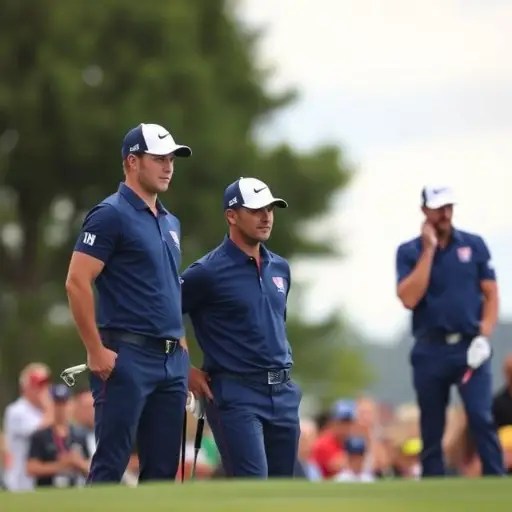
The Ryder Cup at Bethpage Black turned into a historic defeat for Team USA, marking their first loss on home soil since 2012. Despite a late push on Sunday, critical errors and underperformance from top players left the Americans facing an insurmountable deficit. Captain Keegan Bradley’s controversial decisions, including pairing Scottie Scheffler and Bryson DeChambeau in a bid to secure points, backfired, highlighting the strategic missteps that plagued the team throughout the event.
Bradley’s tactics came under scrutiny early on, particularly when he paired Collin Morikawa and Harris English for the opening session, a pairing ranked dead last by analytics firm Data Golf. The duo lost badly, and Bradley’s decision to keep them together again on Saturday only deepened the concerns. Tactical blunders, such as having Russell Henley, a short hitter, tee off on odd-numbered holes, further hurt the Americans’ chances.
Even when the Americans made seemingly sound decisions, they were outplayed by a relentless European team. Scheffler, the world’s top player, went 0-4 in team matches, a rare feat in the modern era of the Ryder Cup. The Europeans, unfazed by the hostile crowd, dominated the course, which was set up in a way that favored their strengths. The rough was trimmed too short, and the greens were soft, conditions that benefited the Europeans’ superior putting skills.
The European team was led by a stellar group of players, including Rory McIlroy, Tommy Fleetwood, Justin Rose, Jon Rahm, and Viktor Hovland, who all performed at an elite level. Their ability to adapt to the course and play under pressure was a key factor in their success. Meanwhile, the American team struggled with consistency, with several top players failing to deliver when it mattered most.
Despite a late surge on Sunday, the Americans could not overcome the deficit. Europe’s 11.5 points after the first two days were the most in the current format since 1979, making a comeback nearly impossible. Bradley admitted the team needed a miracle, but the margin was too great to overcome. The defeat underscored the need for a reevaluation of strategy and preparation for future Ryder Cups.
The loss also highlighted the importance of course setup and preparation, as the Americans had attempted to adjust the course to favor their team. However, the conditions ended up playing more to the Europeans’ strengths, particularly in putting, where Europe had the top six players in strokes gained. This, combined with the strategic missteps and underperformance from key players, sealed the Americans’ fate at Bethpage Black.
In the aftermath, questions have been raised about the long-term implications for the U.S. team. With the Ryder Cup being a highly anticipated event, this loss could lead to a shake-up in leadership and strategy moving forward. Fans and analysts alike are calling for a more data-driven approach to pairings and course management, as well as a renewed focus on developing team cohesion and resilience under pressure.



 The Tower Post