Why senior leaders are filing out of Tesla, Optimus and xAI in 2024–2025
Elon Musk’s companies have always run hot. High ambition and high attrition are part of the lore at SpaceX and Tesla, where engineers brag about sleeping under their desks and shipping the impossible. Over the past year, though, departures at several Musk-led businesses have accelerated into a pattern—most prominently at Tesla, its Optimus humanoid‑robot program, and xAI, the artificial‑intelligence startup racing to catch OpenAI. The exits span battle‑tested veterans and star recruits who barely had time to find a parking spot. Together they raise a sharper question than the usual churn: why are so many senior people leaving now, and what does that mean for the strategy Musk is pursuing across his empire?
The clearest signal came at Tesla in mid‑July 2025, when Troy Jones—vice‑president of sales, service and delivery for North America and a 15‑year veteran—left the company. His exit landed amid a difficult sales year marked by heavier discounting, intense competition from cheaper rivals in China and Europe, and an aging line‑up in Tesla’s largest market. It followed earlier departures from battery and software leadership and capped a period of layoffs and reorganizations that rattled teams responsible for delivering quarterly numbers.
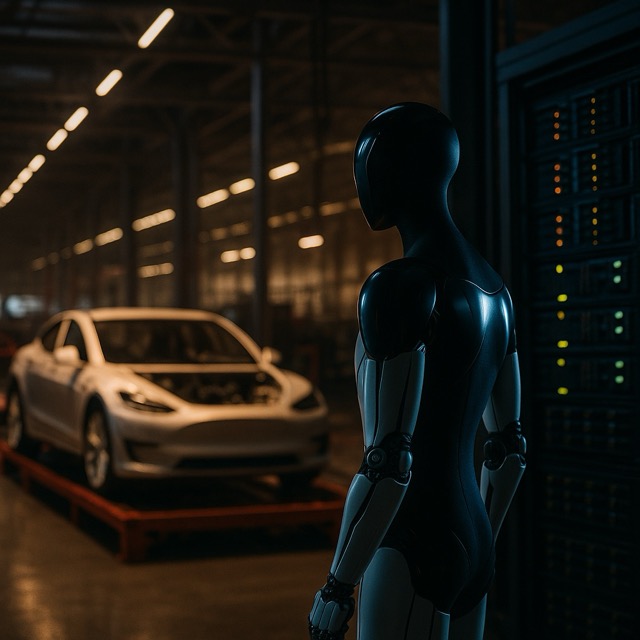
In robotics, the Optimus group, Musk’s bet on a mass‑market humanoid, has been similarly unsettled. Milan Kovac, who had led the effort, announced he was leaving in June. The change mattered not just for morale but for architecture: Optimus is supposed to feed directly off the same perception stack that powers Tesla’s Autopilot and Full Self‑Driving features. A reset at the top of the robot team therefore ripples into decisions about training data, on‑board compute and the cadence of factory pilots.
xAI, the youngest of the three pillars, has seen even higher‑velocity turnover. In early September, chief financial officer Mike Liberatore, a former Airbnb executive, stepped down roughly three months after joining. His brief tenure was notable because he had just helped orchestrate an unusually large funding package—combining multi‑billion‑dollar debt with strategic equity—to bankroll data‑center expansion and turbocharge training for Grok, xAI’s conversational model. Over the summer, a co‑founder and the company’s top lawyer also left. Those moves came alongside a broader reshuffle in Musk’s social‑media business, where X’s chief executive, Linda Yaccarino, resigned in July as parts of the platform’s data, compute and ad‑tech assets were drawn closer to xAI’s orbit.
What’s driving the exodus? Start with management tempo. Current and former executives describe a familiar cadence: midnight directives, weekend ‘all‑hands’ and abrupt pivots to meet a demo, a shareholder call or a self‑imposed deadline. The upside is legendary speed—Tesla and SpaceX have repeatedly out‑iterated slower rivals. The downside is organisational whiplash: road maps rewritten on the fly, months of work discarded and—crucially for senior operators—plans that are hard to defend to customers, regulators and bankers who prize predictability.
Politics is the second accelerant. Musk’s increasingly vocal activism—on U.S. elections, European policy and the culture wars—now trails his companies into boardrooms. Enterprise customers and government buyers ask whether a contract also buys them unwanted controversy. Policy teams spend cycles defusing blow‑ups triggered by late‑night posts. Some leaders are comfortable with the trade‑off, arguing that candour is part of the brand; others say it complicates sales and hiring at a time when every headcount and contract matters.
The market context makes the turbulence harder to shrug off. Tesla is navigating the most crowded EV landscape in its history. Margins that once looked like software are being pressed by price cuts and subsidies that come and go. That puts more pressure on field leadership and on battery‑supply, logistics and service heads—exactly the roles that have seen turnover. Meanwhile, the company is asking investors to re‑rate its story around autonomy and robotics just as it refreshes its vehicle line‑up. Execution uncertainty at the top undermines that pivot.
Talent competition is the third force. In frontier AI, the best researchers, systems engineers and finance chiefs command extraordinary packages at Big Tech incumbents. Startups can counter with velocity and equity upside, but only if they project cohesion. xAI has the opposite problem: rapid growth and funding, paired with a short half‑life in key posts. That spooks candidates who fear stepping into a moving target. Even at Tesla, veterans say a decade of nonstop sprints has left fewer people willing to sign up for another tour.
Then there is structure. Musk runs a highly centralised model where decision rights are personal and fluid. That can be a superpower in crisis—one principal can cut through bureaucracy—but it also creates bottlenecks. When Optimus needs compute for a new perception model, Tesla’s autonomy team needs the same GPUs for a safety‑critical release, and xAI wants to schedule a monster training run, the arbitration typically happens late and at the very top. Leaders who thrive in consensus‑driven environments can find the system alien; leaders who relish direct access to the boss sometimes burn out when priorities collide.
Compensation volatility adds to the mix. Much of the upside at Musk companies is equity‑driven and tied to product milestones as well as stock‑market sentiment. That is rocket fuel when deliveries beat and demos dazzle; it is punishing when timelines slip or macro trends turn. Executives who signed on amid the euphoria of 2023–2024 have watched option math whipsaw alongside EV demand narratives and AI‑chip supply constraints. A number have chosen to take steadier roles elsewhere rather than ride another cycle.
Legal friction is another drag. In late September, xAI sued OpenAI in federal court, alleging trade‑secret theft linked to former xAI employees now at the rival lab. Whether or not the case prevails, it underlines how talent mobility in AI can metastasise into discovery, testimony and subpoenas—distractions that ripple through a thin senior bench. Tesla, for its part, continues to tangle with safety regulators over driver‑assistance, a saga that pulls leadership attention just when the company wants to focus the narrative on robotaxis and robots.
To be clear, none of this means Musk’s thesis is broken. Tesla still enjoys a scale advantage in EV manufacturing, battery integration and in‑market driver‑assist data. If it can translate its autonomy stack into a credible robotaxi service or deploy Optimus beyond factory pilots, the upside is enormous. xAI, despite the churn, has moved quickly on fundraising and model releases. Across the portfolio, there is a deliberate push toward a shared AI architecture that lets breakthroughs in one domain feed another—from vehicle perception to factory automation to general‑purpose assistants.
But leadership instability carries compounding costs. Sales organisations rebuild trust customer by customer. Robotics teams lose tacit knowledge when a lead architect walks. Finance chiefs institutionalise discipline that outlasts any one transaction. Perhaps the biggest risk is strategic drift: the temptation to chase headlines instead of executing patiently against a few durable bets. Investors tolerate drama when execution is flawless; they are less forgiving when the story depends on multi‑year transitions that require repeatable, boring excellence.
What could slow the turnover? Veterans point to three levers. First, clearer ‘swim lanes’ among Tesla, Optimus and xAI—with pre‑agreed rules for sharing compute, talent and data—would reduce last‑minute trade‑offs. Second, an empowered layer of operational leaders, with explicit authority to say no to distractions, would protect quarterly deliverables without dulling the experimental edge. Third, a tighter firewall between Musk’s political advocacy and commercial messaging would spare field and policy teams needless firefights without muting the boss. None of these ask Musk to change his personality; they ask him to route the volatility toward breakthroughs rather than the scaffolding that makes breakthroughs scalable.
The next 12–18 months will test whether that recalibration happens. Tesla is trying to turn early Optimus pilots into limited production while preparing a software‑led refresh of its vehicles. xAI wants to push Grok deeper into enterprise and government workflows as its new data‑center capacity comes online. If the empire can stabilise its senior ranks while keeping up its technical velocity, the recent departures will look like the growing pains of a high‑beta strategy. If not, they risk hardening into a structural tax on execution at exactly the moment Musk needs compounding, not churn.
Sources: Public reporting and filings between April 2024 and September 2025, including Reuters coverage of Tesla leadership changes and xAI executive departures; reporting in The Wall Street Journal and TechCrunch on xAI’s CFO exit; and contemporaneous legal filings and coverage of xAI’s trade‑secret lawsuit.


 The Tower Post