
Justices defer Trump’s bid to oust the governor until January 2026 arguments, preserving a key symbol of central bank independence
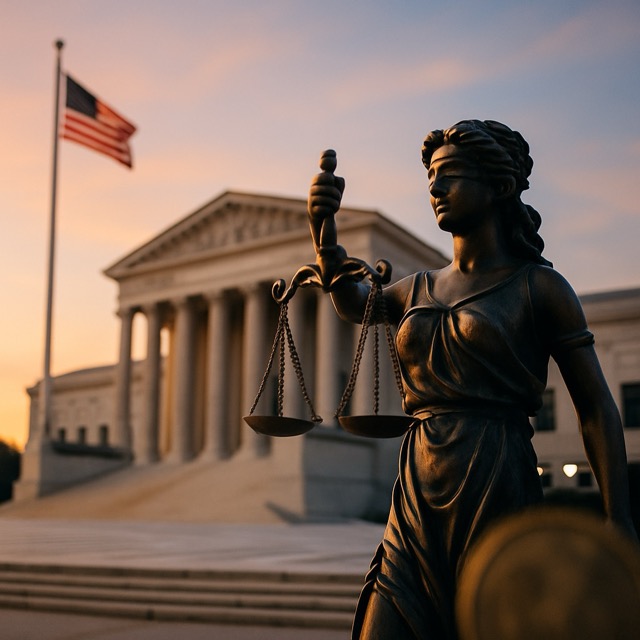
Washington — In a significant, if interim, victory for the Federal Reserve’s institutional independence, the U.S. Supreme Court on Wednesday declined to let President Donald Trump immediately fire Federal Reserve governor Lisa Cook. In a brief, unsigned order, the justices said they would take up the dispute during oral arguments in January 2026 and left Cook in place until then. The decision allows the Biden-appointed economist to keep voting on monetary policy as the central bank navigates a late‑year cooldown in inflation and a fragile labor market.
The Court’s move does not resolve the underlying fight over presidential power and the legal protections Congress afforded Fed governors when it created seven 14‑year seats on the Board. But by denying the White House’s emergency request to remove Cook now, the justices signaled that the Fed may deserve different treatment from other independent agencies whose leaders Trump has sought—often successfully—to dismiss. It also spares Chair Jerome Powell an immediate, politically charged vacancy at a delicate moment for interest‑rate strategy.
Trump attempted to oust Cook in late summer, alleging that before her appointment she violated mortgage rules by designating two different properties as her primary residence. Cook has denied wrongdoing and has not been charged. A federal district judge in Washington blocked the removal in September, finding that the administration had not shown adequate legal cause or due process. A divided appeals court allowed Cook to remain, and the administration then asked the Supreme Court to intervene on an emergency basis.
At stake is more than one official’s job. The case could clarify whether presidents may swiftly dismiss members of the Fed’s Board of Governors—who by statute can only be removed “for cause”—or whether such protections meaningfully insulate monetary policy from day‑to‑day political winds. Although recent Supreme Court rulings have expanded presidential control over some independent agencies, the justices stopped short of rewriting the rules for the central bank in this interim skirmish, opting instead for full briefing and argument.
For financial markets, the immediate consequence is continuity. Cook is expected to participate in at least two more Federal Open Market Committee meetings in 2025, including the closely watched late‑October and December gatherings that will help determine whether the Fed begins trimming rates after holding them near restrictive levels for much of the year. Fed officials have emphasized a data‑dependent approach, and the Court’s order ensures the current voting roster remains intact through year‑end.
The political backdrop is combustible. Trump has repeatedly criticized post‑pandemic rate hikes and has floated reshaping the Fed’s leadership to align more closely with his growth priorities. Supporters say the president must be able to remove officials accused of misconduct. Critics counter that a quick, unilateral firing—especially under disputed allegations—would erode the wall between the White House and the nation’s lender of last resort, risking higher risk premiums and politicized policy.
Legal experts note that the Fed’s design has long reflected a compromise: democratic accountability via presidential appointments and Senate confirmation, tempered by fixed, staggered terms and for‑cause removal to shield rate‑setting from electoral cycles. That framework traces to the Federal Reserve Act and decades of doctrine distinguishing monetary policy from ordinary executive functions. If the Court ultimately broadens removal power, future presidents could exert greater leverage over the Board’s composition between confirmation cycles—an outcome that would reverberate far beyond one governor and one administration.
Cook, a macroeconomist who has published widely on innovation and barriers to growth, joined the Board in 2022 and became the first Black woman to hold the post. Her votes on the FOMC have generally tracked the Powell consensus while advocating attention to labor‑market scarring and financial‑stability risks. Her allies frame the case as a test of whether academic missteps that fall short of criminal charges—or contested interpretations of paperwork—can satisfy a statutory “for cause” threshold originally intended for serious malfeasance or neglect of duty.
Beyond the courthouse, investors are parsing what the pause means for policy. Keeping the current committee intact reduces one source of uncertainty at a time when inflation progress has slowed unevenly across sectors and long‑term yields have crept higher. A sudden vacancy might have fanned speculation about a pro‑growth tilt or, conversely, triggered a bruising confirmation clash just as officials weigh the risk of cutting too soon.
Still, the legal confrontation could cast a shadow into 2026. Oral arguments in January will likely test the meaning of “for cause” in the Fed’s context and whether courts can halt a president’s removal decision in real time or must limit relief to back pay after the fact. Those procedural choices matter: if interim removals are effectively irreversible during litigation, the protections Congress wrote into the statute would be blunted when political pressure is most intense.
For the central bank, legitimacy is an asset that compounds slowly and can dissipate fast. The sight of a president removing a sitting governor mid‑term—particularly without a clear record of serious misconduct—could invite perceptions that interest‑rate decisions are subject to short‑term political priorities. That, in turn, risks unmooring inflation expectations and raising borrowing costs for households and businesses.
Powell, who has tried to keep the Fed above the political fray, now faces the delicate task of reassuring lawmakers and the public that the institution’s guardrails are holding. The Court’s refusal to act immediately gives him that message for now: the Fed can do its job while the justices consider the constitutional architecture around it. But a definitive ruling next year could either fortify the wall of independence—or punch a hole through it.
What comes next: The parties will brief the case this fall, and the justices are expected to hear arguments in January 2026, with a decision likely by late spring or early summer. Meanwhile, the economic calendar remains relentless. Two more inflation readings and the year’s final employment reports will land before the Fed’s December meeting, data that could tip the balance toward the first rate cut of the cycle—or extend the holding pattern.
In the sweep of U.S. economic history, the Fed’s credibility has often turned on whether political actors respect the arm’s‑length arrangement that permits unpopular choices in the short run for long‑term stability. By declining to green‑light an immediate firing, the Supreme Court has—at least temporarily—affirmed that bargain. The harder question, reserved for January, is whether the law still erects a meaningful barrier to the president’s reach, or whether future governors must serve at the pleasure of those they are meant to check.
For Cook personally, the reprieve allows her to keep casting votes and shaping internal debates. For the White House, it keeps alive an effort to define the contours of executive authority over independent officials. For markets and the broader public, it buys time—and preserves the expectation that monetary policy will not be rewritten overnight by politics. That may be enough to steady nerves for now. The ultimate verdict on the Fed’s independence will come when the Court speaks in 2026.



 The Tower Post