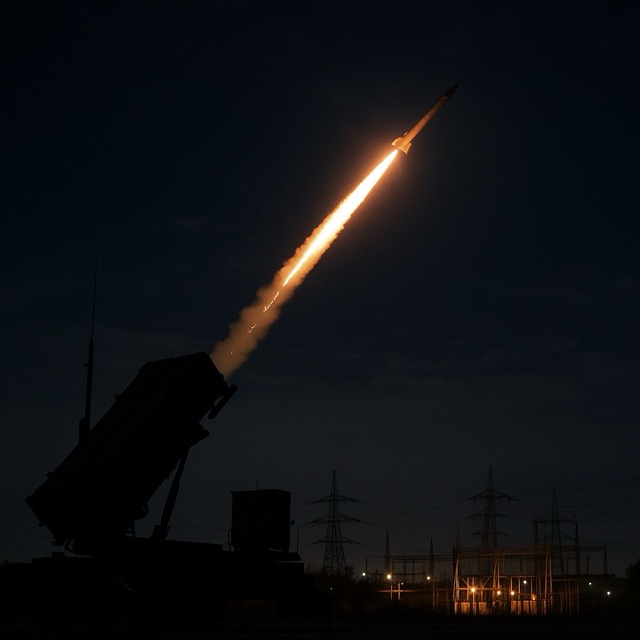
Kyiv and Western officials say software-driven upgrades to Iskander-M and Kinzhal missiles are cutting interception rates just as Ukraine braces for another winter of grid strikes
Russia has quietly tilted the contest in the skies over Ukraine. According to Ukrainian and Western officials, Moscow has rolled out a new wave of software and guidance tweaks to its short‑range Iskander‑M and air‑launched Kinzhal ballistic missiles. The effect is stark: missiles now fly a familiar ballistic arc before abruptly diverting into steep terminal dives or performing lateral maneuvers that compress reaction times and disrupt the engagement geometry of Patriot interceptors — the only systems in Kyiv’s arsenal designed to hit ballistic threats.
The Financial Times first reported the shift this week, citing officials in Kyiv and allied capitals who said interception rates against Russian ballistic missiles have fallen markedly since late summer. Independent Ukrainian outlets amplified the account and described how the upgraded missiles now ‘confuse and avoid’ Patriot batteries by arriving from unexpected angles or plunging in the last seconds of flight. While the hardware appears largely unchanged, the guidance logic and trajectory planning have been refined — a software race unfolding at hypersonic speeds.
The platforms at the center of the evolution are familiar names. The road‑mobile Iskander‑M, long a staple of Russia’s strike complex, launches quasi‑ballistic missiles widely assessed to reach targets hundreds of kilometers away. The Kinzhal, an air‑launched ballistic missile carried by MiG‑31K jets, pairs high speed with a depressed flight profile and maneuvering re‑entry. Both systems, Ukrainian officials say, are now flying profiles that look orthodox to early‑warning radars — until they don’t.
What has changed, specifically? Ukrainian air defenders describe missiles that maintain a predictable path through midcourse before executing abrupt terminal behaviors: steeper dive angles that shorten the window for track‑to‑intercept hand‑offs; cross‑range ‘jinks’ that challenge Patriot’s engagement algorithms; and time‑on‑target coordination that saturates a battery’s ready‑to‑fire canisters. In essence, Russia is trying to force Patriot into ‘late shots’ — intercept attempts launched so close to impact that even a nominal hit probability can’t be realized consistently.
Patriot remains formidable. The system’s phased‑array radar, sophisticated guidance, and hit‑to‑kill interceptors have repeatedly proven capable of striking ballistic targets over Ukraine. But like any complex defensive web, its effectiveness depends on radar survivability, interceptor stocks, crew sleep cycles, and the adversary’s tactics. Here, Russia’s incremental upgrades appear to be widening the gap between detection and decision. If a missile deviates only in the final seconds — or arrives in a multi‑axis volley — the battery’s fire control must juggle several near‑simultaneous engagement sequences while preserving missiles for follow‑on threats.
Kyiv’s broader air‑defense network can still defeat cruise missiles and Shahed‑type drones with less exotic systems — NASAMS, IRIS‑T, Gepard, and MANPADS among them. But the newest maneuvering profiles on ballistic shots are eroding the niche where Patriot was meant to dominate. Ukrainian officials say the consequence is felt in the strike effects: more hits on transformer yards, power‑generation units, and repair depots than during the previous winter season when defenders often blunted similar barrages.
The strategic timing is not accidental. With nights lengthening, President Volodymyr Zelenskyy is warning that Moscow is reverting to its winter playbook — a campaign to plunge cities into rolling blackouts by hitting the grid faster than crews can patch it. Over the past week, Ukraine’s nuclear‑energy safety has been repeatedly stressed, with the Chornobyl site and the Russian‑occupied Zaporizhzhia plant suffering power disruptions that triggered reliance on diesel generators. Each outage not only threatens civilian life and industry but forces commanders to disperse scarce air‑defense batteries to protect critical nodes, thinning coverage elsewhere.
Compounding the challenge is the supply pipeline. Western partners have surged air‑defense aid across 2023–25, but deliveries of interceptors — the rocket‑powered bullets Patriot needs to fire — are finite and must be shared among allies. U.S. officials have acknowledged tight inventories and occasional reprioritizations, even as Washington seeks to keep Ukrainian batteries viable. European customers have accepted schedule slips so more Patriot capability can flow east, yet Ukrainian commanders caution that consumption rates during peak attacks can drain ready stocks in hours, not days.
Behind the scenes, this is becoming a software war. Ukrainian engineers, working with U.S. contractors, have been iterating Patriot radar modes, engagement parameters, and tactical playbooks to counter the new Russian flight tricks. That includes rethinking where and how batteries are sited; using decoys and emission control to preserve radars; and pairing Patriot with point defenses that can handle leakers. But those adaptations take testing time, while Moscow’s programmers can push code updates to launch units with comparatively little warning.
Neither side is operating in a vacuum. Russian salvos have increasingly combined ballistic shots with cruise missiles and swarms of drones, forcing Ukraine to burn interceptors against mixed threats. In response, Kyiv is seeking additional Patriot batteries and alternative high‑end systems to distribute the load. For now, however, commanders are triaging: protecting high‑value grid assets, air bases, and command nodes first; accepting higher risk for industrial or logistical sites farther from the front.
The battlefield math remains sobering. A single Patriot battery can cover only so much sky. If adversary missiles now thread steeper, later, or more erratic terminal paths, the defended footprint shrinks and the cost‑exchange ratio tilts in the attacker’s favor. Even modest reductions in interception rates translate into more debris on city streets and more hours of darkness for civilians.
What would bend the curve back? Ukrainian and Western officials point to three levers. First, capacity: more batteries and more interceptors so commanders can pursue ‘shoot‑look‑shoot’ doctrines without gambling on single‑shot kills. Second, software: rapid, iterative updates to radar and fire‑control logic tuned against the latest Russian profiles — a continuous ‘observe‑orient‑decide‑act’ loop across the network. Third, resilience: hardening and redundancy across the grid so that even successful strikes produce shorter blackouts and fewer cascading failures.
None of this means Russia has achieved immunity. Patriots have downed Kinzhals before, and will again. But the offense has seized momentum in the cat‑and‑mouse cycle that defines modern air defense. As autumn closes and energy demand spikes, that edge matters — reducing Kyiv’s decision time, stretching its interceptor stockpiles, and magnifying the consequences of every leaker that gets through.
Bottom line: missile warfare in Ukraine is being decided less by exotic hardware than by the speed of software adaptation and the stamina of supply chains. If Ukraine can accelerate updates, expand coverage, and cushion its grid, the dark winter Moscow seeks may prove shorter and less punishing than advertised. If not, the next few months will test the limits of what even the world’s best air defenses can do when the threat keeps changing mid‑flight.
Sources
— Financial Times, “Russian missile upgrade outpaces Ukraine’s Patriot defences,” Oct. 2, 2025.
— Kyiv Independent, “Russia modifies missiles to evade Ukraine’s Patriots,” Oct. 2, 2025.
— The Moscow Times, “Russia Upgrades Missiles to Evade Ukraine’s Patriot Defenses,” Oct. 2, 2025.
— CRS (US Congress), “PATRIOT Air and Missile Defense System for Ukraine,” updated July 17, 2025.
— The Guardian, “Attack cutting power to Chornobyl nuclear plant a ‘global threat’, says Zelenskyy,” Oct. 2, 2025.
— AP News, “Zelenskyy warns Russian drones endanger safety at nuclear sites,” Oct. 2, 2025.
— The War Zone, “Patriot deliveries to Ukraine ramping up, others being delayed,” July 17, 2025.




 The Tower Post