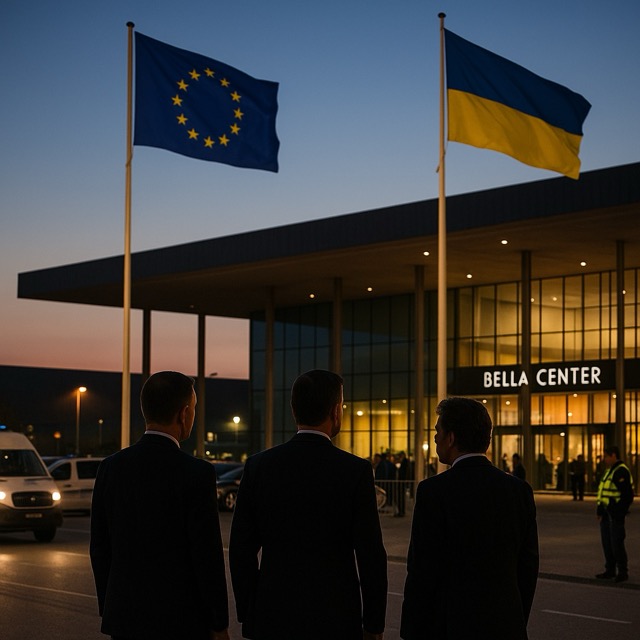
At the European Political Community summit in Copenhagen, leaders from across the continent double down on support for Ukraine while NATO’s chief cautions that Russia’s missiles could reach cities like Rome.

COPENHAGEN — NATO Secretary General Mark Rutte issued his starkest warning yet this week, telling Italy’s public broadcaster TG1 that Europe should consider itself uniformly exposed to Russia’s long‑range strike capabilities — including in capitals far from the front. “We are all in danger,” he said, adding that Russia’s most advanced missiles could hit Rome, Amsterdam or London “at five times the speed of sound.” The comments landed as leaders from across the continent gathered in Denmark for the seventh European Political Community (EPC) summit, where the war in Ukraine dominated an agenda focused on traditional and hybrid threats, economic security and migration.
The EPC meeting — a forum that convenes EU and non‑EU countries alike — closed with a clear message: support for Kyiv will not waver. Host Prime Minister Mette Frederiksen framed the day’s debates around hardening Europe against a Kremlin that is “testing” the continent across multiple fronts, from drone incursions to cyberattacks. European Council summaries noted sessions on defence, resilience and the risks of escalation, while Ukraine’s President Volodymyr Zelenskyy addressed participants remotely to urge sustained military and financial backing.
Rutte’s interview, and the reaction it sparked, crystallised a tension that has run through Western capitals for months: how to convey the gravity of the threat without inducing alarmism — and how to keep public opinion steady as the war grinds on into its fourth calendar year. Italian outlets splashed the warning across front pages, stressing the specific reference to Rome. Others sought to calibrate the message, noting that while the Kremlin has repeatedly engaged in nuclear‑tinged rhetoric, Western intelligence has not indicated an imminent plan to strike NATO territory. Rutte, for his part, cast the remark as a sober reminder that geography offers no automatic immunity in an age of hypersonic and standoff weapons.
The context matters. Only a day earlier, Vladimir Putin told an audience in Sochi that Russia would deliver a “significant” response if Europe further “militarised” the conflict by arming Ukraine with longer‑range systems. The Russian leader mocked warnings of a broader war even as European governments reported fresh cyber activity and violations of airspace on the alliance’s northern and eastern flanks. That dual track — denial paired with menace — has become a hallmark of Moscow’s messaging, designed both to deter Western aid and to seed doubts among voters already feeling the pinch of defence spending and energy re‑shoring.
Inside the Bella Center, the EPC’s sprawling format — 43 countries at the table, ranging from EU members to neighbors like the UK, Norway and the Western Balkans — produced what officials called a “pragmatic consensus.” There was no formal communiqué, but participants described a steelier tone than at past meetings: more air‑defence coordination, more joint work on counter‑drone technology, and a push to deny Russia the components it needs for missiles and drones. Denmark and several Baltic and Nordic partners pressed for an accelerated ‘drone wall’ along the EU’s external borders and critical energy corridors; southern states argued for better protection of ports and civil aviation hubs — a concern that resonated after Rutte’s explicit mention of Rome.
For Brussels, the summit served as a staging post ahead of an October European Council where leaders will revisit Ukraine funding and the legal architecture to tap windfall profits from frozen Russian assets. The Commission, backed by several capitals, has argued that using such profits to pay for air defences, artillery shells and energy repairs would both punish aggression and harden Ukraine for a long war. Skeptics warn of legal challenges and retaliation against European companies still operating in Russia. Either way, new money is the sine qua non for maintaining the “pact of steel” that Kyiv and Brussels have sought to project since the full‑scale invasion began in 2022.
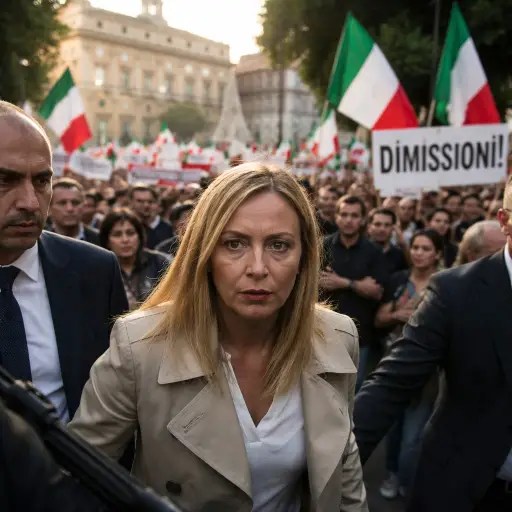
Italy, pulled into the centre of the debate by Rutte’s remarks, has moved carefully. Prime Minister Giorgia Meloni has held firm on sanctions and military aid, and Italian air defences already contribute to NATO missions over the Baltics and the Black Sea. Defence planners in Rome privately note that the peninsula’s geography — with dense civilian infrastructure and multiple NATO facilities — argues for layered protection: early warning, point defence for key sites, and rapid repair crews to keep airports and logistics nodes functioning even under harassment from drones or cruise missiles. The question, as ever, is resourcing — and whether Italian public opinion will accept another tranche of funding if the conflict drags deep into 2026.
Beyond matériel, leaders wrestled with information resilience. Several governments cited disinformation operations aimed at fracturing support for Kyiv ahead of elections in Central Europe. Officials pointed to fabricated narratives about refugee crime, manipulated casualty figures and bogus “leaks” alleging Western escalation plans. The EPC discussions included proposals for real‑time cross‑border takedown requests and public‑interest transparency from major platforms. An allied diplomat called it “air defence for the public square” — an effort to intercept the digital equivalent of drones before they reach their targets.
Rutte’s larger strategic thesis — articulated in London and at Chatham House earlier this year — is that Europe must close its readiness gap within five years: more ammunition, deeper industrial stockpiles, quicker procurement, and a credible surge capacity. In Copenhagen, he linked that agenda to his blunt warning on missiles. Hypersonic speeds, he suggested, compress decision time; layered defence buys minutes; but only deterrence through strength buys peace. In practical terms, that means sustained 2%‑plus defence spending across NATO (with several allies already above that threshold) and long‑term contracts that give industry the confidence to invest.
Ukraine, for its part, used the EPC platform to present a winter plan heavy on air defence, energy protection and long‑range fires. Kyiv’s immediate asks remain familiar — Patriot interceptors, IRIS‑T and NASAMS missiles, counter‑UAV kits, and power‑grid transformers — but officials also pressed for coordinated sanctions enforcement to starve Russia’s missile complex of chips and machine tools. President Zelenskyy’s address thanked countries that have anchored coalition initiatives, from artillery rounds to training pilots, and urged undecided states to join. The subtext was unmistakable: delays cost lives and infrastructure now, and leverage at any future negotiating table later.
If there was a dividing line in Copenhagen, it ran between leaders who see the next six months as decisive and those who expect a long slog that must be politically sustainable. Eastern and Nordic voices pushed for faster transfers of long‑range strike and a loosening of end‑use constraints. Others, particularly in southern and western Europe, cautioned against steps that could be cast by Moscow as direct NATO participation. Yet even the most cautious agreed that a credible air‑defence umbrella — for Ukraine and for Europe’s own skies — is not optional.
That consensus helps explain why Rutte’s “Rome” line resonated beyond Italy. It was less a warning of an imminent strike than a rhetorical nudge aimed at the complacency that can creep in far from Kharkiv or Odesa. In his formulation, the front line stretches wherever Europe’s critical infrastructure can be held at risk — which is to say, across the map. The policy translation is prosaic but urgent: buy more interceptors, fill the maintenance pipelines, drill civil defences, and coordinate flight‑safety protocols so civil aviation can ride out periods of heightened threat without cascading disruption. Those are not headlines, but they are the stuff of deterrence.
Absent a formal EPC communiqué, the measure of success will be what arrives, and how fast, in the coming weeks: missiles in Ukrainian launchers, radars at Europe’s airports, sanctions cases in court. The politics will remain hard. But in Copenhagen there was, at minimum, a shared recognition that the costs of drift are higher. As one senior official put it, Europe has spent two years learning to live with risk; the task now is to reduce it — and to do so before Moscow tries to raise the stakes again.
References
• Rutte’s remarks to TG1 reported by RAI News (Oct. 2–3, 2025).
• European Political Community summit overview — Council of the EU (Oct. 2, 2025).
• Address by President Zelenskyy to the 7th EPC Summit (Oct. 2, 2025).
• Putin’s Sochi statements warning of a ‘significant’ response — coverage in Le Monde (Oct. 2–3, 2025).
• Italian press round‑up: la Repubblica, Corriere della Sera, Il Fatto Quotidiano (Oct. 2–3, 2025).
 The Tower Post