
Macron accepts resignation; far-right demands dissolution, left mulls presidential impeachment as markets slide
Paris – Sébastien Lecornu resigned as France’s prime minister on Monday morning, just weeks after his appointment on September 9, a lightning‑fast collapse that instantly made him the shortest‑serving head of government in the Fifth Republic. President Emmanuel Macron accepted the resignation as the Elysée scrambled to keep a grip on the state after a weekend cabinet unveiling triggered a political firestorm.
The dramatic turn, coming barely a day after Lecornu presented a broadly unchanged list of ministers, exposed the depth of France’s governing crisis in a hung National Assembly split into three rival blocs. Allies on the right balked at the line‑up; the left denounced it as continuity without course correction; and the far right saw vindication for its claim that Macron’s second term has become ungovernable.
In immediate reactions, National Rally leader Jordan Bardella urged the president to dissolve the Assembly and call fresh elections, while François Bayrou, the outgoing prime minister forced from office last month, warned that the situation was “grave and worrying.” Jean‑Luc Mélenchon, the figurehead of France Unbowed, said lawmakers should now take up an impeachment motion against the president—a constitutional long shot but a potent symbol of the opposition’s resolve.
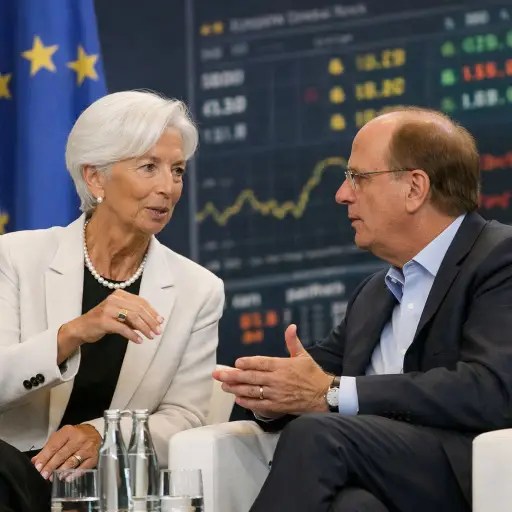
Markets recoiled at the renewed uncertainty. The CAC 40 fell sharply in early trading and the euro weakened, while French government bond yields ticked higher, underscoring investor anxiety over governance and budget risks as Paris races to craft a 2026 spending plan. Bank stocks led losses on expectations of prolonged gridlock and delayed fiscal decisions.
Lecornu’s fall was as swift as it was stark. Appointed at 39 and seen as a loyalist with a pragmatic bent after three years as defense minister, he spent much of September in consultations designed to lower the political temperature after a bruising year. But the new cabinet he unveiled Sunday evening was attacked from all sides—too similar to its predecessors for critics seeking a break; too unbalanced for center‑right partners; and too technocratic to reset a jaded public mood.
At the core of the backlash was a sense that policy would not materially shift: critics pointed to the continuity in economic and interior portfolios and to the elevation of familiar heavyweights. The government’s pledge to forswear procedural shortcuts in parliament, such as fast‑track budget tools, bought little goodwill with an opposition that felt emboldened by recent successes and unified—at least tactically—by hostility to Macronism.
The implosion leaves France entering another caretaker phase just as ministries begin the annual budget sprint. With fiscal consolidation on the agenda after years of post‑pandemic support, any delay in setting expenditure ceilings or revenue measures risks spooking debt markets further. Ratings pressure has re‑entered the conversation; so has the specter of snap elections, which could complicate the medium‑term fiscal path.
Inside Macron’s camp, the debate now turns to the least bad option. One path is to appoint a figure palatable to parts of the center‑right and stitch together a workable, bill‑by‑bill parliamentary arithmetic. Another is to push for a confidence vote on a pared‑down program and dare opponents to bring the house down. A third—and the most politically perilous—would be to roll the dice on a dissolution and seek a fresh mandate, an option the Elysée has so far resisted.
For the opposition, the incentives are clearer. Bardella and the National Rally spy momentum and would relish an early vote. The conservative Republicans remain divided between those tempted by influence in government and those who fear being eclipsed by the far right. On the left, Mélenchon’s call to prioritize an impeachment motion is part pressure tactic, part rallying cry to keep the street and the chamber in sync.
Beyond the tactics lies a structural impasse. The 2024 snap election produced a National Assembly with no stable majority and three blocs of near‑equal weight. Since then, France has churned through prime ministers while avoiding any grand coalition or formal pact. Reform of the pension system—rammed through early in Macron’s second term—poisoned relations with unions and opposition parties. Inflation may be easing, but purchasing power remains a top public concern, and security fears—from urban unrest to geopolitical shocks—sit close to the surface.
Internationally, partners are watching closely. France plays a central role in European defense and industrial policy; uncertainty in Paris complicates EU budget talks, defense initiatives, and climate‑industry packages. With Germany still grappling with its own coalition strains, a wobbly France raises the odds of a slower, thinner compromise on the bloc’s economic agenda.
For now, Macron must appoint yet another prime minister, task them with assembling a cabinet capable of surviving contact with parliament, and shepherd a budget through the most fragmented assembly in a generation. The Elysée says the state will continue to function; the markets say time is short. And voters, staring at yet another changing of the guard, may wonder what—if anything—has truly changed.
Timeline: Macron named Lecornu prime minister on September 9 after François Bayrou lost a confidence vote, hoping a younger, consensus‑minded figure could stabilize the government. After nearly a month of consultations, Lecornu unveiled his cabinet on October 5. By the morning of October 6, amid withering criticism from allies and opponents alike, he had tendered his resignation, which Macron accepted.



 The Tower Post