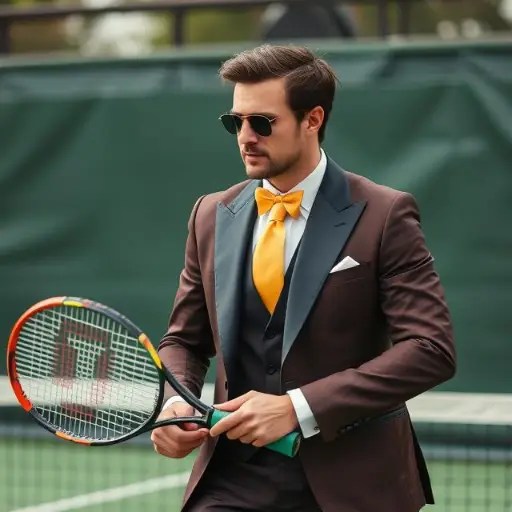
From Denim to Runways: How Tennis Stars Redefined Style on and Off the Court
Men’s tennis has undergone a remarkable transformation over the decades, evolving from a sport defined by sporty aesthetics to a high-fashion phenomenon. From the rebellious style of Andre Agassi in the late 1980s to the refined elegance of Roger Federer in the 2000s, the sport has seen a dynamic shift in how players present themselves both on and off the court. Agassi, known for his denim shorts, “hot lava” Nike sneakers, and bold hair, inadvertently set the stage for a new era of tennis fashion, though he never intended to be a trendsetter. “That wasn’t my intention,” Agassi says, reflecting on his impact on tennis style. “I guess in hindsight, if you’re bringing back a lot of the retro shoes and stuff, maybe it was iconic on some level, retrospectively.”
Federer, on the other hand, brought a more subdued and classic approach to tennis fashion, which has influenced the broader culture of the sport. His involvement in the Laver Cup, an ATP-sponsored event, has further integrated high fashion into the world of tennis. The event, which features players in matching suits and tuxedos, has become a platform for athletes to showcase their personal style. Carlos Alcaraz, the world number one, has embraced this trend, starring in Louis Vuitton campaigns and sporting the brand at the Laver Cup. “The fashion side is really interesting and a beautiful world,” Alcaraz says, highlighting the importance of adding a fashion element to tennis culture.
As the sport continues to evolve, players like Taylor Fritz and Jannik Sinner have also found their place in the high-fashion world. Fritz, now a Boss-sponsored player, has walked the Milan Fashion Week runway, while Sinner collaborates with Gucci. These collaborations reflect a growing trend where tennis players are not only athletes but also style icons. “It is exciting for us athletes to have a chance to express ourselves off the court,” says Alex de Minaur, emphasizing the importance of personal expression beyond the sport.
The Laver Cup, with its blend of competition and fashion, has become a testament to how tennis can serve as a platform for showcasing style. As players continue to explore their fashion identities, the sport remains a dynamic and ever-evolving space where fashion and athleticism intersect. The event also highlights the increasing influence of fashion houses in the world of sports, with brands like Boss, Louis Vuitton, and Gucci investing heavily in partnerships with top athletes.
Moreover, the rise of social media has amplified the visibility of these fashion choices, allowing fans to follow their favorite players not just for their athletic achievements but also for their personal style. As players like Alcaraz continue to push the boundaries of fashion in tennis, the sport is not only redefining itself but also setting new trends that influence the broader fashion industry.
The legacy of tennis fashion can be traced back to the early days of the sport in England, where players wore tailored suits and white flannels, creating an image of sophistication and elegance. This tradition has been carried forward by modern players who now embrace both classic and contemporary styles. For instance, Stan Smith, a former tennis legend, has been seen wearing his iconic white Adidas sneakers at the Laver Cup, bridging the gap between past and present.
Roger Federer, often credited as the pioneer of high-fashion in tennis, has not only influenced his peers but also inspired a new generation of players to explore their fashion identities. “I hope the players enjoy getting dressed up and they like having good pictures taken of themselves as well, especially in a group environment,” Federer says, emphasizing the importance of creating memorable moments beyond the court.
The integration of fashion into tennis has also led to the creation of unique events and campaigns that celebrate both the sport and style. The Laver Cup, for instance, has become a cultural event that brings together players, fans, and fashion enthusiasts. It showcases not only the athletic prowess of the players but also their ability to command the spotlight in formal attire.
As the sport continues to evolve, the relationship between tennis and fashion is likely to grow stronger, with more players embracing their roles as style icons. This trend not only enhances the visibility of the sport but also reinforces the idea that tennis is more than just a game—it’s a platform for self-expression, creativity, and cultural influence.




 The Tower Post