
US-driven AI demand sparks a flurry of European divestments—here are the companies riding the wave, and what it means for power, pricing and policy.
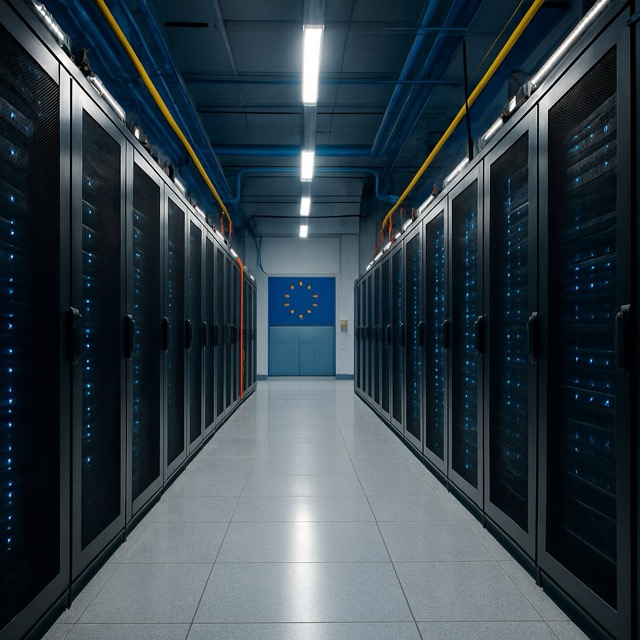
LONDON/PARIS/FRANKFURT – In the space of a few weeks, European private capital owners have launched roughly €17 billion worth of data center sales, a rapid-fire sequence of processes aimed at cashing in on the US-driven artificial intelligence boom. The logic is simple: hyperscalers and AI model operators are hoovering up capacity, valuations are strong, and sellers want to recycle capital into new builds and power procurement. The result is one of Europe’s busiest seasons for digital infrastructure dealmaking on record.
The marquee processes read like a who’s-who of European digital infrastructure. EQT has kicked off a sale of Nordic fiber-and-data-center platform GlobalConnect that could fetch around €8bn. Partners Group is exploring options for atNorth, its high-performance computing and colocation operator in Iceland and the Nordics, with sources pointing to a valuation of about €4bn. Oaktree Capital Management is marketing a significant stake in Pure DC, in a transaction tipped to value the business as high as €5bn, while DWS weighs a sale of Dutch and German operator NorthC for roughly €2bn. In France, Orange has examined selling minority stakes in portions of its estate. Together, the deal flow points to a decisive shift: private owners are monetizing mature assets to fund the next, much more power-hungry wave of AI.
“There are lots of stranded, inefficient dollars in the data centre market,” as one global investor recently put it—summarizing the new orthodoxy that capital must be redeployed toward the densest, most power-secure campuses. With AI training clusters demanding megawatt blocks at speed, Europe’s winners are those who can secure land, grid connections and cooling at scale.
The US is the proximate catalyst. North American model makers and cloud giants are dictating technical specs—for liquid cooling, fiber routes and dedicated power—and pushing long-term take‑or‑pay structures that make cashflows look more ‘utility‑like’ than ever. That profile, in turn, is attracting massive infra and private credit pools willing to finance big capex programs in exchange for contracted returns.
Still, the boom collides with Europe’s two binding constraints: power and permitting. Grid interconnections in Dublin, Frankfurt, Amsterdam and parts of London are scarce; municipal resistance is rising; and decarbonization rules are tightening. To keep pace with US demand, sellers-turned-builders increasingly bundle data centers with power: on‑site gas peakers with carbon capture pilots, corporate PPAs tied to offshore wind, and, in several markets, behind‑the‑meter battery systems to shave peaks and offer grid services.
Below, we map the European companies surfing the AI wave—operators, builders and suppliers benefiting as capacity shifts toward high-density, AI-ready campuses.
• GlobalConnect (Nordics/Germany): A backbone of 244,000km of fiber and a growing estate of regional data centers. Its sale process tests whether buyers will pay a premium for integrated fiber‑plus‑DC footprints that can guarantee latency and route diversity for AI workloads.
• atNorth (Iceland/Sweden/Finland): Hot‑ and liquid‑cooling‑ready sites, proximate to abundant renewables and cool ambient temperatures. The company’s pitch: lower power prices, lower PUEs and large tracts of developable land for multi‑GW campuses.
• Pure DC (UK/Europe): Developer focused on hyperscale, with utility‑style, long‑dated offtakes. The sale would crystallize the value of its land bank, interconnect queue positions and relationships with US hyperscalers.
• NorthC (Netherlands/Germany/Switzerland): Edge and regional colocation with sustainability features, including heat‑re‑use pilots and local energy integration—attractive for enterprise AI inference close to users.
• Orange (France): Select asset stake sales under consideration underscore a broader telco trend: partnering with infrastructure capital for capex‑heavy upgrades while keeping strategic control of customer relationships.
• Equinix and Digital Realty (pan‑EU): While US‑listed, both are expanding aggressively in Europe via JVs, hyperscale build‑to‑suit, and campus densification. Their interconnection fabrics remain critical for AI data pipelines between training clusters and enterprise inference nodes.
• OVHcloud (France): The European cloud champion is leaning into GPU‑as‑a‑service and sovereign AI offerings, building out higher‑density racks and liquid‑cooling support while marketing data residency and cost advantages.
• EdgeConneX (pan‑EU, EQT‑backed): Known for its build‑to‑suit model at the edge and now increasingly for large‑scale campuses, the company is tapping the debt markets against long‑term customer commitments.
• Global Switch, Vantage DC Europe, NTT GDC and Telehouse (pan‑EU): All are racing to secure power and land for multi‑phase expansions, often using JV capital and structured power deals to accelerate timelines.
• Utilities and power partners (EWE, Statkraft, RWE, Energia and others): As data centres morph into power‑plus‑compute hubs, utilities with renewables pipelines and flexible generation are becoming kingmakers—and targets for private capital investment.
Pricing is evolving just as quickly. AI‑grade footprints require higher‑density power per rack (and often liquid cooling), driving all‑in build costs higher but also supporting escalation mechanisms indexed to power and materials. Across the market, buyers are underwriting returns on the basis of contracted capacity reservations, multi‑year expansion options, and the ability to bolt on adjacent land as grids unlock.
Debt markets, meanwhile, are back in force. Investment‑grade‑like structures secured by long‑term leases are drawing private credit funds keen to finance capex for AI blocks. Several operators are also exploring asset‑backed securitisations of cashflows tied to specific campuses, a structure familiar from fibre that is now migrating to data centres.
For sellers, timing matters. With benchmark rates stabilising and equity markets rewarding visible AI exposure, 2025 offers a sweet spot: bidders have line‑of‑sight on GPU deliveries and power additions through 2027, but competition for sites and substations is intensifying. That dynamic is encouraging full exits rather than minority recaps—releasing capital for greenfield projects and power procurement.
Regulation could yet redraw the map. The EU’s Data Centre Energy Efficiency Regulation (under final consultation) and national rules on grid priority and heat re‑use will shape where AI clusters land. Municipal incentives are emerging, too: expedited permits in former industrial zones, tax breaks for heat‑re‑use district networks, and grid‑friendly load‑shifting commitments.
Investors are also reassessing geography. The Nordics remain advantaged on power price and land, while Iberia and Italy are rising thanks to subsea cable landings and solar‑plus‑storage economics. Frankfurt, Amsterdam and Dublin stay capacity‑constrained but strategically essential for interconnect and enterprise proximity. The UK market is split: London’s grid is tight, yet Slough and Didcot corridors are seeing multi‑phase AI campuses with dedicated power arrangements.
Risks abound. Power scarcity can delay projects by years; supply chains for liquid cooling, transformers and high‑capacity switchgear are still stretched; and local opposition remains real. Valuations priced off AI optimism could look full if training demand moderates or if sovereigns intervene to ration scarce grid capacity.
Even so, the strategic direction is clear. Private capital is pivoting from owning yesterday’s facilities to building tomorrow’s: denser, cooler, greener and closer to abundant power. The current wave of disposals is less an exit from digital infrastructure than a reshuffle—one that frees balance sheets for the mega‑campuses and power deals that the AI era demands.
What to watch next: (1) closing valuations on GlobalConnect, atNorth and Pure DC versus early price talk; (2) the spread between Nordic and core‑EU power‑inclusive pricing for AI training blocks; (3) the speed at which utilities and operators stitch together ‘power‑and‑compute’ JVs; and (4) regulatory outcomes on heat re‑use and grid priority that could tilt the map for years to come.




 The Tower Post