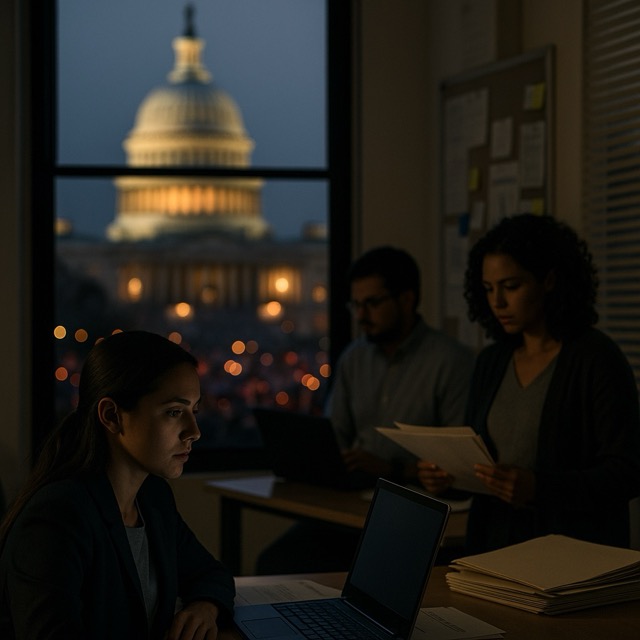
Nonprofits funded by the Open Society Foundations brace for investigations, funding pressure, and harassment as Washington rhetoric escalates
NEW YORK – In boardrooms and back offices of small nonprofits across the United States, leaders say they are rewriting risk plans, encrypting staff lists, and scrubbing website language that could make them targets. The catalyst is not a court ruling or a new law, but a drumbeat of threats from President Donald Trump aimed squarely at George Soros and the Open Society Foundations (OSF), the $25 billion philanthropic network that funds thousands of civil society groups.
Trump has vowed public investigations into Soros and suggested a sweeping crackdown on tax‑exempt organizations he labels as promoting “left‑wing extremism.” While the legal contours remain murky and contested, the rhetoric alone has had a measurable effect: grant recipients and peer organizations describe a pervasive, ambient anxiety — and, increasingly, operational changes designed to reduce their visibility.
“There’s enormous fear,” said the director of a midsize immigrant‑rights nonprofit in the Southwest, who requested anonymity to discuss internal deliberations. Her group receives a mix of foundation grants, including from OSF. “We’ve paused two public campaigns and moved staff trainings off campus after threats spiked.”
OSF leaders insist they will not be cowed. In an interview aired last week, foundation officials said they are “not afraid” and prepared to defend their grantees in court if necessary. But they also acknowledge that smaller organizations — particularly those outside major metros — are vulnerable to both bureaucratic pressure and harassment from extremist networks.
The chill is arriving on several fronts at once. Nonprofit executives describe new caution from institutional partners; universities have quietly delayed or downsized joint projects; and some city agencies have grown reluctant to co‑host events that might draw protests. A handful of groups say private donors asked to remain anonymous after receiving email blasts naming Soros as a supposed financier of “domestic terrorism.”
Policy risk is also driving tactical shifts. Several organizations say they are documenting every public‑facing training and updating insurance policies to include crisis communications and digital security support. At least three OSF‑supported groups contacted for this story said they have created rapid‑response legal budgets and are rehearsing how to respond to subpoenas or surprise audits, should they come.
The heightened scrutiny reprises familiar patterns from abroad. Rights advocates note that civil society in Hungary, where Prime Minister Viktor Orbán led a years‑long campaign against foreign‑funded NGOs, saw a similar deterrent effect: even before legal penalties materialized, organizations lost partners, diverted scarce resources to compliance, and watched staff burn out.
In the United States, constitutional protections and the independence of the courts limit what a White House can do unilaterally. Yet experts warn that aggressive oversight, politicized investigations, and tax‑status challenges — even if ultimately unsuccessful — can drain money and time from groups that deliver frontline services.
Large philanthropies may weather the storm. OSF, one of the world’s biggest private funders of human rights, public health, and democratic participation, has said it will stand by grantees and has resources for litigation and security. But smaller nonprofits — domestic‑violence shelters, bail funds, civic engagement hubs — operate on thin margins. For them, a frozen grant cycle or the loss of a municipal partner can mean fewer clients served.
On social media and at rallies, Trump has revived familiar themes, conflating philanthropic support for protest movements with criminality and casting Soros as a singular foe — language that watchdogs say echoes years of antisemitic conspiracy theories. Civil liberties groups have condemned the threats as an abuse of power and warned of a broader assault on the nonprofit sector’s independence.
Inside organizations, the response is pragmatic. One voting‑rights coalition in the Midwest said it has rewritten its volunteer intake scripts to avoid casual political language and moved certain trainings to invite‑only Zoom rooms. An LGBTQ+ youth group in the South has shifted to smaller, decentralized gatherings after receiving doxxing threats. A public‑health nonprofit working with asylum‑seekers said it now coordinates with local law enforcement before vaccination drives, a step it never considered necessary before.
Security experts say the operational playbook looks increasingly like that of newsrooms and election offices in recent years: monitor threats, lock down staff data, and train workers on de‑escalation. “You can’t control the politics, but you can harden your people,” said a consultant who advises several OSF‑funded groups. “The goal is to keep serving communities without giving oxygen to provocations.”
The financial calculus is changing too. Some foundations are accelerating grants or converting restricted money into flexible support so grantees can hire counsel or upgrade cybersecurity. Others are quietly collaborating on mutual‑aid funds that can step in if government partners withdraw. Several donors said they remain committed but may reduce public visibility — a trade‑off that preserves program work while limiting the chance of becoming a target.
Whether the chill endures will depend in part on how rhetoric translates into policy. Any attempt to revoke tax exemptions en masse would face legal challenge and likely years of litigation. But the near‑term effect — the one felt in triage meetings and Slack channels — is already here. As one nonprofit leader put it: “We can fight in court tomorrow. What we’re fighting today is the clock, the inbox, and the cost of staying safe.”
For many groups, the mission has not changed, only the conditions. They continue to register voters, assist migrants, support survivors, and defend free expression. What’s new is the bandwidth they must allocate to the politics swirling around their funders. In that sense, the chill radiating from Washington is less a freeze than a constant draft — a steady, draining wind that makes every step of civil society’s work a little heavier.



 The Tower Post