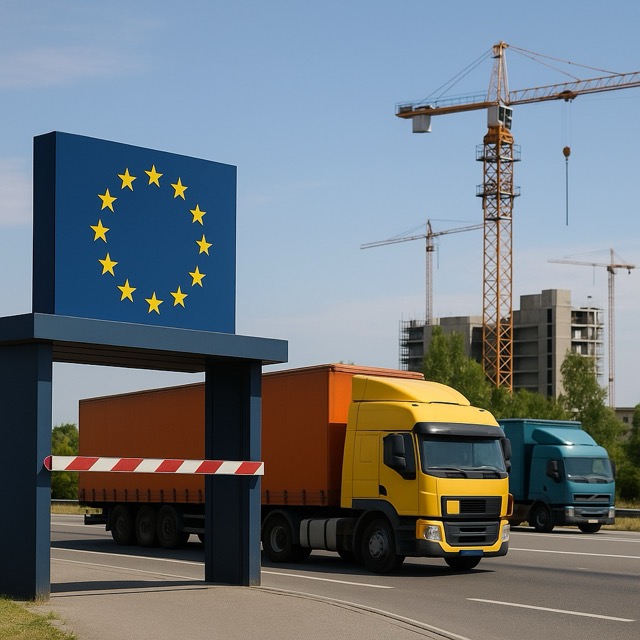
Spanish economy minister Carlos Cuerpo sets out a near-term agenda to unlock growth across borders—without waiting for grand treaties.
Brussels/Madrid — Europe’s single market has never been a finished product. It is a living promise. Three decades after its formal launch, cross‑border trade in goods is fluid, but the arteries that should carry services, capital and data still clog too easily. European companies complain of a thousand small frictions—duplicated reporting, non‑harmonised standards, slow permits, and blurry rules for digital operations. Yet the policy debate often gravitates to grand bargains that take years. The EU can do more, now, with instruments it already has. Spanish economy minister Carlos Cuerpo argues that ‘taking down practical barriers in months, not years, is the fastest competitiveness boost Europe can deliver.’
The backdrop is urgent. The Enrico Letta review of the single market urged leaders to make integration ‘much more than a market,’ while Mario Draghi’s competitiveness report called for a step‑change in investment and scale. But even before big‑ticket decisions on new EU financing or treaty change, national ministries, regulators and the Commission can tighten the bolts of the market we already share. What follows is a near‑term, actionable list—drawn from interviews with EU officials, industry bodies and national capitals—of steps that could be executed within the current mandate and legal base.
1) Enforce what exists—especially in services. The Services Directive and professional qualifications rules were designed to allow engineers, nurses, architects and electricians to work across borders with clarity. In practice, sector‑specific carve‑outs and gold‑plating at national level keep mobility costly. A joint Commission–member state ‘enforcement sprint’—with quarterly scorecards, public peer pressure and rapid infringement decisions—could clear the backlog. Publishing comparable metrics (processing times, rejection rates, fees) would create a race to the top. Spain, Portugal and the Nordics have offered to pilot a common dashboard; others should join.
2) Make instant payments the default for business‑to‑business transactions. With the EU’s instant payments regulation in force, banks and payment service providers can clear euro transfers in seconds. Governments and major utilities should switch their accounts payable to instant by default, with a 30‑day target for all cross‑border B2B invoices. Late payments are a competitiveness tax on SMEs; instant rails plus strict enforcement of the Late Payments framework would lift working capital across the Union.
3) One VAT ID, one portal. The One‑Stop Shop (OSS) simplified VAT for e‑commerce, but too many SMEs still juggle multiple registrations for mixed activities. A ‘Single EU VAT Account’—administratively stitched together from existing OSS/IOSS systems—would let a firm file once, settle net liabilities centrally, and see real‑time obligations for all 27 member states. No new treaty is needed; it is a question of IT plumbing and political will.
4) A Green Permitting Fast Track that actually moves. A common template for solar, wind, grid and storage permits exists on paper. Implementation is patchy. Create cross‑border ‘Red Tape Response Teams’—mixed squads of national and EU experts who embed in over‑stretched regional offices for 90‑day sprints. Tie cohesion funds and the Recovery and Resilience Facility to measurable throughput: permits issued, median time to decision, and digital‑by‑default filings. Publish the league table; let investors and citizens see where projects advance—and where they stall.
5) Mutual recognition by default for low‑risk products. Where EU‑level standards are equivalent, companies should not have to re‑test the same product when crossing a border. Set up a negative list of genuinely high‑risk categories that still need national checks, and presume mutual recognition for the rest. When national authorities block a product, they should have to explain within 15 days on a public portal and face expedited Commission review.
6) Rail freight and cross‑border passenger fixes. Completing technical interoperability is slow, but operational changes can deliver now: coordinated timetabling at borders, shared digital capacity booking, and a cap on ‘last‑minute path’ fees that penalise cross‑border trains. A mandate for infrastructure managers to publish weekly slot availability at border nodes would help logistics planners and reduce empty runs.
7) A single EU login for companies. With eIDAS 2.0 and the European Digital Identity wallet, firms should be able to ‘log in once’ to any public service—permits, customs, public procurement—across the Union. The quick win is federation: mutually recognise national enterprise identities and enable cross‑login via a common gateway. Set a 2026 deadline for all high‑impact services to accept EU wallets, with conformance tested by the Commission’s interoperability hub.
8) Faster standard‑setting for strategic tech. The EU leads in writing rules; it must match that with faster standards. For heat pumps, batteries, smart grids and industrial data, commit to 12‑month cycles for priority standards and allow ‘provisional conformity’ where proposals have cleared 80% consensus. This gives firms a target to design against without waiting years for formal stamps.
9) Public procurement that scales European. Fragmented tendering still locks out cross‑border bids. A ‘European Lots’ label on tenders above a threshold would guarantee common technical specs, English documentation alongside national languages, and digital submission via the EU’s procurement gateway. Member states could receive a bonus in EU co‑financing when they use European Lots and award to consortia spanning at least three countries.
10) A capital‑markets quick bundle. The grand vision of a full Capital Markets Union is complex, but three items are ready: a common EU prospectus micro‑regime for sub‑€50 million listings; passporting for angel and venture funds up to a clear size; and harmonised withholding‑tax relief at source for cross‑border investors via a single digital form. These steps would loosen Europe’s scale‑up bottleneck without reopening fiscal treaties.
11) Data‑sharing that works for industry. Build sectoral data spaces where companies can exchange operational data with legal certainty—starting with mobility, energy and manufacturing. Templates for contracts and liability are available; the gap is uptake. The Commission should assign ‘industrial data sherpas’—roving teams that help clusters onboard, auditing interoperability and security once, not 27 times.
12) Remove the ‘paper by default’ reflex. Public authorities that still require physical stamps, in‑person appointments or paper originals are single‑market blockers. Make digital the legal default, with strictly limited exemptions. Where trust services exist, require their use. If a citizen can open a bank account remotely, a firm should be able to register a branch or certify a document the same way.
The politics may be harder than the plumbing. Member states often defend local gatekeepers—professional chambers, sub‑national authorities, legacy monopolies. But the cost of fragmentation is compounding. Europe’s firms scale slower; its innovations reach customers later; its projects take longer to finance. The choice is not between deregulation and protections. It is between smart, simple rules that travel across borders and a thicket that only incumbents can navigate.
Cuerpo’s case is pragmatic rather than utopian. ‘We can argue for new instruments—and we should,’ he tells business audiences, ‘but nothing stops us from enforcing today’s rules, building common portals and removing duplicated checks.’ In his view, the most important ingredient is accountability. Quarterly dashboards, visible to citizens and companies, would show progress on permits issued, invoices paid on time, and cross‑border uptake of digital services. Peer pressure, he says, is a powerful legislator.
The opportunity is also political. Delivering practical single‑market gains in 2025 and 2026 would demonstrate to voters that the EU’s promise is tangible: fewer forms, faster payments, a train that actually connects regions, a startup that can sell across Europe on day one. It would strengthen the case for larger, longer‑term moves—common funding for strategic projects, deeper capital markets, and more integrated energy and defence procurement.
None of this requires reinventing institutions. It requires coordination, transparency and a bias for execution. Set targets, publish scoreboards, reward leaders and help laggards catch up. Europe has the talent and technology to grow; what it needs, urgently, is to take down the barriers hiding in plain sight.
As ministers gather in Brussels this autumn, the litmus test will be simple: in twelve months, will a nurse, an SME exporter, a rail operator and a clean‑tech developer feel the difference? If the answer is yes, the EU will have demonstrated that consolidation is not a slogan but a deliverable. If not, the single market risks becoming a museum piece—admired, photographed, and slowly bypassed by the world outside.



 The Tower Post