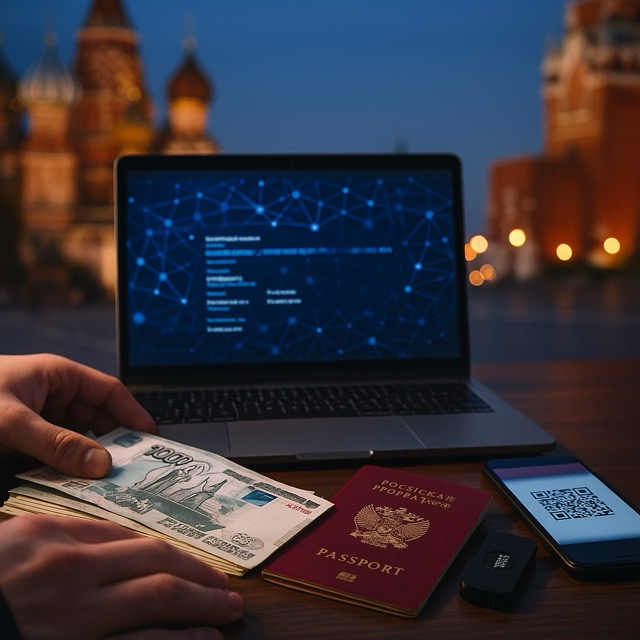
A Financial Times investigation and blockchain data show a ruble-pegged token deleted, re‑minted, and rerouted to keep Russian cross‑border payments flowing despite U.S. and U.K. blacklists.
When U.S. and U.K. authorities blacklisted a cluster of companies linked to A7A5—the ruble‑pegged stablecoin touted in Moscow as an alternative cross‑border rail—the punitive move looked decisive. Within days, however, the operation’s administrators pulled off a maneuver that underscores both the promise and the peril of crypto’s programmable money: they destroyed most of the existing tokens and re‑issued fresh ones to new wallets, then resumed business almost as usual.
An analysis of on‑chain flows and exchange activity indicates that at least $6 billion moved through A7A5 after key entities were sanctioned in mid‑August, according to reporting that surfaced on Monday. Investigators say more than 80% of the token’s supply was rapidly ‘burned’—a function sometimes marketed as a compliance tool—before being re‑minted into addresses that lacked direct ties to the blacklisted infrastructure. The effect was to sever a clear provenance trail while preserving the network’s liquidity and its links to overseas counterparties.
The tactic laid bare the uneasy intersection of sanction regimes built for bank‑centric finance and the decentralized architectures powering digital assets. Token contracts can embed administrative levers such as blacklist lists, pause switches, or burn‑and‑reissue functions. In the A7A5 case, those very controls—designed in some token projects to help freeze tainted funds—appear to have been inverted to sidestep enforcement.
A7A5 sits at the core of A7, a Russia‑aligned settlement network born of wartime necessity. With large swaths of the banking system gated from Western pipes, Russian companies have increasingly stitched together alternative routes for cross‑border trade. A7A5, issued from Kyrgyzstan and marketed as fully backed by ruble deposits, plugs into that parallel plumbing. It operates primarily on high‑throughput blockchains and is tightly integrated with a set of exchanges and OTC brokers who keep the token convertible into hard currency or local tender in Asia, Africa, and Latin America.
Western officials argue the architecture is less a neutral innovation than a state‑aligned workaround. The token’s parent companies include sanctioned interests, among them Promsvyazbank (PSB), a Russian state lender that services the defense sector, and entities tied to Moldovan oligarch Ilan Șor. In August, Washington and London rolled out coordinated measures aimed at the token’s issuers and their facilitators, citing the network’s role in enabling sanction evasion and financing trade outside the formal banking system.
The backlash was not merely legal. In early October, the Kyrgyz issuer appeared as a sponsor at Token2049, one of Asia’s marquee crypto conferences, prompting a flurry of questions to organizers and a swift scrubbing of promotional materials referencing A7A5 and its executives. The episode highlighted a regulatory patchwork: while the token and its affiliates draw sanctions in the U.S. and U.K., they can still market and build partnerships in jurisdictions where enforcement actions have not been mirrored.
On‑chain telemetry paints a picture of stubborn momentum. Transfers have clustered during Moscow business hours, and liquidity has deepened on regional platforms—some newly launched or rebranded after sanctions snared earlier venues. Compliance experts describe a ‘hydra effect’: designate one head and two more appear, often with fresh corporate registrations and token contract iterations designed to dilute the link to blacklisted predecessors.
Technically, the alleged evasion hinged on three moves. First, administrators invoked contract functions to burn large swaths of the outstanding supply—eliminating tokens traceable to sanctioned wallets. Second, they re‑issued equivalent amounts to addresses with no obvious association to the targeted entities. Third, they guided users toward exchanges and OTC desks outside Western enforcement reach, leveraging over‑the‑counter netting and off‑chain settlement to keep fiat on‑ and off‑ramps open. For users, the experience was largely uninterrupted: invoices in rubles, payouts in dollars or local currency, with A7A5 as the bridging asset.
Regulators have seen versions of this play before. Centralized stablecoins like USDC and USDT can freeze specific addresses; privacy‑enhanced tokens and mixers can obscure flows. But stablecoins with built‑in administrative powers present a different challenge: the same levers that allow issuers to quarantine illicit coins can be used to perform a controlled molt—shedding tainted skins and emerging as a freshly minted supply whose ancestry is harder to contest in a court or compliance desk.
Industry lawyers caution that such maneuvers do not make the underlying activity lawful. U.S. sanctions apply to persons under U.S. jurisdiction regardless of token tweaks, and secondary sanctions can ensnare non‑U.S. actors who materially support sanctioned parties. Yet the practical edge often lies with speed: if a network can remap its token supply and counterparties faster than authorities can list them, the economic utility persists while the legal drag catches up.
The scale claims are striking. A7 representatives have boasted of processing more than $80 billion in transactions across ten months—figures that cannot be independently verified but which align with the visible growth in on‑chain transfers and exchange volumes. Even conservative measures suggest billions have coursed through the ecosystem since the August designations. That throughput is not merely speculative churn; it reflects trade‑finance style flows— commodity deals, machinery imports, and settlement of invoices where sanctioned banks cannot touch the rails.
For policymakers, the A7A5 saga is an object lesson in the limits of list‑based sanctions in a tokenized world. It suggests enforcement will increasingly hinge on chokepoint diplomacy—pressuring compliant hubs, dollar correspondents, cloud providers, and infrastructure custodians to enforce sanctions at the application and platform layer. It also raises the prospect of new rules that target token contract capabilities themselves, restricting burn‑and‑reissue functions or requiring auditable registries of administrative actions by sanctioned or high‑risk issuers.
In the meantime, the network’s operators are expanding their geographic footprint. Sales teams have fanned out to African capitals with pitches tailored to importers who struggle to access dollars; in parts of Asia, they tout cheaper, faster settlement vis‑à‑vis correspondent banking. The marketing emphasizes legal opinions from local counsel and registration in friendlier jurisdictions—Kyrgyzstan today, perhaps others tomorrow—while downplaying the risk of secondary sanctions for overseas partners.
Market participants are split on the durability of the model. Some argue that once the biggest exchanges and stablecoin issuers balk, liquidity will thin and spreads will widen, pushing users back toward mainstream rails. Others note that as long as commodity flows and state‑backed entities need a payments backdoor, incentives will sustain liquidity—especially if new wrappers, synthetic pairs, and collateralized lending keep the token circulating beyond its core Russian user base.
There are also macro stakes. If ruble‑linked stablecoins continue to scale, they may deepen a multipolar monetary order in which regional tokens intermediate trade outside the dollar. That shift would hardly unseat the greenback, but it could carve sizable niches where settlement, credit, and hedging occur through tokenized rails policed by non‑Western authorities—or by no one at all.
For now, A7A5’s apparent post‑sanctions resilience is forcing a rethink among regulators, compliance teams, and conference organizers who must decide which sponsors to court. The message from the network’s continued operation is blunt: in crypto, design is policy. As long as token governors can erase and reissue at will, sanctions will be a race—between code that routes around blockages and the legal systems trying to keep pace.
Sources: Reporting and public statements by U.S. and U.K. authorities; conference organizers; on‑chain analytics from industry researchers; and contemporaneous coverage by major financial and crypto media outlets.



 The Tower Post