
Airlines, airports and campaigners agree aviation policy needs a shake‑up. They just disagree on how to decarbonise—and whether anyone will pay for it.
Airports, airlines and climate campaigners rarely sing from the same hymn sheet. Yet on one point there is striking consensus in 2025: government policy on aviation needs a shake‑up. The divide is over how, how fast, and who foots the bill.
Across Europe and beyond, ministers are trying to keep air travel affordable and abundant while slashing emissions from a sector that still relies overwhelmingly on fossil jet fuel. Industry leaders insist that innovation will deliver: cleaner fuels, better aerodynamics and smarter operations. Climate groups argue that innovation is necessary but not sufficient on the timelines set by science. They want demand to fall where rail is a workable substitute and for public money to be channelled into energy and rail infrastructure rather than more runway capacity. Passengers, for their part, are returning to the skies in record numbers after the pandemic, confirming that consumer behaviour has not shifted as much as policymakers once hoped.
The result is a political and practical stalemate. Everyone says they want cleaner skies, but few support the trade‑offs needed to get there.
Mandates without molecules
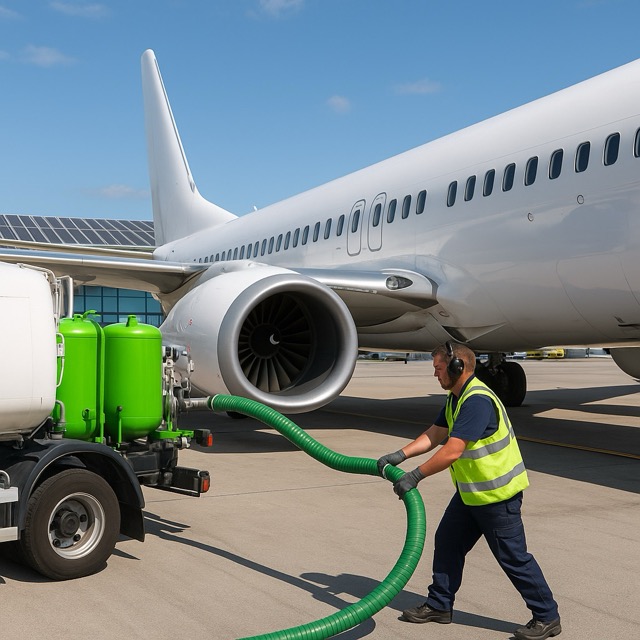
The centrepiece of most government roadmaps is sustainable aviation fuel. SAF is a family of drop‑in fuels made from waste oils and residues, municipal solid waste, biomass and, increasingly, synthetic routes that combine green hydrogen with captured carbon to produce e‑kerosene. The European Union’s ReFuelEU Aviation regulation obliges all flights departing EU airports to use a small but rising share of SAF—starting at two percent in 2025 and increasing through the 2030s toward a seventy percent share by 2050. A separate sub‑mandate is designed to bring synthetic e‑fuels into the mix in the next decade so the sector is not locked into a single pathway. The United Kingdom has set a similar opening target of two percent in 2025 and legislated a glide path to ten percent in 2030 and twenty‑two percent in 2040, with a power‑to‑liquid obligation beginning later this decade.
On paper, these mandates create the certainty investors crave. In practice, they run into an unforgiving arithmetic. Before COVID‑19, commercial aviation burned roughly three hundred million tonnes of jet fuel a year. Demand is rebounding strongly. Yet global SAF output in 2023 amounted to a fraction of one percent of aviation’s needs, and although production is growing, it is not on course to match policy timelines without a step‑change in investment. In the UK’s inaugural mandate year, mid‑2025 blending levels were still tracking below the two percent requirement, despite airport incentives designed to nudge uptake.
Waste‑based fuels are constrained by limited feedstocks that are also claimed by road transport and shipping. Synthetic e‑fuels avoid that scarcity but demand vast amounts of clean electricity, abundant green hydrogen and large‑scale sources of CO₂. They also require electrolyzers, direct‑air capture units and new refineries at industrial‑scale that will take years to finance and build. Airports want governments to de‑risk these projects with contracts‑for‑difference and long‑term price guarantees. Airlines want durable tax credits and relief from overlapping carbon costs while supply ramps up. Campaigners reply that the very scarcity and price of SAF is the climate signal that policy should heed by reducing unnecessary flying and shifting short‑haul trips to rail.
Tax, trade‑offs and the politics of pain
If SAF is the industry’s preferred path, taxation is the political third rail. Kerosene remains undertaxed or tax‑exempt in many jurisdictions because of historic treaties and worries about competitiveness. Frequent‑flyer levies, ticket duties and kerosene taxes are floated regularly and then dialled back under pressure from voters and business groups. Nowhere shows the tension more clearly than the Netherlands. Plans to reduce the number of flights at Amsterdam Schiphol to cut noise and address environmental concerns triggered years of litigation and a requirement to follow European “balanced approach” procedures. The government subsequently revised the scale and timing of the reduction while the airport advanced major investment plans to improve the passenger experience and encourage cleaner fleets. To opponents, that looked like retreat. To officials, it was proof that blunt caps are legally and politically fraught.
France has used a different lever. Since 2023, domestic flights are restricted on routes where a rail journey of two and a half hours or less exists. The measure is narrower than headlines suggest because network design and exemptions limit the city pairs it touches, but it sent a signal that trains should replace planes where rail is truly competitive. Austria drew a similar line by tying pandemic bailout money for its flag carrier to shifting short domestic hops to rail when the journey takes under three hours. These measures are modest in climate terms yet revealing in political terms: voters and regions accept change when the alternative is convenient, reliable and priced fairly.
The international patchwork—and a credibility gap
Beyond national mandates, governments rely on the UN‑brokered CORSIA scheme, which requires airlines to address the growth of international aviation emissions above an agreed baseline. After a voluntary pilot, CORSIA entered its first phase in 2024 and becomes mandatory from 2027, with more than a hundred states participating. Supporters view it as a bridge until cleaner fuels scale. Critics worry that some offsets lack environmental integrity and that the scheme’s ambition is mismatched to the sector’s growth. Airlines cannot plan multibillion‑euro fleet decisions on the strength of rules that may be tightened or weakened every few years.
Policy uncertainty now crosses the Atlantic. The United States jump‑started SAF projects with generous tax credits that improved project economics. Subsequent political shifts have cast doubt on how long that support will last. If US demand weakens, European carriers fear that global projects will be delayed or repriced just as EU and UK mandates tighten. Investors want bankable offtake contracts and a stable policy horizon, not a patchwork of airport‑level discounts and annual grant rounds.
Hydrogen dreams, contrail fixes, and the limits of efficiency
Could technology leapfrog the SAF bottleneck? Manufacturers are exploring hydrogen combustion and fuel‑cell propulsion for the 2030s, while start‑ups have flown small retrofits and engine makers have logged meaningful electric and hybrid test hours. These are genuine advances. They will not, however, decarbonise the workhorse single‑aisle fleets that carry most passengers this side of 2040. Fleet turnover is slow, certification is slower, and airports would need a generational rebuild to store and handle cryogenic fuel. Even optimistic timelines imply a lengthy transition in which today’s kerosene aircraft will still dominate.
Closer to today’s operations, airlines are trialling contrail‑avoidance routing to reduce non‑CO₂ warming from ice‑crystal clouds that trap heat at high altitude. Early studies indicate that carefully chosen altitude or track changes on specific nights can deliver meaningful climate benefit. The trade‑off is extra fuel burn from detours, uncertain meteorology and benefits that vary with weather. Operational measures such as single‑engine taxi, lighter catering trolleys, improved winglets and continuous‑descent approaches are valuable but incremental. No one credible thinks they can compensate for the lack of clean molecules at the scale required.
Airports as policy laboratories
For airports, the decarbonisation jigsaw has three pieces. First, cleaning up their own direct energy use by electrifying airside vehicles, installing large‑scale renewables and replacing gas boilers with heat pumps. Second, enabling cleaner turnarounds by providing fixed electrical ground power at every stand, improving surface‑movement efficiency and making SAF available at scale. Third, managing demand and noise through pricing that rewards quieter, cleaner fleets and, in extremis, capping movements where communities are at risk.
Heathrow’s approach shows both the possibilities and constraints. The hub has extended a SAF incentive that aims to push uptake beyond legal minimums, with targets to exceed national mandates in the second half of the decade. That seeding effect matters for airlines willing to pay a green premium. Yet airports cannot conjure fuel that refineries do not produce, and incentives must be paid for through charges that ultimately flow to passengers. In the Netherlands, the protracted fight over flight numbers at Schiphol has pitted residents seeking relief from noise and night flights against airlines arguing that quieter aircraft and smarter procedures deliver more benefit with less economic damage. The process has become the symbol of a deeper question: should aviation growth be channelled into being cleaner, or should growth itself be limited?
Passengers: the missing lever
For a brief moment during the pandemic, the idea of flying less took hold. Then borders reopened, fares fell and pent‑up demand surged. Industry statistics show 2024 as a record year for global passenger traffic, with load factors at all‑time highs and international travel especially strong. In plain terms, planes are full again. Green add‑on fees, voluntary offsets and soft nudges have not bent the curve. Business travel, once forecast to shrink permanently, has proved stickier than expected in many markets.
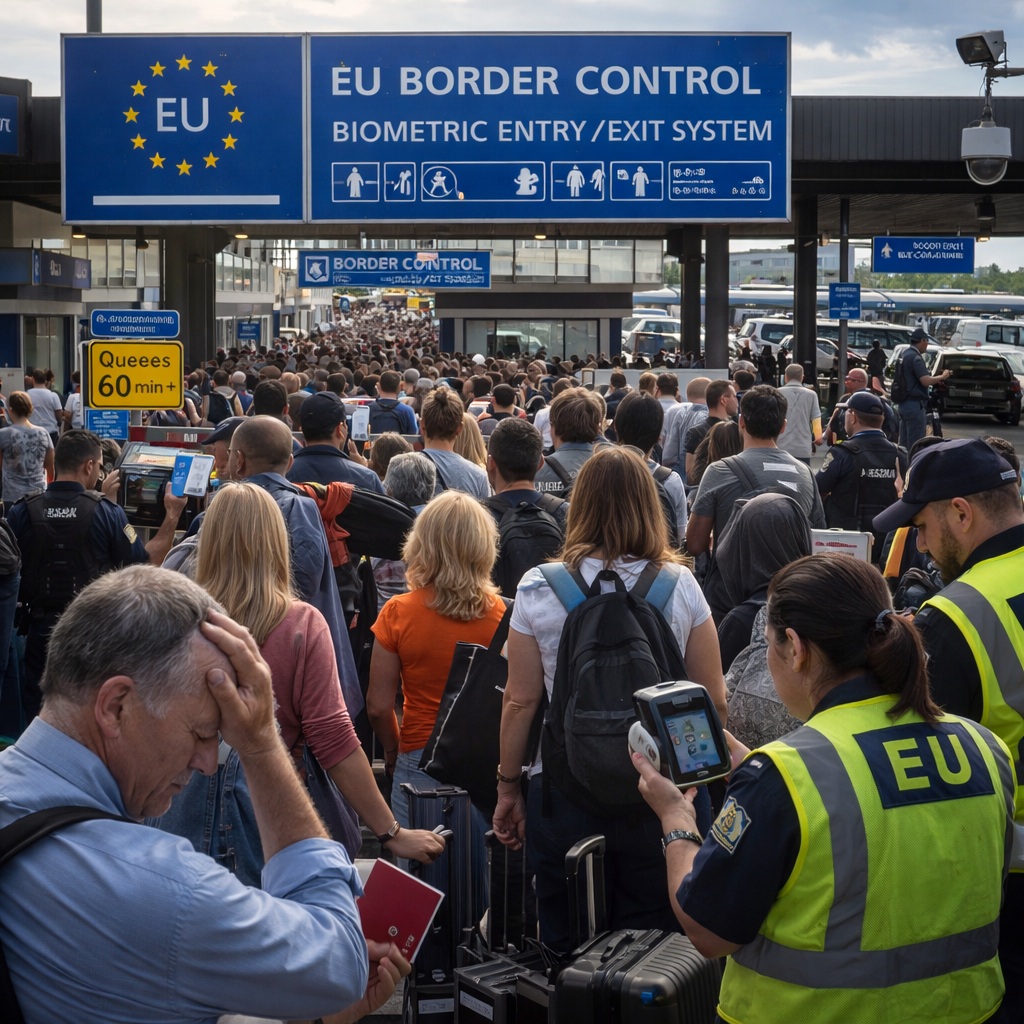
If politics abhors pain, passengers abhor hassle. People care about climate, but convenience and cost still dominate purchase decisions. A minister who presides over summer queues and baggage meltdowns loses votes; a minister who quietly postpones a fuel‑tax decision rarely does. That asymmetry explains much of today’s stalemate.
Where agreement exists—and where it doesn’t
Ask industry, airports and activists what they agree on and the list is not empty. All sides want clearer, longer‑lived policy signals; faster permitting for SAF plants and renewable‑energy projects; common standards for book‑and‑claim certificates so corporate buyers can support cleaner fuel even when it is not physically available; and more public finance to de‑risk first‑of‑a‑kind projects. Most accept that rail should substitute for short‑haul where it is genuinely time‑competitive and convenient. And there is broad support for electrifying airport operations and squeezing every last efficiency from existing fleets.
Disagreement starts with who pays. Airlines warn that aggressive ticket taxes and hard caps will push traffic to hubs with looser rules, harming connectivity without meaningfully shrinking global emissions. Campaigners reply that aviation has long been under‑taxed and subsidised and that flying, unlike steelmaking or cement, is discretionary for many journeys. Airports try to straddle the gap by selling the greenest possible version of growth: cleaner fleets, higher SAF blends and better ground operations as a pathway to expand without breaking climate targets. The three tribes even differ on metrics. Industry talks in carbon intensity per passenger‑kilometre; campaigners point to absolute emissions and non‑CO₂ effects; airports focus on local noise and air quality alongside climate.
A way forward—if politics will wear it
An honest plan uses every lever at once. Governments should lock in rising SAF mandates with robust sustainability criteria and pair them with contracts‑for‑difference so developers can finance plants at scale. Ticket taxes should be transparent and escalate predictably, with rebates for lower‑carbon choices such as rail on eligible routes or flights supplied with verified SAF. Revenues should be recycled into the energy and rail infrastructure that clean fuels will require: new renewable generation, grid reinforcement, hydrogen pipelines and modernised signalling to make rail faster and more reliable.
Regulators can build climate into slot coordination, rewarding quieter and more efficient fleets, and set clear timelines to eliminate routine night operations where communities suffer. Public agencies can establish national SAF certificate registries so corporate travel buyers can support decarbonisation credibly. Development banks and export‑credit agencies can crowd in private capital by taking early project risk. None of this is glamorous, but it is the boring scaffolding that turns ambition into steel and concrete.
Industry has work to do as well. Airlines can publish route‑level fuel‑mix disclosures and offer verifiable SAF certificates to customers and corporate buyers. Airports can tie landing‑charge discounts to proven climate performance on noise, local air quality and verified SAF use, not just to marketing budgets. Manufacturers must keep squeezing airframe and engine efficiency while preparing for hydrogen or other novel propulsion where it makes sense, and for the grid and storage upgrades those options will require at airports.
Finally, passengers must be part of the story. The greener choice should be the default, not a guilt‑laden add‑on. Booking platforms can show rail first for eligible routes and clearly label flights with higher‑SAF supply. Corporates can write lower‑carbon travel into procurement. And everyone should stop pretending that a token offset is climate realism. Real progress will involve real trade‑offs, including paying more for some journeys and taking the train where it works.
Aviation will not decarbonise because one tribe wins the argument. It will decarbonise because policy makes the clean option investable, airports make it operable, airlines make it purchasable and passengers accept that cheap, easy flying cannot stay quite as cheap and easy as it was. That is the shake‑up most people say they want. It is also the one that politics has been reluctant to deliver—so far.
References
• EASA: ReFuelEU Aviation—SAF mandates begin at 2% in 2025 and rise toward 70% by 2050; sub‑mandate for e‑fuels in the 2030s.
• UK Government: SAF mandate starts at 2% in 2025, rising to 10% by 2030 and 22% by 2040; power‑to‑liquid obligation from 2028.
• IATA: 2024 passenger traffic exceeded 2019 with record load factors.
• ICAO/IATA: CORSIA—pilot 2021–23; first phase 2024–26; mandatory from 2027 with broad state participation.
• France: restriction on domestic short‑haul flights where rail < 2.5 hours since 2023; Austria: bailout condition to replace flights with rail where < 3 hours.
• Netherlands: Schiphol flight‑cap process revised following court rulings and EU procedure; updated caps and a major investment plan debated into 2025.
• Heathrow: extended SAF incentive aiming to exceed legal minimums in 2025 and increase toward 2030.



 The Tower Post