
A $6 billion-plus plan signals a strategic Arctic shift as Washington turns to Helsinki’s polar shipbuilding prowess
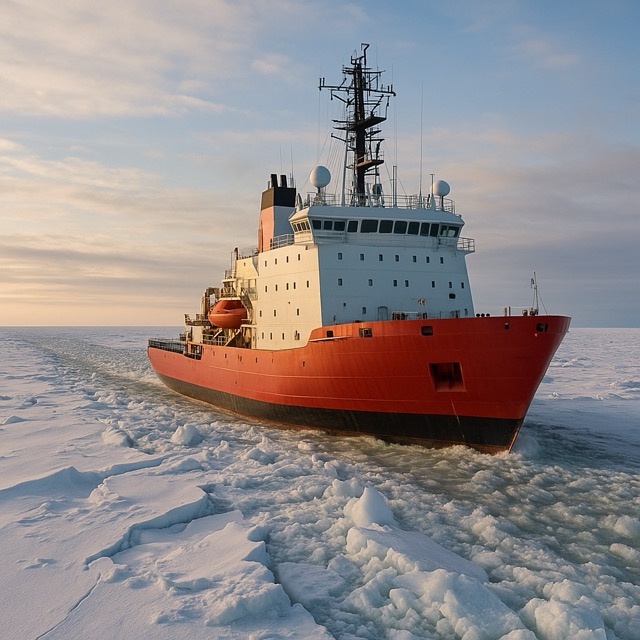
When the United States and Finland signed a memorandum of understanding in Washington this week, the technical language belied a strategic leap: the two countries intend to co-produce a new fleet of up to 11 polar icebreakers—four to be built in Finnish yards first, followed by as many as seven in the United States. The framework, valued at roughly $6–6.1 billion, is designed to accelerate delivery of Arctic Security Cutters (ASCs) while jump‑starting U.S. industrial capacity for polar shipbuilding that has atrophied over decades.
The deal arrives amid a rapid thickening of great‑power competition in the High North. Melting sea ice has shortened seasonal shipping routes across the top of the world and exposed untapped reserves of minerals and hydrocarbons. Russia has expanded military infrastructure along its Arctic coastline and maintains a large icebreaker fleet—including nuclear-powered vessels—while China pushes its so‑called “Polar Silk Road,” participating in research and commercial ventures despite not being an Arctic nation. For Washington and its NATO allies, credible access and presence now hinge on steel in the water.
Under the memorandum, Finland—home to world‑leading polar designers and yards—will construct the first tranche of four ASCs, leveraging proven designs and cold‑weather know‑how. The United States will then apply Finnish expertise to scale production stateside for up to seven additional cutters, according to official statements. U.S. officials characterize the approach as a bridge: foreign build now, domestic build later, with an explicit goal of onshoring the capability once schedules and workforce allow.
The White House also invoked presidential authority to permit foreign construction on national security grounds, an unusual but not unprecedented move intended to avoid years of delay. The Department of Homeland Security, which oversees the U.S. Coast Guard, hailed the agreement as a practical path to closing the country’s long‑acknowledged “icebreaker gap.” Coast Guard leaders have warned for years that the United States operates only a handful of polar‑capable cutters—insufficient for simultaneous missions that range from scientific support and search‑and‑rescue to defense, logistics, and freedom‑of‑navigation operations.
Although the plan’s headline number—11 ships—captures attention, the underlying logic is about tempo and resilience. Building four cutters in Finland at the outset buys near‑term capacity; transferring that knowledge to American yards aims to seed a durable production line for the remainder. Industry notices in recent days suggest a U.S. consortium led by Gulf Coast yards will partner with Finnish designers to localize supply chains, tooling, and ice‑class welding skills. Officials say the arrangement also includes training exchanges for engineers and crews, joint testing regimes, and common spares to simplify sustainment over the fleet’s 30‑plus‑year service life.
For Finland, now a NATO member on the Alliance’s front line with Russia, the partnership is both industrial and strategic. Polar shipbuilding is a crown‑jewel export sector in a country whose yards have delivered ice‑capable cruise ships, research vessels, and heavy icebreakers to customers worldwide. Helsinki’s calculus is that deepening ties with U.S. buyers—and with the Coast Guard in particular—locks in high‑skilled work and embeds Finnish technology in a critical Western security program. It also reinforces NATO interoperability as allied navies and coast guards plan more frequent Arctic patrols and exercises.
The agreement follows a 2024 trilateral “ICE Pact” among the United States, Canada, and Finland to pool expertise and accelerate polar icebreaker design. But this week’s step goes further by sketching out actual hulls, sequencing, and the split of workshare across the Atlantic. People familiar with the discussions say the initial four hulls will be based closely on mature Finnish designs adapted to U.S. mission systems, communications security requirements, and aviation facilities. Later U.S.‑built ships could incorporate incremental upgrades and greater commonality with American supply chains as the domestic learning curve flattens.
Geopolitics looms over every detail. New sea lanes such as the Northern Sea Route along Russia’s coast, and seasonally navigable passages through the Canadian Arctic, are seeing more interest from shippers looking to shave transit time between Asia and Europe. While these routes remain risky, the long‑term trend puts a premium on icebreaking escorts, emergency response, and domain awareness. Russia, which fields dozens of icebreakers including powerful nuclear units like the Arktika‑class, has re‑opened and modernized bases across the region. China, meanwhile, has built its own polar‑capable vessels and has increased research voyages, investments, and diplomatic outreach to Arctic capitals.
Against this backdrop, U.S. policymakers describe the icebreaker program as an artery for presence, not simply a capital‑asset buy. A larger, modern fleet would allow the Coast Guard to provide year‑round access to the Arctic and Antarctic, support the National Science Foundation’s polar missions, and underpin allied operations with communications and logistics. It would also give Washington a stronger hand in shaping emerging rules—on shipping safety, environmental protection, and search‑and‑rescue—at forums where practice on the water often precedes written law.
Still, the plan faces risks familiar to any major shipbuilding effort: cost growth, workforce shortages, and the ever‑present temptation to load hulls with requirements that slow schedules. The bridge‑build approach—start abroad, finish at home—adds complexity in export controls, intellectual property, and quality assurance across two production ecosystems. Congressional oversight committees have signaled support but will scrutinize timelines and industrial benefits flowing to U.S. yards, particularly if domestic builds slip behind schedule or imported components dominate the bill of materials longer than expected.
Supporters counter that the status quo is not an option. With climate change compressing timelines and rivals already operating at scale, the United States needs hulls in the water sooner than a purely domestic ramp‑up would allow. The partnership with Finland, they argue, trades some short‑term political discomfort for strategic effect: faster delivery, allied interoperability, and a path to rebuild a polar shipbuilding base America will need for decades.
For Helsinki and Washington alike, the symbolism is hard to miss. In pairing Finnish Arctic expertise with U.S. resources and demand, the program binds two transatlantic partners to a generational project at the literal edge of allied territory. If it delivers on schedule, the ice will not be the only thing broken: so too will be the inertia that has, for years, limited Western presence in the world’s fastest‑changing frontier.




 The Tower Post