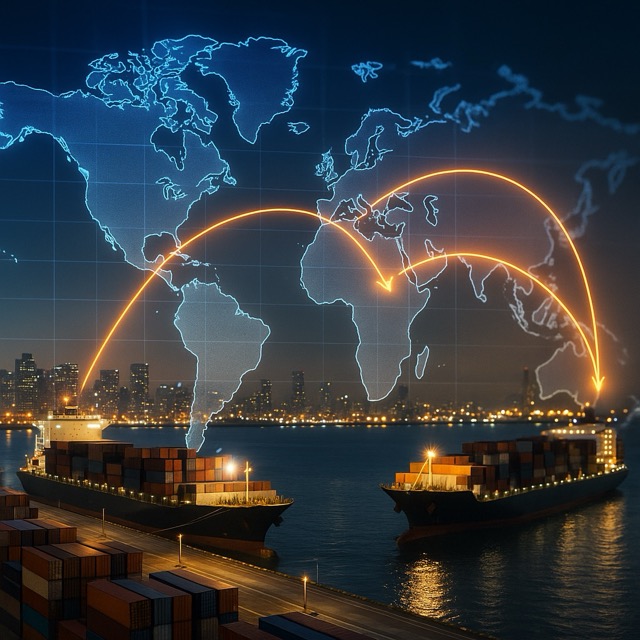
How a new policy mix—turbocharged under Trump—rechanneled capital into the United States and Europe
For decades, foreign direct investment (FDI) flowed along a familiar axis: multinational companies raised capital in advanced economies and deployed it into faster-growing emerging markets, particularly in Asia. That map has flipped. Since 2022, the center of gravity for new factories, data centers and advanced-energy plants has shifted back to the North Atlantic, with the United States and Western Europe capturing an outsized share of greenfield announcements and reinvestment. The drivers are a combustible mix of industrial policy, geopolitics and a once-in-a-generation technology buildout.
The political headline is inescapable: in Washington, President Donald Trump has staked an ambitious claim that his second administration would “bring trillions home.” The White House has touted eye-popping pledges from foreign sovereigns and corporations to fund U.S.-based projects—from AI infrastructure to conventional manufacturing. Even if those headline figures prove inflated, the broader direction of travel is clear. Global capital is crowding into the West’s real-economy assets and away from China and parts of the emerging world. The result is a reallocation of risk, supply chains and influence that could define the decade. If sustained, it may become one of Trump’s most enduring legacies, even as some of the foundations were poured under his predecessor.
Announcements vs. reality
Start with the facts. Measured FDI “expenditures” into new or expanded U.S. businesses totaled $151 billion in 2024, according to the U.S. Bureau of Economic Analysis—down from $176 billion in 2023 and below the pre-2020 average. On that narrow metric, 2024 looked soft. But the stock of foreign direct investment—the accumulated position—jumped to a record $5.71 trillion at year-end 2024, with Europe accounting for the lion’s share of the increase and manufacturing affiliates leading the gains. In parallel, greenfield announcements and capex pipelines in semiconductors, batteries and clean energy remain historically large, reflecting multiyear buildouts that don’t show up in a single year’s flow data.
Europe tells a complementary story. Capital is still arriving—particularly into renewable supply chains and advanced manufacturing—even as the European Union tightens screening of sensitive deals and coordinates national security reviews. The message isn’t “closed”; it’s “choosy.” The EU is courting allies’ capital for strategic sectors while scrutinizing acquisitions that could compromise technology or critical infrastructure. Selectivity has not prevented Western Europe from attracting new money; rather, it has redirected it toward priority industries and trusted partners.
Why the West? Follow the incentives—and the risks
Three structural tailwinds are channeling FDI westward.
First, industrial policy has teeth. U.S. law now offers a dense web of production tax credits, grants and loans across clean-tech, critical minerals and domestic manufacturing. The CHIPS and Science Act and the Inflation Reduction Act catalyzed an unprecedented wave of factory construction under President Joe Biden. Trump’s team has doubled down on the approach while promising a friendlier permitting environment and tighter restrictions on adversarial investment. Whatever one’s politics, the combined effect is gravitational: the after-tax return on building in America rose, and boardrooms noticed.
Second, geopolitics has raised the price of distance. The pandemic-era supply shock, Russia’s war in Ukraine and U.S.–China technology controls taught companies that “just in time” can become “not in time.” Nearshoring and “ally-shoring” rewired site-selection models. Mexico, for example, has benefited from reinvestment by existing multinationals serving the U.S. market, even as wholly new entrants remain cautious. In Europe, the quest for energy security and technology sovereignty has steered capital back into the bloc and the UK, albeit with tighter screening.
Third, a technology supercycle is underway. The buildout of artificial intelligence and cloud infrastructure—vast data centers, chip fabrication plants, grid upgrades—requires enormous, upfront, location-bound capex. These projects gravitate to jurisdictions with reliable power, rule of law and deep capital markets. For now, that points overwhelmingly to the U.S. and parts of Europe.
China and the emerging world: still important, but losing share
China remains a giant manufacturing base and a significant recipient of “utilized” FDI channeled through existing operations. But several indicators underscore a relative cooling of Western capital toward the mainland: weakness in property, concerns over regulatory opacity and national-security frictions have curbed new Western greenfield commitments and cross-border M&A. Meanwhile, Chinese outbound investment has shifted toward the Global South and strategic resources, reflecting both push and pull factors.
Across emerging markets, performance is mixed. Latin America posted higher aggregate FDI inflows in 2024, yet new greenfield flows stagnated and the region remains heavily reliant on resource-led projects. Portfolio investors have also become choosier, a signal that risk premia are resetting. The upshot is not withdrawal, but rebalancing—more selective investment, closer to end markets and political allies.
So is this a “Trump effect”?
Fair question. Much of the current project pipeline originated during the 2022–2024 period, when the CHIPS Act and IRA first rewired incentives. And a notable share of announced facilities has encountered delays or redesigns as costs, demand and permitting realities bite. But Trump’s policy stance—assertive trade enforcement, tighter outbound and inbound investment controls in strategic sectors, proposed tax changes favoring domestic production, and visible courtship of capital from allied sovereign investors—amplifies the trendlines rather than reversing them. Even if the administration’s headline pledge tally overstates what will materialize, the political signal to invest “in America with allies” is unambiguous, and it aligns with risk management instincts in corporate boardrooms.
In Europe, a similar duality applies. Governments are sharpening investment screening and subsidy rules, but are also backing gigafactories, hydrogen corridors and chip packaging plants. For foreign investors from trusted jurisdictions, the practical result is clearer incentives paired with clearer guardrails—which, paradoxically, can reduce uncertainty and crowd capital in.
What to watch next
• From pledges to plants. The gap between ribbon-cutting announcements and equipment on the floor remains the biggest swing factor. Watch realized capex and employment at semiconductor fabs, battery plants and hyperscale data centers across the U.S. Sun Belt and Western Europe.
• Grid and power constraints. The AI and electrification booms are colliding with power bottlenecks. The speed of transmission buildout and permitting reform will determine how fast investment can be absorbed.
• Screening and security. The EU’s move toward a harmonized, stricter FDI regime, plus the U.S. Treasury’s outbound screening of investment into sensitive technologies, will shape where capital can go—and at what cost.
• Emerging-market reinvention. Mexico’s reinvestment-led surge, Brazil’s energy-transition bets and India’s manufacturing push could still capture a meaningful share of Western supply chains, especially if policy credibility deepens and infrastructure keeps pace.
The bottom line
Global FDI is not shrinking into a zero-sum game so much as it is re-weighting. The West’s share of large, strategic, capital-intensive projects is rising, and the political logic supporting that shift spans parties and capitals. Should the current environment persist—stronger security filters, de-risking from China, and muscular subsidies—the Trump years may be remembered less for a dramatic new doctrine than for consolidating a pivot already in motion and hardening it into the default setting for global manufacturers and data-era infrastructure.



 The Tower Post