
New “Standard” Editions Offer Reduced Features and Higher Prices Than Expected, Sparking Mixed Reactions
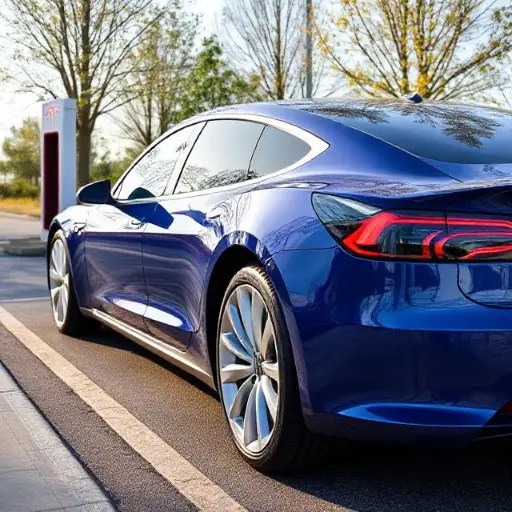
Tesla has officially introduced more affordable versions of its Model 3 sedan and Model Y SUV, aiming to reignite growth after a decline in sales in 2024. The new “Standard” variants start at $36,990 and $39,990, respectively, and feature fewer amenities compared to the higher-end models. While they offer an estimated 321 miles of range on a full battery, the Standard models lack key features like Autopilot and include only basic driver assistance systems. The absence of advanced features such as a second-row touchscreen, FM/AM radio, and heated seats in the second row highlights Tesla’s cost-cutting strategy.
The new models are part of Tesla’s broader effort to make its vehicles more accessible while maintaining profitability. However, the pricing is not as low as some had hoped, especially considering that CEO Elon Musk had previously teased the idea of a $25,000 Tesla before ultimately scrapping the project. The new Model 3 does not even dip below the $35,000 price threshold that Tesla promoted in a run-up to the car’s launch in 2016. That sticker price, which helped put Tesla on the map, was never really offered save for a few months as an off-menu ordering option.
Inside the Standard models, Tesla has taken a minimalist approach to the extreme. There is no second-row touchscreen, the steering wheel and side mirrors are manually adjusted, and the cars lack an FM/AM radio. They feature just seven speakers compared to the 15 speakers and one subwoofer on the costlier versions. Only the first row has heated seats. On the outside, Tesla has removed the light bar that adorns the nose of the more expensive Model Y variants, and the glass roof is also gone on the Standard cars.
Musk and other Tesla executives have joked about playing “Game of Thrones but [for] pennies” — an effort to describe the company’s mad scramble to remove as much cost out of its cars as possible. That strip-it-down thinking appears to be the primary strategy of how the company approached the Model 3 and Model Y Standard.
Tesla plans to sell these versions in multiple global markets, including Europe. The expiration of the U.S. federal EV tax credit last month means these prices will be pretty straightforward in the United States, unless buyers live somewhere with strong state EV incentives. That sets up an interesting calculus for new EV buyers.
Major automakers are simultaneously pulling back plans for a number of more expensive electric vehicles, theoretically reducing competition, which could be a boon for Tesla. Ford is working on a low-cost electric vehicle platform due out in 2027. General Motors is bringing back the Chevy Bolt. Upstart automakers like Rivian and Lucid Motors, and even newer entrants like Slate Auto, are pushing to release EVs in the next few years that are priced on either side of the Model 3 and Model Y Standard.
Musk did tangible damage to Tesla’s brand earlier this year when he got involved in the second Trump administration. However, Tesla rebounded to notch its best quarter ever as the EV tax credit expired, and it is unclear how durable that momentum will be. The new Standard models will likely apply competitive pressure on Tesla’s own offerings, not to mention the potential havoc it could wreak on the used market.




 The Tower Post