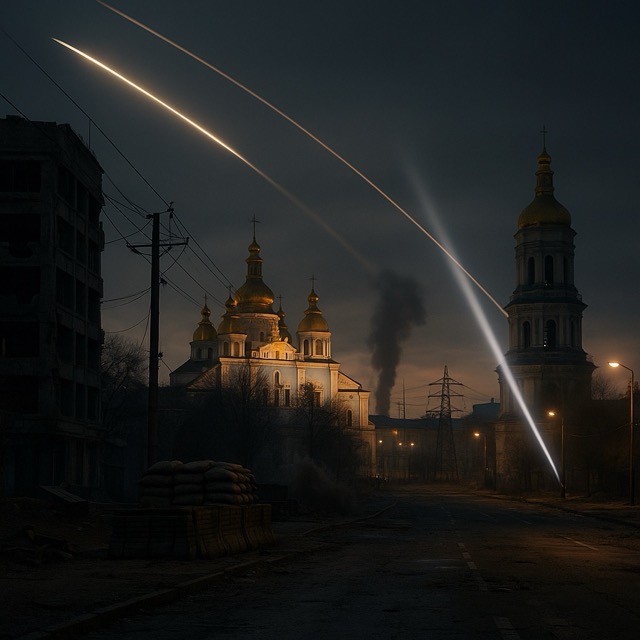
Front lines shift by meters, air campaigns expand by kilometers, and diplomacy chases the battlefield’s pace
LEDE
Nearly four years into Russia’s full-scale invasion, the war in Ukraine has settled into a brutal rhythm: incremental advances on the ground, long‑range strikes deep behind the lines, and a political track struggling to keep pace with the demands of a grinding conflict. This October, the front remains active in the Donetsk and Zaporizhzhia regions, Russia is again hammering Ukraine’s power grid ahead of winter, and Kyiv’s allies are re‑calibrating support—from combat aircraft timelines to new long‑range strike debates. The result is a war that changes daily in small ways, even as its larger contours harden.
BATTLEFIELD DYNAMICS
The most intense fighting this month centers on the eastern Donetsk oblast and along the southern axis of Zaporizhzhia. Ukrainian units report local advances near Orikhiv, a node that has repeatedly served as a hinge for moves toward Tokmak and the rail corridors feeding Russia’s southern grouping. Kyiv says it has retaken small settlements and pushed Russian forces back by a few kilometers on certain sectors—progress measured in tree lines and trench networks more than in towns taken. Moscow disputes these claims and reports its own gains elsewhere, continuing a pattern of dueling daily bulletins that are difficult to independently verify in real time.
In the Pokrovsk direction—west of Avdiivka and a focal point of Russia’s 2024–25 push—Ukrainian forces describe repelling dozens of assaults in a single day. Casualty figures remain opaque, but the tempo underscores a larger trend: Russia’s offensive doctrine continues to lean on massed artillery, glide bombs, and infantry pushes aimed at exhausting Ukrainian defenses, while Ukraine attempts to attrit logistics hubs and force rotations along an overstretched front.
AERIAL WAR WIDENS
Far from the trenches, the air war has grown broader and more complex. Russia has renewed large‑scale strikes on energy infrastructure across Kyiv, Donetsk, Odesa, and Chernihiv regions, part of a strategy to pressure the grid as temperatures fall. Ukrainian officials tally barrages of drones, cruise and ballistic missiles, and a rising volume of guided glide bombs launched from standoff ranges. Air defense crews say intercept rates remain high around major cities but concede that even a small percentage of leakers can disable transformers and sub‑stations, with repairs measured in weeks.
Ukraine has answered with longer‑range strikes of its own, leaning on domestically produced drones and occasional Western‑supplied missiles. On the occupied Crimean peninsula, a series of explosions at oil depots and airfields has underscored the vulnerability of Russian logistics nodes feeding the southern front. Kyiv’s strategy aims to stretch Russian air defenses across a vast battlespace—from border oil refineries to Black Sea ports—forcing difficult choices about what to protect.
THE BLACK SEA CAMPAIGN
Nowhere has that pressure been more visible than at sea. Through a two‑year campaign of missiles, uncrewed surface vessels, and aerial drones, Ukraine has degraded Russia’s Black Sea Fleet and reopened a coastal shipping lane for grain and steel exports. The fleet’s posture has shifted east and south, reducing the risk profile for Ukrainian merchant traffic hugging the coast. While Russia retains significant naval and air assets, the cost of operating near Crimea’s western approaches has risen sharply, and Russia’s ability to enforce a full blockade has eroded.
AIRPOWER AND F‑16 TIMELINES
A central question for 2025 remains Ukraine’s fighter fleet. European donors have committed F‑16s on a rolling timeline tied to training pipelines and the arrival of replacement F‑35s in donor inventories. Belgium’s transition is particularly consequential: as F‑35s land at Florennes and other bases, Brussels has reiterated it will free up F‑16 airframes and spares for Ukraine. The first tranche of airframes earmarked for cannibalization and training is arriving sooner, with operational jets targeted for 2026. For Kyiv, even a modest number of multirole fighters—integrated with existing Patriot, IRIS‑T, and NASAMS batteries—could complicate Russian glide‑bomb tactics and provide limited but meaningful standoff strike options.
LONG‑RANGE STRIKE DEBATE
In Washington, the debate over expanding Ukraine’s long‑range strike portfolio has resurfaced. The discussion now extends to potential sales of Tomahawk cruise missiles, a capability that—if approved—would complement Western and indigenous systems already in use. The Kremlin has signaled alarm at the prospect, and neighboring Belarus has publicly warned against escalation. For Ukraine, the logic is straightforward: greater reach forces Russia to reconfigure air defenses and logistics far from the front, creating second‑order effects that ripple back to trenches and towns.
AID, BUDGETS, AND STOCKPILES
The politics of aid continue to shape the battlefield. In the United States, defense authorization and appropriations cycles for fiscal year 2026 include provisions to accelerate transfers from European stocks and reduce bureaucratic friction for allies trying to move ammunition and launchers east. Oversight bodies report that billions in previously appropriated funds remain available, largely for replenishing inventories drawn down to arm Ukraine. The headline sums obscure a more prosaic challenge: matching available munitions—especially air defense interceptors and 155mm shells—to Ukraine’s monthly burn rate without hollowing out donor readiness.
EUROPE’S DIPLOMATIC TRACK
In Europe, Ukraine’s EU accession path entered a complicated phase this fall. The European Council’s early‑October session in Copenhagen reaffirmed political backing for Kyiv and signaled that support would be on the agenda again later this month. Yet Budapest’s continued objections—rooted in disputes over minority language rights and other bilateral frictions—have slowed the mechanics of moving to the next stage of talks. EU officials praise Ukraine’s reforms under wartime conditions but stress that difficult chapters remain before accession can be realized.
CIVILIAN COST AND WINTER RISK
For civilians, the most immediate worry is the grid. Every transformer destroyed and sub‑station disabled increases the odds of rotating blackouts in December and January. Utility crews, now veterans of wartime repair, race to replace equipment even as air‑raid sirens force them back into shelters. Municipalities stockpile generators and spare parts, while international donors funnel funds toward energy resilience: mobile boilers, modular substations, insulation kits, and shelters with heating for vulnerable residents. Russia’s strategy is clear—to make cities colder, darker, and costlier to defend. Ukraine’s counterstrategy is equally clear: keep the lights on long enough for air defenses and industry to adapt.
WHAT TO WATCH NEXT
Three variables will shape the winter campaign. First, ammunition and air‑defense supply: if interceptor deliveries keep pace with Russian strike packages, major blackouts can be mitigated, if not prevented. Second, the F‑16 glide path: initial airframes and trained pilots will not transform the air war overnight, but their arrival will force Russia to adjust altitude, tactics, and basing. Third, Crimea: sustained Ukrainian strikes on fuel depots, airfields, and air‑defense radars there could further degrade Russia’s ability to support ground operations in Zaporizhzhia and Kherson, giving Kyiv more room to maneuver in the south.
THE BOTTOM LINE
The war’s center of gravity remains the contest between Russia’s bet on attrition and Ukraine’s bet on adaptation. Russia is mobilizing men and refurbishing armor to hold or nibble forward. Ukraine is trying to make each Russian kilometer more expensive—through precision strikes, dispersed logistics, and better air defenses—while preserving its own capacity to regenerate combat power. This month’s skirmish lines may move only by meters, but the strategic battle over factories, shipyards, and energy infrastructure is moving by kilometers. Whether that momentum can be turned into decisive change on the ground is the question that will define the coming winter.
Notes & Sources
Sources: Reuters (front‑line updates in Zaporizhzhia/Donetsk, Oct. 12, 2025); Associated Press (energy grid strikes and long‑range debate, Oct. 13, 2025); Die Welt (Crimea oil‑depot strike report, Oct. 12, 2025); Institute for the Study of War (daily operational assessments, Oct. 8–12, 2025); Kyiv Independent (U.S. defense bill provisions, Oct. 9, 2025); Council of the EU (support for Ukraine discussed at Oct. 1, 2025 Copenhagen meeting); AeroTime/AirDataNews (Belgium F‑35 deliveries and implications for F‑16 transfers, Oct. 13, 2025); RFE/RL (Black Sea campaign reporting, July 29, 2025).




 The Tower Post