
With a hung parliament and a ticking clock, France’s prime minister seeks votes for a 2026 budget by mixing continuity at Finance with fresh faces elsewhere.
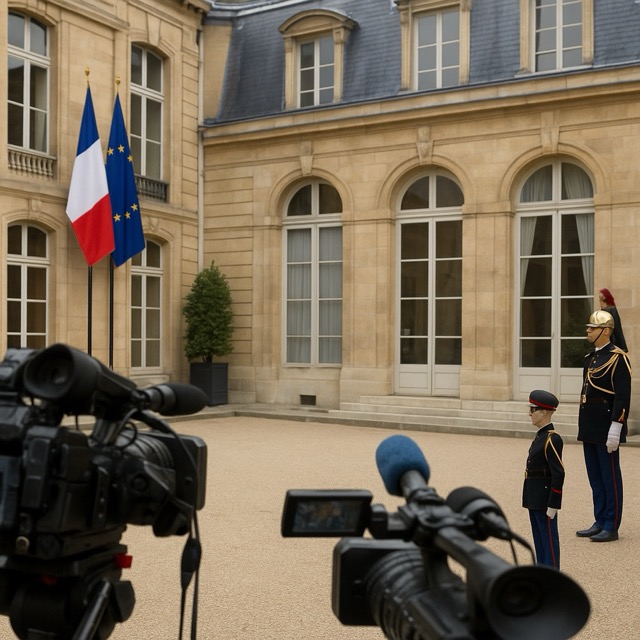
On Sunday evening, Prime Minister Sébastien Lecornu unveiled a new cabinet in a bid to end weeks of political whiplash and salvage the 2026 budget process. The line‑up pairs continuity at the economic helm—Roland Lescure keeps the finance portfolio—with new faces brought in to woo votes across a splintered National Assembly. The stakes are immediate: the government plans to finalize and submit its draft budget within days, hoping to steady markets and outflank looming no‑confidence motions.
The reshuffle is Lecornu’s second attempt in as many weeks to assemble a workable team. His first cabinet, born amid fraught negotiations, collapsed almost as soon as it was announced. This remake is designed to be more durable and more political: a balance between loyalists of President Emmanuel Macron’s centrist Renaissance party and a handful of figures meant to reassure the centre‑right and pragmatic regional leaders.
Keeping Lescure at Finance is the through‑line. Seen as a pro‑market technocrat with parliamentary experience, he is charged with steering a deficit stuck around the mid‑5% of GDP range back toward the government’s stated target below 5% next year. Officials say the draft budget will emphasise phased savings, guarded investment in energy transition and competitiveness, and a tighter grip on operating outlays across ministries. Privately, aides acknowledge the arithmetic only works if the Assembly lets at least some of the savings through—or if the government reaches for constitutional shortcuts.
That is the political math Lecornu must solve. Since last year’s legislative elections left France with a hung parliament, budgets have become bargaining seasons rather than policy set‑pieces. The far right has signalled it will oppose the plan sight unseen; the left demands relief measures and a rethink of recent pension and spending reforms; the conservative Républicains remain split between pragmatists open to amendments and purists bent on toppling the government. Winning even a procedural vote to move the text forward will require a coalition of the temporarily willing.
To make that coalition conceivable, Lecornu peppered his team with figures pitched as operational rather than ideological. Security‑minded administrators and regionally rooted moderates were elevated to portfolios where quick wins are visible to local constituencies—transport reliability, school staffing, and policing capacity in large metropolitan areas. At foreign affairs, continuity aims to avoid unsettling allies as Europe wrestles with war in Ukraine, the Middle East crisis, and a choppy transatlantic climate.
Financial markets will read the cabinet as a credibility test. France’s borrowing costs have risen in tandem with investor doubts about the state’s ability to curb its deficit without crimping growth. Ratings agencies have telegraphed a demand for a more believable path to consolidation. Lescure’s challenge is to show that incrementalism can still add up: a few billion shaved from subsidies, stricter means‑testing of benefits, tightened tax expenditures, and a clamp‑down on fraud—enough, in theory, to bend the curve while protecting priority investment. The opposition, for its part, will argue that the plan is either too harsh on households or too timid to matter.
How the budget is pushed matters almost as much as what is in it. Under France’s constitution, the government has tools to accelerate the process or shield parts of a bill from hostile amendments. Each resort to procedure, however, carries political cost, particularly after back‑to‑back no‑confidence dramas felled previous governments. Lecornu’s message on Monday will be deliberately conciliatory: amendments are welcome on implementation and sequencing, he has told interlocutors, but the direction of travel on deficit reduction is not negotiable.
The most explosive trade‑offs lie in social policy. Reform fatigue is real after the pension overhaul, and inflation—though past its peak—has left households wary of new belt‑tightening. Expect the cabinet to ring‑fence headline social benefits, extend targeted relief for the lowest‑income deciles, and lean on efficiency drives inside the state to find savings first. Even then, opposition parties will probe for weak joints: transport fares, university fees, and local government grants could all become flashpoints.
Energy and industrial policy, long touted as the engine of France’s competitiveness, will remain a budgetary priority but not an open‑ended one. Officials argue that France can narrow the deficit while still seeding new capacity in grid upgrades, nuclear maintenance, and strategic manufacturing. Tax credits introduced during the energy shock will be revisited and, in some cases, sunsetted; others will be retargeted to projects with faster domestic spillovers.
Across the Channel and across the Rhine, partners are watching whether Paris can put its fiscal house on a more predictable footing. At the EU level, France will need to demonstrate a consolidation path consistent with revised euro‑area fiscal rules while continuing to fund defence commitments and Ukraine support. A credible French budget, European officials note, would lower the temperature on debates over common borrowing and industrial subsidies.
The politics of persuasion now moves to the committee rooms and the airwaves. Lecornu’s lieutenants will court centrist mayors and departmental leaders who can sway undecided deputies. Business federations—concerned about energy costs and predictability of payroll charges—may offer cautious support if the labour‑tax wedge narrows even modestly. Unions, bruised by the pension fight, are preparing to mobilise should the budget contain what they consider stealth austerity.
The far‑right Rassemblement National will frame the exercise as elite accountancy detached from purchasing‑power anxieties, while the left will insist that credible consolidation can only come from tackling tax avoidance and windfall gains. Each camp is already weighing whether to table censure motions calibrated to embarrass the centre and force new elections. In that game of brinkmanship, a few abstentions can decide the government’s fate.
For Lecornu, success by Christmas would look like this: the budget moves through the Assembly with negotiated amendments, the deficit target nudges below 5% of GDP for 2026, and France avoids another confidence crisis. Even then, he will have bought time, not peace. The medium‑term plan—restoring fiscal space while maintaining investment—will require year‑two reforms to state spending, procurement, and pensions that make today’s skirmishes look like an opening act.
The alternative is messy: a blocked Assembly, emergency spending authorisations, and an early return to the political roulette that has consumed Paris for months. Fiscal drift would raise borrowing costs further, press regional budgets already squeezed by infrastructure needs, and dim prospects for growth above 1% next year. Lecornu’s new government is designed to persuade enough actors that this is a risk not worth taking.
The stakes are personal, too. After multiple changes of prime minister in quick succession, Macron has bet that Lecornu can combine operational discipline with a negotiator’s touch. If the budget fails at the first hurdle, the presidency’s room for manoeuvre narrows sharply—and France edges closer to another season of caretaker politics.
For now, the new cabinet has bought a few precious days to turn a fragile parliamentary map into a governing majority of sorts. Whether that proves a turning point or merely a pause in France’s rolling crisis will be clear soon—when the numbers, and the votes, are finally counted.



 The Tower Post