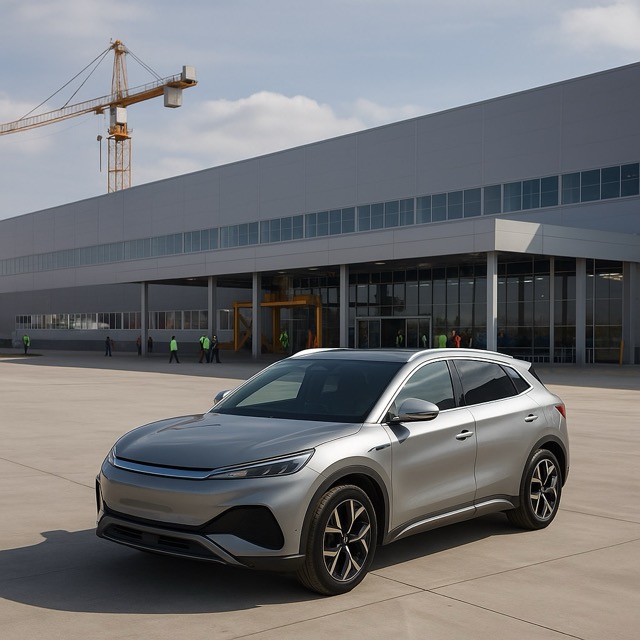
In October 2025, Executive Vice President Stella Li is pushing the Chinese automaker beyond its home turf—plant by plant, deal by deal—with European beachheads in Hungary and Turkey at the core.

When BYD’s Stella Li walks a factory floor, she doesn’t so much tour as triangulate. Which models for which markets? What local partners unlock faster homologation or cheaper logistics? Where should pricing flex to hit an importer’s sweet spot, or bend to tariffs without breaking brand momentum? In 2025, as Chinese carmakers accelerate their global charge and the political headwinds stiffen, Li has become BYD’s field general abroad—translating a battery giant’s scale into a street‑by‑street retail presence.
Li joined BYD in the 1990s, long before the company became the world’s best‑selling maker of electrified vehicles. Her rise has tracked BYD’s evolution from a battery supplier to a fully vertical carmaker selling millions of plug‑in hybrids and battery electrics. Today, as Executive Vice President, she is the architect and advocate of BYD’s international expansion—from dealer networks and model mix to siting assembly lines and suppliers—while the group grapples with a crowded, cut‑throat Chinese market and new trade barriers across the West.
Europe is the proving ground. Rather than contest the continent solely from Chinese ports, Li is building locally. In Szeged, southern Hungary, BYD is erecting a multi‑billion‑euro passenger‑vehicle plant designed to anchor the company’s regional footprint. The project, announced in late 2023, has moved from land purchase to full site works and recruitment. BYD says initial output is expected to begin in phases around the turn of 2025–2026, with mass production ramping through 2026—a timetable shaped by component localization, certification, and a patchwork of EU trade measures. In practical terms, the Szeged facility gives BYD what it most needs in Europe: proximity—to customers, to regulations as they evolve, and to a supplier base it is actively courting to follow.
A second pole is forming to the southeast. In 2024, BYD agreed with Ankara to build a $1 billion plant in Turkey, with a planned annual capacity of roughly 150,000 vehicles. The factory is slated to begin production in 2026, complementing Hungary while broadening BYD’s access to customs unions and regional supply chains. Turkey also offers talent in powertrain and body assembly, the legacy of a decades‑old auto cluster serving Europe and the Middle East. Li has framed the strategy plainly: make in—or near—the markets you serve, and diversify routes to customers when policy turns volatile.
The calculus is not only bricks and mortar. Li’s team is re‑sequencing BYD’s product mix to fit Europe’s demand curve and its incentives. That now means a bigger role for plug‑in hybrids (PHEVs), which ease range anxiety, preserve price competitiveness amid tariffs, and help fleets meet CO₂ targets. Full EVs remain the endgame, but hybrids are the bridge into households and company car lists that are cost‑squeezed by higher interest rates and thinner subsidies. At the same time, BYD is bringing its higher‑margin badges to Europe: Denza, its premium sub‑brand, is set to debut sales by the end of 2025, with production migrating to Europe as assembly sites mature.
Li’s fingerprints are on the go‑to‑market details that often decide outcomes. In markets like Germany, the UK and the Nordics, BYD has leaned into partnerships with established dealer groups to accelerate coverage and after‑sales while it invests in stand‑alone brand stores in capital cities. Pricing is calibrated model‑by‑model against local rivals and taxes, and adjusted as freight and battery input costs move. In Australia and Southeast Asia—where BYD’s volumes have surged—Li has pressed for early shipments of right‑hand‑drive models and rapid homologation, ensuring showroom momentum doesn’t stall for lack of trim variants or charging adapters.
There are headwinds. Europe has layered provisional and definitive duties onto Chinese‑built EVs, raising the hurdles for imports just as BYD’s global ambitions crest. Local communities weigh the upside of factory jobs against anxieties about industrial policy and competition. And within China, a brutal price war—ignited in part by BYD’s own cost discipline—has squeezed margins and punished slower followers. But BYD’s vertical integration in batteries, motors and power electronics remains a lever few rivals can match. For Li, that means she can promise more stable pricing to fleet buyers, quicker variant refreshes, and a credible path to local content thresholds that determine which cars qualify as ‘European‑made.’
The human factor matters, too. Li has become BYD’s most visible ambassador outside China. She is a familiar presence at auto shows from Munich to Melbourne, an energetic explainer‑in‑chief who can toggle between chemistry and channel strategy. Colleagues say she thrives on country‑specific puzzles: the tax credit that tips a deal in Portugal, the leasing product that unlocks France’s salary‑sacrifice schemes, or the cargo route that shaves days off deliveries to Ireland. The risk, detractors argue, is concentration: a highly centralized, hands‑on command style that must eventually give way to deeper local bench strength.
For now, the scoreboard favors the approach. BYD has climbed market share in several European countries, while maintaining leadership at home in electrified sales. In 2025 it has expanded its European portfolio from compact crossovers to estates and MPVs, strengthened its dealer networks, and readied a European charging ecosystem—including megawatt‑class hardware for depots—to support buses, trucks and energy storage customers alongside retail buyers. The first ‘Made in Europe’ BYDs will give it an even stronger narrative with consumers wary of long shipping chains and geopolitical friction.
Hungary and Turkey are staging posts in a larger rerouting of the global EV supply chain. For Brussels, the arrival of a Chinese champion with local payrolls is both an opportunity and a policy dilemma. For European incumbents, it is a forcing function to cut costs and accelerate software and battery roadmaps. And for Li, it is the latest iteration of the same playbook she has run since the 1990s: use batteries as the foundation, build product stacks atop them, and move manufacturing as close to the customer as politics and physics allow.
What comes next depends on how quickly BYD can translate construction schedules into customer deliveries—and how deftly Li balances hybrid pragmatism with electric ambition. If the Hungary ramp proceeds on its revised cadence and Turkey lights up on time, BYD’s European capacity could approach the mid‑hundreds of thousands within a few years, enough to influence pricing and technology adoption across segments. If delays drag, rivals will seize the breathing room. Li’s bet is that proximity and scale will compound. In 2025, with cranes on the Danube plain and site surveys on the Bosporus, that wager is being laid in concrete.



 The Tower Post