
After China’s latest export hurdles for magnets—even those with trace Chinese content—President Trump threatens 100% tariffs, jolting supply chains from EVs to missiles.
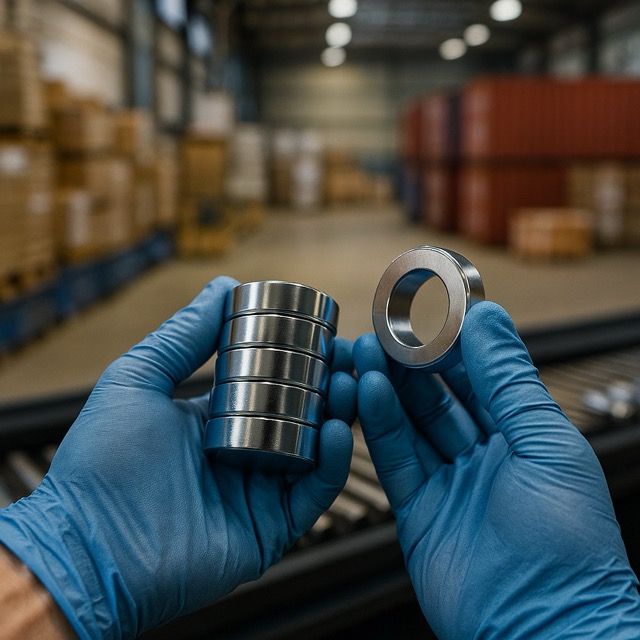
China has tightened the screws on the world’s most strategic materials—and the United States is bracing for impact. In the latest escalation of a trade confrontation that had been cooling only months ago, Beijing last week broadened export restrictions on rare earths and permanent magnets, extending approval requirements to goods that contain even trace amounts of China‑sourced materials or were made with Chinese equipment. In rapid response, U.S. President Donald Trump threatened to impose an across‑the‑board 100% tariff on Chinese imports, a move that would double average levies and ignite a new phase of the trade war.
The stakes are unusually high. Rare earth elements are the backbone of permanent magnets used in everything from electric vehicle drivetrains and wind‑turbine generators to precision missiles, radar systems and smartphones. China dominates the global magnet supply chain—both upstream processing and downstream manufacturing—leaving automakers, defense contractors and chipmakers exposed to regulatory aftershocks far beyond China’s borders.
What changed: China’s Ministry of Commerce published a new suite of export‑control notices—summarized in “Announcement No. 61 (2025)”—that expand the list of restricted rare earths and tighten licensing for magnets and related materials. Crucially, foreign companies that make magnets outside China must now seek Chinese government approval if their products contain Chinese‑origin rare earths, include even trace percentages of those materials, or were produced using certain Chinese technologies. The rules’ extraterritorial reach is what spooked boardrooms across Europe, North America and Asia: an EV motor built in Slovakia or a guidance assembly finished in Arizona could suddenly be subject to a Chinese license review if upstream inputs touched China.
Industry executives say approvals have already slowed. Traders and manufacturers report license applications being returned for additional documentation and longer processing times, even before the new measures formally take effect.
China also added five more elements—holmium, erbium, thulium, europium and ytterbium—to restrictions announced in April on seven others, tightening the net around the magnets most prized for high‑performance applications. With exporters warning of bottlenecks and customers rushing to bring forward orders, prices for certain magnet alloys have turned jumpy and lead times have stretched in spot markets.
Washington’s answer came swiftly. In remarks and social‑media posts over the weekend, President Trump threatened to lift U.S. tariffs on Chinese imports to 100% unless Beijing relaxes the new controls. That would mark a sharp break from the tentative tariff de‑escalation earlier this year and risk a new inflationary pulse just as the Federal Reserve tries to keep price pressures in check. The White House is also weighing targeted carve‑outs for allies and critical industries, but details remain fluid as diplomats test whether Beijing might soften its stance before the rules’ effective date.
Allies are hedging. In Brussels, EU officials are pushing for coordinated action among G7 partners, arguing that the answer to China’s magnet squeeze is diversification rather than retaliatory tariffs that could splinter markets. European automakers—already grappling with a profit pinch from discount EVs and a soft consumer cycle—face the prospect of higher input costs and certification headaches if motor designs need to be re‑qualified with non‑Chinese materials. German industry groups warn that even a few weeks of licensing friction could ripple through just‑in‑time assembly lines.
Defense supply chains are on alert. Pentagon contractors source specialized neodymium‑iron‑boron and samarium‑cobalt magnets for precision‑guided munitions, avionics and satellite systems. While some waivers and “Buy American” exceptions exist, the practical reality is that China’s processing capacity and magnet know‑how still dominate the market. Defense officials have been pushing to onshore more capacity, but new furnaces and oxide separation facilities take time to commission, and environmental permitting remains a hurdle.
Analysts note that the timing is political as well as economic. The stepped‑up controls land ahead of a possible meeting between Trump and Chinese President Xi Jinping later this month, setting the stage for brinkmanship. By leveraging choke points in advanced materials, Beijing can raise the price of U.S. and allied export controls on semiconductors and AI hardware—while testing the cohesion of Western partners who rely on affordable magnets to meet clean‑energy goals. Washington, for its part, is betting that tariff shock therapy will force Beijing back to the table without derailing a fragile global expansion.
For manufacturers, the immediate playbook is part triage, part transformation. Procurement teams are mapping exposure to Chinese content at the component level—down to supplier‑of‑supplier tiers—to decide when they need Chinese licenses and where to pivot. Some customers are accelerating contracts with Japanese, European and U.S. magnet makers; others are dusting off older ferrite designs that are heavier but less dependent on rare earths. Recycling initiatives are
getting fresh attention as a near‑term hedge, though closed‑loop magnet recovery remains small relative to demand.
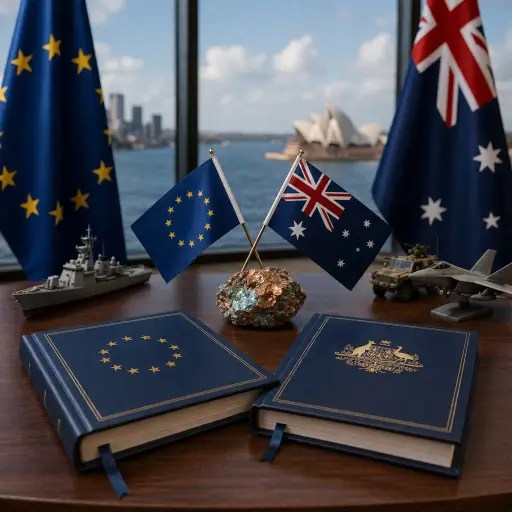
Investment is shifting, too. Australia, the U.S. and a handful of European countries are courting capital for new rare‑earth separation plants and sintered‑magnet lines, often backed by state incentives. But competing at scale with China’s ecosystem—covering ore, chemistry, powder metallurgy and machining—will take years. In the meantime, companies are writing clauses into contracts to share the risk of licensing delays and price spikes, while revising inventory policies that had become razor‑thin in the just‑in‑time era.
Markets are whipsawing. Shares of Western magnet makers and alternative suppliers have rallied, while automakers and industrial conglomerates exposed to high‑performance motors have lagged. Energy investors are parsing what magnet tightness might mean for wind‑turbine build‑outs in 2026, and whether developers shift toward designs that use fewer rare earths. Currency traders, meanwhile, are gaming out how a 100% U.S. tariff might affect the dollar‑yuan relationship and global inflation expectations.
Three things to watch next: First, the final text and implementation guidance for China’s expanded controls—especially how “trace amounts” are quantified across complex assemblies, and whether exemptions emerge for civilian medical or renewable‑energy uses. Second, the scope and sequencing of any U.S. tariff move: an immediate across‑the‑board hike would hit consumer goods and intermediate inputs alike, while a phased approach could target categories most exposed
to Chinese leverage. Third, the stance of U.S. allies. A coordinated diversification push could blunt China’s bargaining power; a fragmented response could amplify it.
The bottom line: China’s magnet rulebook is designed to project power beyond its borders, converting supply‑chain interdependence into political leverage. Washington’s tariff threat is designed to shock. Businesses caught between those two strategies have little choice but to plan for both a deal and a prolonged standoff—buffering inventories, qualifying alternatives and, where possible, redesigning products to be less hostage to any single chokepoint.


 The Tower Post