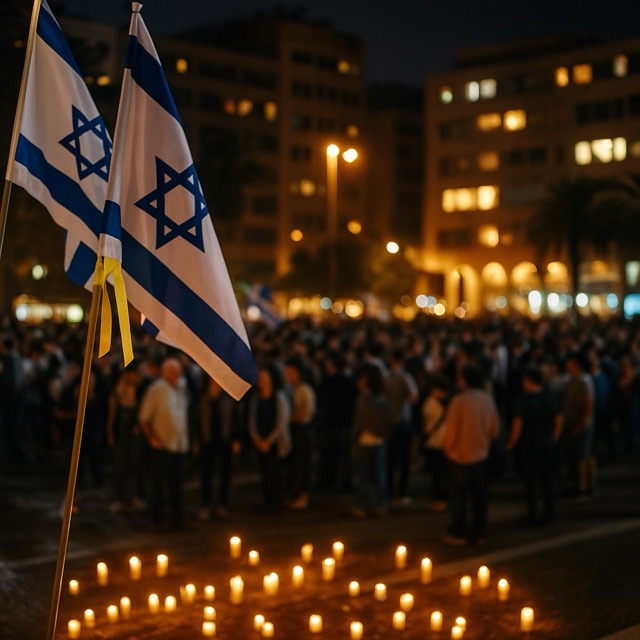
As Israel celebrates the return of the last living hostages from Gaza, the Prime Minister faces a reckoning over October 7—and a test of whether relief can outweigh responsibility.

TEL AVIV — The cheers that rang out across Israel on Monday night gave way to a quieter, more complicated dawn. With the last 20 living hostages home from Gaza—elderly grandparents, festival‑goers, kibbutz families, and soldiers—a nation that had taught itself to live with daily vigil tents finally exhaled. There were embraces at the Re’im base, sirens replaced by ululation and song, and hospitals in Tel Aviv and Be’er Sheva readying trauma teams for the homecomings. For many Israelis, it felt like the first unambiguous moment of relief since the Hamas attacks of October 7, 2023.
But jubilation does not automatically absolve. For Prime Minister Benjamin Netanyahu—who has spent two years deflecting calls for an independent inquiry into that day’s failures, and fighting to keep his corruption trial from consuming his premiership—the end of the hostage saga poses a pointed question: can the architect of wartime policy convert relief into political redemption, or will the very terms of the deal that brought the captives home deepen demands for accountability?
The mechanics of the exchange were stark and emotionally asymmetrical. Hamas handed over the remaining living hostages in two batches, alongside four coffins of Israelis who died in captivity. In return, Israel freed roughly 2,000 Palestinian detainees and prisoners, including minors and many arrested during the war, and agreed to a U.S.-brokered cease-fire that paused major operations while international mediators pushed a wider stabilization plan. Donald Trump, back in the White House, flew to Jerusalem to address the Knesset and to Sharm el‑Sheikh to sign a regional compact with Egypt, Qatar, and Turkey—events that yielded soaring rhetoric about a ‘new Middle East’ even as practical questions piled up.
Those questions began with the dead. Families of 28 Israelis whose fate is now confirmed, or presumed, to be death are pressing for the return of all remains under the terms of the deal. Only a handful of bodies have been transferred to date, a lag that prompted Israel to restrict aid flows into Gaza and accuse Hamas of violating the accord. The International Committee of the Red Cross has warned that retrieving bodies from collapsed tunnels and pulverized buildings may take time, even with a cessation of hostilities. For bereaved families, time is already too cruel a companion.
For those who returned alive, the first testimonies are shattering. Former captives describe months in underground rooms chained to pipes, near‑starvation diets, and relentless psychological pressure—interspersed with odd flashes of quotidian routine with their guards. Some said conditions improved as negotiations advanced; others recount torture that intensified in the final weeks. Doctors say the medical recovery will be measured in months; the psychological one, in years. The yellow ribbons that once symbolized hope now signify endurance.
At the political level, the hostage deal scrambles a map that, until days ago, seemed fixed. Public opinion in recent weeks showed a broad majority of Israelis ready to end the war if it meant bringing hostages home, and a similarly large share believing Netanyahu should assume responsibility for the October 7 failures—either by resigning now or after the fighting stopped. Yet snap polls since the agreement suggest a modest uptick for Netanyahu’s Likud, as swing voters absorb the euphoria of the homecomings and the image of a leader standing alongside a supportive U.S. president. Whether that bounce endures once the celebrations fade is the central variable of Israeli politics.
Netanyahu’s case for redemption rests on three pillars. First, that his government, under unrelenting military pressure, forced Hamas into concessions it would not have made earlier. Second, that the cease‑fire is a means to a more durable security architecture—one that places Arab partners and U.S. leverage at the core while keeping Israeli troops out of indefinite urban quagmires. Third, that reopening the wounds of October 7 via a full state commission of inquiry would fracture national cohesion at the very moment hostages and bereaved families need it most.
His critics counter with three pillars of their own. They argue that the government’s early focus on maximalist war aims—‘total victory,’ the razing of Hamas battalions, the refusal to sequence hostage releases above battlefield milestones—delayed a deal and cost lives. They note Netanyahu’s trial has repeatedly collided with wartime scheduling, feeding an impression that he prolonged conflict to delay testimony. And they insist that accountability for the worst security lapse in Israeli history is not optional, even if the first breath of peace has arrived. Many families from the Hostages and Missing Families Forum, while elated at reunions, say the return of bodies and a formal reckoning must now be non‑negotiable.
Beyond the courtroom and the commission lie the strategic unknowns. Gaza’s postwar governance remains a contested field. Washington talks of a technocratic administration backed by Arab states, paired with a reconstruction plan and security guarantees that keep Hamas disarmed and Israel at a remove. Jerusalem’s ruling coalition is split: some ministers want to retain control over key crossings and security corridors; others accept a multinational presence so long as it denies Hamas a revival. For Netanyahu, who has long navigated between international expectations and domestic coalition arithmetic, owning the cease‑fire will mean owning these trade‑offs too.
If the deal holds, the economy stands to benefit as reserve duty eases and borders reopen to commerce. Tourism, dormant for two years, could return. Yet public trust does not rebound on autopilot. The same protesters who filled Kaplan Street to demand elections and a hostage‑first strategy are already reassembling—this time to insist that the cease‑fire be used to cement civilian oversight of the security establishment and to codify clear lines of authority for crisis response. An Israel that danced for the homecomings may soon march again for accountability.
There is also the matter of tone. Trump’s triumphal visit lifted Netanyahu’s optics, with images of handshakes and speeches broadcast worldwide. But the theatrics carried a downside: the American president’s improvisational praise for Netanyahu—even joking about a pardon in the prime minister’s corruption cases—played awkwardly with Israelis who separate gratitude for diplomatic muscle from tolerance for domestic impunity. “National dignity is not a get‑out‑of‑court card,” a former Likud voter told me in Tel Aviv. It is precisely this split screen—relief and resolve—that defines the moment.
In parliamentary terms, the prime minister still governs a narrow coalition accustomed to cliff‑edge votes. His rivals sense vulnerability but must decide whether to press for early elections while the national mood is tender. Netanyahu has made a career of surviving such junctures, converting short‑term resentment into long‑term inertia. If the hostage deal turns into a durable de‑escalation in Gaza, and if the remains of the dead return swiftly, he can argue that he delivered where it mattered. If the cease‑fire frays or the body returns drag on, the backlash could be fierce.
In the end, political redemption is less a single act than a sequence: truth‑telling about the past, competence in the present, and plausibility about the future. Israel has achieved a moral imperative by bringing its citizens home. Whether it now achieves a civic imperative—an honest accounting for how they were taken in the first place—will determine Netanyahu’s place in the story. The families who waited 738 days did not only ask for return. They asked for answers. Relief has arrived. Responsibility is next.



 The Tower Post