
Brussels hits luxury houses with €157 million in penalties over illegal price controls, sending a warning across the fashion sector
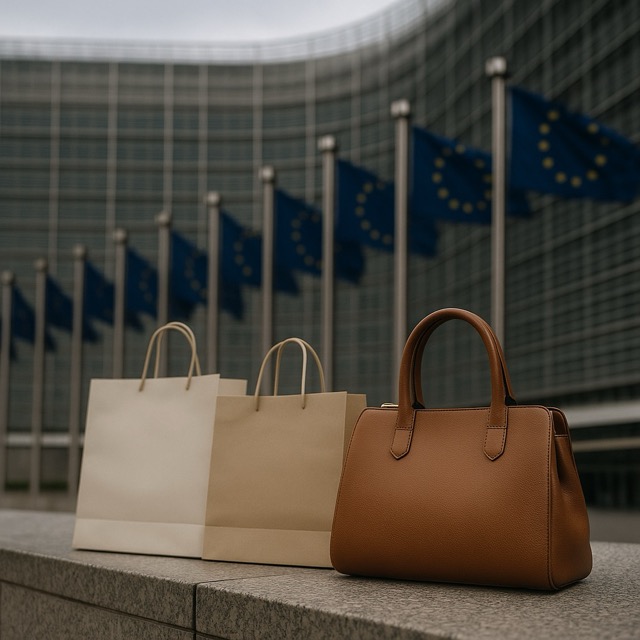
Europe’s antitrust watchdog has fined luxury fashion houses Gucci, Chloé and Loewe a combined €157 million for illegally controlling the prices at which independent retailers resold their handbags, shoes and ready-to-wear, in what the European Commission said was a clear-cut breach of EU competition rules.
The decision, announced this week after a two‑year probe that followed 2023 ‘dawn raids’ on fashion showrooms, centers on so‑called resale price maintenance (RPM) — a practice in which a brand dictates or indirectly fixes the minimum price charged by third‑party retailers. Regulators said the three labels restricted discounts, controlled sale periods and pressured partners who deviated from centrally set price lists, limiting consumer choice and keeping prices artificially high across the European Economic Area.
Gucci, owned by Kering, received by far the largest penalty at roughly €119.7 million. Richemont‑owned Chloé was fined about €19.7 million, while Loewe — part of LVMH — faces an €18 million sanction. The amounts reflect the duration and scope of the practices, as well as varying levels of cooperation. Officials said the brands ended the conduct after the Commission opened a formal investigation and granted fine reductions for assisting the case.
“Retailers must be free to set their own prices,” a senior EU competition official said, arguing that RPM is a long‑standing ‘hard‑core’ restriction under the bloc’s vertical agreements rules. By synchronizing prices, the Commission concluded, the companies reduced incentives to compete on promotions just as the luxury market shifted toward omnichannel sales and a heavier reliance on multibrand partners.
The case lands at a delicate moment for European luxury, where topline growth has cooled after a post‑pandemic boom. Brands have pushed through repeated list‑price increases since 2020 to protect margins and manage scarcity, even as tourism patterns, Chinese demand and aspirational spending have become less predictable. Against that backdrop, regulators have widened their scrutiny of how premium and luxury labels control distribution — both online and in brick‑and‑mortar — including through selective networks, marketplace bans and tight rules on discounting.
While RPM cases in Europe are not uncommon — electronics, gaming and cosmetics have all been targeted in recent years — the fashion ruling is notable for its breadth across three marquee houses and for the size of the fine borne by Gucci, one of the industry’s largest names by revenue. Kering said it had cooperated fully and taken steps to strengthen its compliance controls. LVMH emphasized Loewe’s commitment to competition law. Richemont did not immediately comment.
Market reaction to the fines was muted but telling. Analysts said the financial impact on Kering, LVMH and Richemont is modest relative to their cash flows, but the governance signal is strong. Several brokers forecast heightened audit and legal costs, as groups review playbooks not only at the named brands but across their wider stables to ensure pricing communications with wholesale partners are ‘clean.’
Share‑price moves were contained, reflecting investors’ view that the episode is manageable. Yet the timing is awkward for Gucci, which is in the early innings of a multi‑year creative reset under designer Sabato De Sarno and a commercial overhaul aimed at reigniting growth. For Loewe, the case lands against a backdrop of surging cultural relevance under creative director Jonathan Anderson. Chloé continues to refocus its positioning and distribution under Richemont.
What happens next? The companies may choose to challenge elements of the decision before the EU General Court, although appeals rarely succeed on RPM findings when documentary evidence is strong. Short of litigation, brands will work to demonstrate that their distribution systems — selective but non‑coercive — comply with the letter and spirit of EU rules. Expect updated guidelines to merchandisers and account managers spelling out what communications are allowed (e.g., non‑binding recommended prices) and what is not (pressure to stick to them).
For retailers, the practical upshot could be greater freedom in promotional calendars and cross‑channel price experimentation. Large department stores and specialty chains, many of which have launched their own e‑commerce operations, have been pushing for the ability to match competitors’ deals in real time. If brands retreat from hands‑on price ‘coordination,’ more dynamic pricing is likely to seep into parts of the luxury segment that traditionally moved in lockstep.
Consumer advocates welcomed the ruling as evidence that price transparency is returning to the fashion aisle. At the same time, the decision does not mandate any direct restitution to shoppers, and pre‑tax prices at the top end of the market remain largely a function of brand strategy, input costs and exchange rates. In other words: don’t expect overnight bargains on iconic bags. Still, even modestly looser discounting could matter for mid‑market customers who time purchases to sales.
The fashion industry will also be watching for spillovers into online platform policy. European regulators have previously taken aim at so‑called ‘most‑favored‑nation’ clauses and marketplace restrictions that prevent third‑party sellers from offering lower prices elsewhere. Although those issues were not central to this case, the logic is linked: mechanisms that blunt price competition — whether contractual or by practice — will attract scrutiny. The Commission has said it wants distribution rules that are technology‑neutral and protect competition regardless of channel.
Timeline of the case: After on‑site inspections in 2023, the Commission opened a formal investigation in 2024, gathering emails, price lists and testimony from retailers across multiple member states. Settlement talks accelerated this year, with the brands offering cooperation and compliance commitments. The fines announced this week reflect both the gravity of the infringement and cooperation rebates under the Commission’s framework.
Enforcement outlook: Europe’s renewed focus on vertical restraints comes alongside headline actions on digital gatekeepers and mergers, but the message to traditional industries is clear — competition rules apply as strictly to a century‑old fashion house as to a cloud platform. Legal advisers expect more sector sweeps where pricing patterns look suspiciously uniform across wholesale networks.
Bottom line: The penalties will not upend the economics of global luxury. But they do puncture the industry’s long‑held assumption that brand aura can justify heavy‑handed control over downstream prices. In Brussels’ eyes, prestige ends where consumers’ right to a fair deal begins — and that line will be enforced.




 The Tower Post