
As talks swirl over possible Vladimir Putin visit, the European Union signals new pressure on Moscow’s war economy
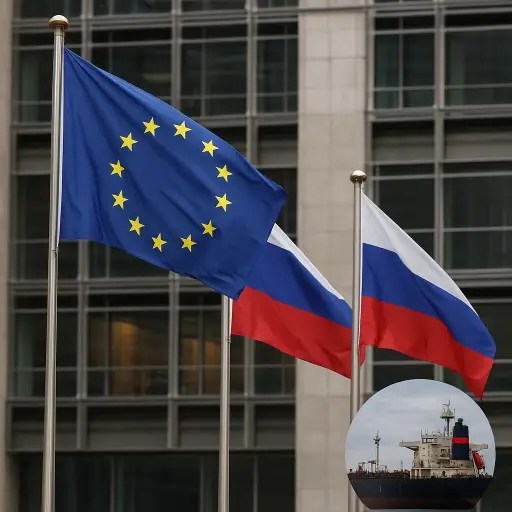
Senior EU officials signalled this week that the bloc is on the verge of adopting its 19th sanctions package against Russia, reinforcing its resolve to squeeze the financial and energy lifelines that support Moscow’s war effort. At the same time, the possibility of a visit by Russian President Vladimir Putin to an EU capital has stirred fresh debate among EU member states and illustrates the fraught diplomacy surrounding the conflict in Ukraine.
According to Kaja Kallas, the EU’s High Representative for Foreign Affairs and Security Policy, while the exact timing of the decision remains fluid, negotiators are aiming to formalise the new round of measures “this week.” This announcement follows her earlier remarks in August that the EU “will work on a 19th package of sanctions against Russia” and warned against any concessions to Moscow unless a full and unconditional cease‑fire is achieved.
Strengthening the pressure
The upcoming package builds on the bloc’s 18th sanctions round, approved in mid‑July, which focused heavily on Russia’s energy, banking and military‑industrial sectors. That package featured a lower price cap on Russian crude oil, expanded blacklisting of vessels in the so‑called “shadow fleet” and cut‑offs for financial transactions tied to Moscow’s war machine.
Officials say the 19th package will go further. Among the known contours: a swifter timetable for phasing out Russian hydrocarbon imports, tighter restrictions on technology transfers used in drones and warfare, and tougher measures closing loopholes used by shipping and insurance firms to circumvent current sanctions. While full details are not public, one report indicates the EU may advance a ban on Russian liquefied natural gas imports from 2028 to 2027.
One major hurdle this time around was cleared this weekend when Austria backed the package, reversing its earlier opposition and removing an important blocking point ahead of the EU foreign ministers’ meeting.
Diplomacy in the shadow of sanctions
Yet the diplomatic context is complicated. The possibility that Putin may be hosted by an EU member state has raised eyebrows in Brussels, particularly given the arrest warrant issued by the International Criminal Court (ICC) against him. Kallas described the idea of such a visit as “not nice” and stressed that any meeting must include the Ukrainian leadership to avoid sending the wrong signal.
Analysts say the timing underscores the dual‑track nature of EU policy: one track aims to squeeze Russia economically and curb its war‑machinery; the other explores diplomatic openings — but only on terms favourable to Kyiv and aligned with European unity. “We will not accept half‑hearted measures,” an Estonian foreign‑minister told reporters of the 19th package.
Internal divisions, strategic unity
Despite broad consensus, the EU still faces internal divisions that complicate unanimity—the requirement for adopting such sanctions. As recently as mid‑July, one member state had delayed the 18th package over concerns about phasing out Russian gas imports by 2028.
This time around, the bloc is keen to pre‑empt new hold‑outs. Member states are reportedly preparing accommodation letters and side‑mechanisms addressing energy‑security concerns and potential economic impacts. Brussels is also leaning on diplomatic signalling: Austria’s shift to support the new package shows that political pressure may be paying off.
Why this matters
Moscow’s economy has been under sustained strain from sanctions, but incremental moves by the EU still matter. By targeting oil‑price caps, shipping and insurance networks, and technology exports, the EU is aiming to raise the cost of Russia’s war in Ukraine to a point where continuing the conflict becomes unsustainable. Kallas herself framed the June meeting as the EU signalling: “Russia’s aggression cannot go unanswered.”
For Ukraine, the timing matters. Kyiv has repeatedly called for the EU and its allies to raise the pressure on Russia, arguing that military aid must be matched by economic leverage. The announcement of the forthcoming 19th package may serve as a signal to both Moscow and international markets that the EU remains committed — even as year‑end politics loom large.
Looking ahead
The next few days will be critical. EU foreign ministers are expected to gather in Luxembourg, where final political agreement could be secured. If adopted this week, the 19th sanctions package will mark another step in the bloc’s strategy of “maximum pressure.” Observers will then be watching for implementation and enforcement — especially in shipping and energy sectors, where Russia has shown capacity to adapt.
In parallel, the diplomacy with Putin—and Ukraine’s role in any talks—remains a wildcard. For the EU, maintaining credibility means coupling sanctions with coherence, and avoiding the appearance of division. As one Brussels diplomat put it: “Strength is as much about unity as about the measures themselves.”
 The Tower Post