
Human rights lawyers urge the International Criminal Court to investigate senior European figures over alleged complicity in migrant deaths and abuses linked to the EU–Libya migration‑enforcement regime.
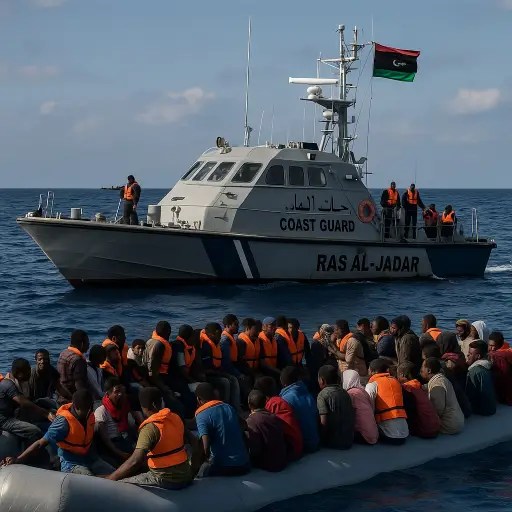
A landmark legal submission filed this week with the International Criminal Court in The Hague is turning the spotlight squarely on the European Union’s migration policies. Human rights lawyers have called for a full investigation into 122 current and former European officials, alleging their actions or omissions in the management of migration across the central Mediterranean amount to crimes against humanity.
The filing and its allegations
The core of the case is a 700‑page brief compiled by a team of lawyers led by Omer Shatz and Juan Branco. It draws on more than six years of investigation—including interviews with over 70 senior European officials, internal minutes of EU council meetings and classified documents—to identify how national governments and EU institutions allegedly coordinated policies that redirected asylum‑seekers and irregular migrants towards Libya’s detention system.
The filing names high‑level current and former officials from multiple EU member states—including, as previously reported, French President Emmanuel Macron and former German Chancellor Angela Merkel—among those accused of co‑perpetrating or participating in an “attack on a civilian population” through policies that foreseeably resulted in death, detention, torture, enslavement and other inhuman acts.
Specifically, the lawyers allege that tens of thousands of migrants died attempting to reach Europe via the central Mediterranean route, and many more were intercepted, returned to Libya or detained in horrific conditions, where they suffered systematic abuses.
The operational backdrop: EU–Libya cooperation
Since 2014‑15, the central Mediterranean route—primarily departures from Libya towards Italy or Malta—has become the deadliest migration corridor globally. While exact numbers vary, thousands of migrants have drowned or disappeared, and many more have been returned to Libya where non‑state armed actors, militias and the fragmented Libyan coast guard operate detention camps and torture centres.
The EU and member states have since adopted a policy of cooperation with Libyan coast‑guard forces and border‑control agencies, supporting them financially, training them and in some cases providing equipment, with the explicit aim of preventing migrant departures. Critics argue such cooperation shifted the rescue burden away from Europe, effectively outsourcing interception to Libya and creating a zone of impunity for abuses.
What the filing demands and what’s next
The lawyers request that the ICC open a formal investigation—arguing that the named individuals can be held individually criminally responsible under the Rome Statute for crimes against humanity. The key legal theory is that European officials knowingly implemented or sustained a policy whose effects included mass death and human‑rights abuses, thereby meeting the “widespread or systematic attack” standard.
The prosecution office of the ICC has previously acknowledged a situation under investigation in Libya but has not yet pursued charges against high‑ranking Europeans. The filing signals a push to expand the focus beyond Libyan actors and hold European policy‑makers accountable.
A spokesman for the European Commission said the EU continues to defend its migration policies as efforts to combat human trafficking, protect migrants and manage irregular flows: “We remain committed to engaging with all actors involved,” he said.
Implications: Legal, political and humanitarian
Legally, if the ICC opens an investigation, it could mark a significant expansion of accountability to include democratic states’ migration policies. The precedent would raise profound questions about “border control” as a state policy and its intersection with international criminal law.
Politically, the filing adds to mounting pressure on European capitals over their migration stance. Already facing domestic backlash over pushbacks, over‑crowded reception centres and cooperation with Libya, governments may now endure judicial scrutiny alongside reputational risk.
Humanitarian: For migrants and refugees, the case brings renewed focus to the dangers of crossing the Mediterranean and the detention regime in Libya. Advocacy groups hope it will drive meaningful reform—including safe‑and‑legal routes, rescue capacity and independent monitoring of interception‑return arrangements.
Challenges ahead
- Jurisdiction: The ICC must determine whether the alleged crimes fall within its jurisdiction and whether they meet the threshold of “crimes against humanity.”
- Standing: Some of the accused officials may invoke immunity or argue that the policies were lawful border‑control measures, not criminal.
- Evidence: Gathering admissible evidence of policy‑level intent and linking it to specific individual acts will be complex.
- State cooperation: The success of any investigation will depend heavily on state cooperation. Since Libya is not fully under control of the government and some European states may resist, enforcement may be difficult.
A strategic turning‑point?
Human rights lawyers view the filing as a strategic turning‑point in migration‑law litigation. One advisor said: “We did the work of the prosecutor’s office … we deconstructed the apparatus of power and identified which offices, which ministries, which individuals are responsible.”
If the ICC accepts the case, it could open investigations that ripple across Europe’s migration governance—and send a message: that migration‑management policies are not immune from the oversight of international criminal justice.
As Europe grapples with its identity as both a destination for asylum‑seekers and a fortress against irregular migration, the legal, moral and political stakes of this filing are high. For the tens of thousands who died or suffered along the route from Libya to Europe, it may mark a moment of reckoning.


 The Tower Post