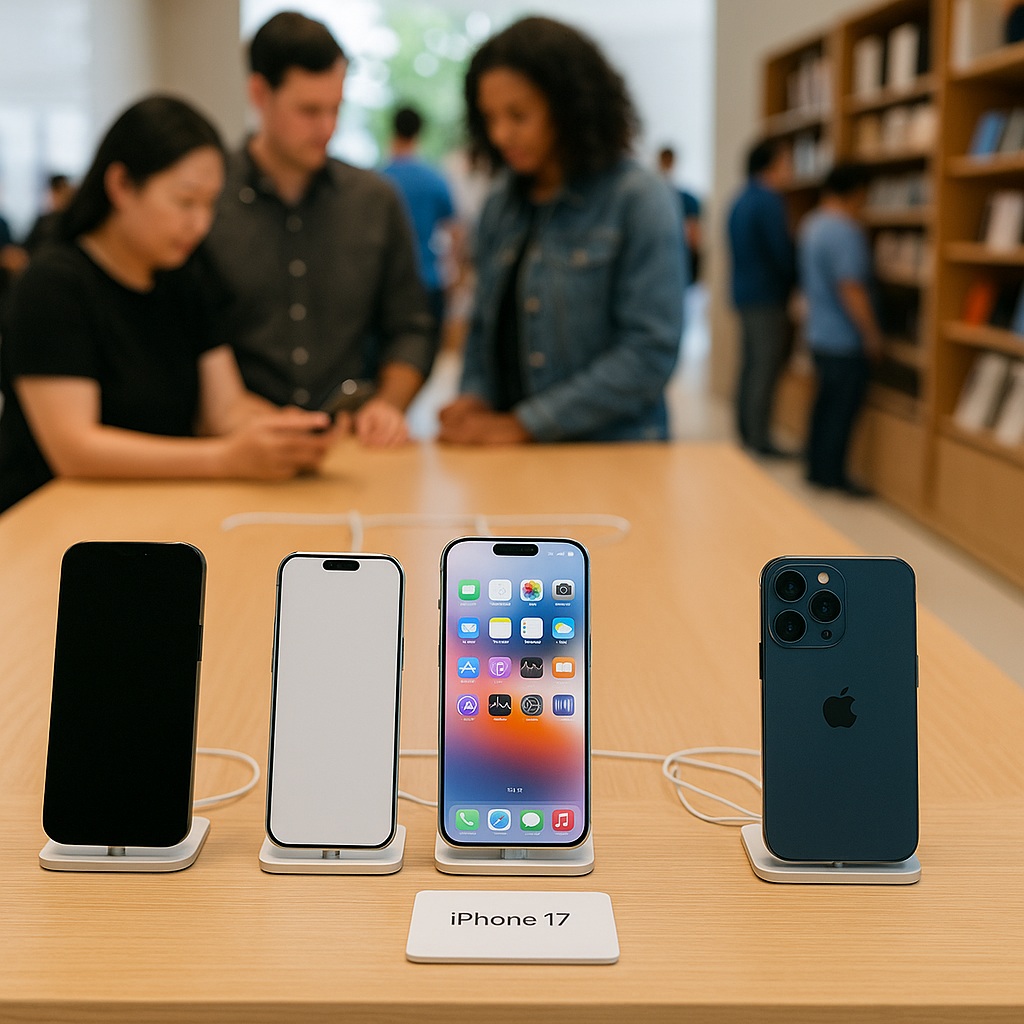
Counterpoint Research data show Apple’s latest flagship outpacing its predecessor thanks to value‑led upgrades and global launch momentum
The latest generation of Apple’s flagship smartphone, the iPhone 17 series, has enjoyed a notably stronger start than its predecessor in two of the world’s largest smartphone markets — China and the United States. According to a research brief published by Counterpoint Research on Monday, the iPhone 17 series achieved a 14 per cent higher volume of sales in its first ten days of availability compared with the iPhone 16 series.
In greater detail, the report states that the base model iPhone 17 nearly doubled the equivalent model’s sales in China during the same launch window. Across the two markets combined, the base unit recorded a 31 per cent increase. Senior analyst Mengmeng Zhang described the base‑model surge as “very compelling to consumers, offering great value for money.”
What’s Driving the Upsurge
Analysts point to several factors behind the stronger start of the iPhone 17 series:
- Upgraded core specs without a price increase. The base iPhone 17 retains the same starting price as last year’s equivalent model but includes enhancements such as a newer A19 chip (for the Pro/Max versions), improved display specifications and greater starting storage.
- Appeal of value in a challenging market. In China, where smartphone shipments are broadly flat or declining, the value‑oriented push of the base model appears to have resonated.
- Strong carrier promotions in the U.S. In the United States, carriers reportedly increased subsidised trade‑in offers for the iPhone 17 launch weekend, helping premium model sales gain traction.
- Global simultaneous launch strategy. The iPhone 17 series was launched globally—including in China—on September 19, 2025, supporting momentum across regions.
Implications for Apple and the Smartphone Market
For Apple Inc., this early performance offers a positive signal amid a smartphone market that is facing headwinds in key geographies:
- In China, for example, overall industry volume declined 0.6 per cent year‑on‑year in Q3 2025 yet Apple’s shipments in the quarter rose 0.6 per cent, driven by the iPhone 17 series.
- The uplift suggests Apple’s current flagship launch has avoided some of the softness afflicting competing segments and models.
For the broader smartphone industry, the data re‑emphasise that incremental improvements paired with stable pricing can still shift demand—even in mature markets. It may also stimulate competing manufacturers to accelerate promotional efforts, trade in upgrades and new value variants to stimulate demand.
But It’s Early Days
While the first ten‑day metric offers an encouraging start, several caveats remain:
- Volume thresholds: The 14 per cent improvement is relative — the absolute unit numbers were not disclosed in full. Without the raw base figure it is difficult to assess how large that uplift truly is in context.
- Sustainability: Whether the early momentum holds over later weeks and months will depend on factors such as supply constraints, trade‑in equity, and regional operator promotions.
- Competitive pressure: Despite the boost in China, Apple still faces intense competition from domestic vendors in that market, and wider macroeconomic headwinds (consumer sentiment, promotional intensity, currency and supply‑chain disruptions) remain.
- Geographical breadth: The metric covers only the U.S. and China — although key markets, they leave out many other regions where launch timing and consumer dynamics may differ.
Looking Ahead
Industry watchers will be monitoring how Apple sustains the momentum:
- Whether the Pro and Pro Max variants will drive comparable lift in premium segments, especially in the U.S., where high‑end sales carry greater margin.
- Whether carrier subsidies and trade‑in dynamics evolve further — analysts suggest the iPhone 17 launch may mark a shift toward more aggressive upgrade‑driven pricing strategies.
- How regional regulatory & ecosystem factors (for instance in China around eSIM roll‑out or localised software features) will impact longer‑term performance.
- Supply‑chain and production ramp effects, especially as Apple moves to ramp up the model through Q4 and enters holiday sales season.
Conclusion
The early sales data for the iPhone 17 series reveal a strong start for Apple in two of its most critical markets. With a 14 per cent uplift over the predecessor in the first ten days, and an even more pronounced surge in China for the base model, the strategy of offering meaningful upgrades at stable pricing appears to have paid off. While many variables remain in play—including global rollout, carrier dynamics and competitive reactions—the initial result is far better than many expected in a cautious smartphone environment. For Apple, the challenge now will be to translate this strong opening into sustained momentum through the key holiday quarter and beyond.




 The Tower Post