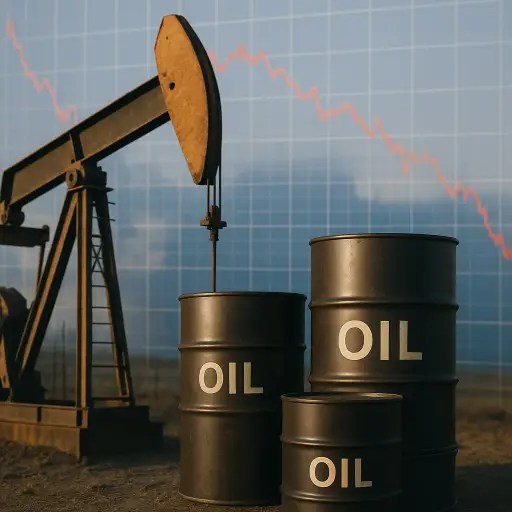
Global demand fears and Europe’s energy‑import vulnerability weigh on crude futures as supply concerns mount

Oil markets entered a cautious mood this week as crude benchmarks slid under the shadow of renewed trade frictions between the world’s two largest economies and broader concerns about global energy demand. Market participants pointed to a volatile mix of weaker demand signals and looming supply surpluses, compounding worries for major importing regions such as Europe.
Demand worries take centre‑stage
Prices for key crude benchmarks edged downward on Monday, with Brent crude futures dipping to just over US $61 a barrel and West Texas Intermediate (WTI) hovering around $57.
Analysts highlighted the dual threat: slower economic growth in light of U.S.–China trade escalation and a supply‑side overhang projected by the International Energy Agency (IEA) for 2026.
The U.S. and China have re‑imposed tariffs, raised port fees and threatened fresh trade restrictions, prompting investor concern that global freight flows and manufacturing activity may be disrupted, denting energy demand in Asia and beyond.
In China, the world’s largest crude importer, flows into storage facilities have sharply declined — a combined indicator of both weaker fresh demand and higher refinery throughput. The trend underscores a shift from aggressive stock‑piling toward processing, removing a key demand cushion for buyers of crude.
Supply dynamics add to the pressure
On the supply side, the IEA’s outlook has flagged a growing surplus in global crude supply through mid‑2026, shifting market sentiment from fears of shortfall toward the risk of glut. Meanwhile, producers in the Organization of the Petroleum Exporting Countries and allies (OPEC+) continue to maintain or raise output, further weighing on the balance.
Against that backdrop, some banks — including Bank of America — have warned that Brent crude could fall below the $50 mark if the demand outlook erodes further.
Europe faces heightened exposure
Unlike the U.S., which enjoys a growing degree of energy self‑sufficiency from its shale plays, the European Union remains reliant on large volumes of imported oil and refined product, exposing the region to both price swings and external demand shocks. One recent analysis pointed out how Europe’s trade and energy mix could leave it vulnerable to weaker global demand and shifting commodity pricing.
With crude prices under pressure, European refiners may face narrower margins, while consumer energy prices could ease — a mixed signal for inflation but potentially straining upstream investment in the region. The knock‑on effect of a weaker oil price could delay capital expenditure in European oil and gas sectors at a time when supply transitions are already under way.
China’s counter‑move and its ripple effects
Significantly, China has maintained favourable crude import flows this year — though recent data show storage inflows have been pared back sharply, to a daily surplus of 570,000 barrels in September, down from over 1 million barrels per day in August. That decline reflects both higher domestic refining throughput and caution over future price movements and demand prospects.
China’s import behaviour and its ability to absorb discounted crude, especially from Russia, introduce an added layer of complexity to global oil markets — altering traditional flows and challenging the stability of demand in other regions.
What to watch in the coming weeks
- Monitoring the outcome of high‑level trade talks between the U.S. and China, with any easing of tensions potentially providing support to oil.
- Watching inventory and shipment data from major importers and refiners (China, India, Europe) to assess whether demand is holding up or deteriorating further.
- Keeping an eye on production activity from OPEC+, U.S. shale and other major producers, since supply momentum appears resilient even as demand flags.
- Evaluating Europe’s downstream exposure: weaker crude prices may aid inflation relief but could pressure local investing and production capacity over time.
Conclusion
The convergence of renewed U.S.–China trade frictions, demand concerns and looming supply surpluses has placed oil markets in a defensive posture. Europe’s heavy dependence on imported crude adds further nuance: while lower prices may relieve inflation and consumer cost pressures, they also reflect a frailer global demand outlook, with implications for upstream energy investment and regional economic resilience alike.
With market sentiment increasingly shaped by the demand side, the short‑term bias appears bearish. Unless trade tensions ease or surprising demand strength emerges — perhaps via China or an unanticipated geopolitical route — oil prices may remain under pressure and risk revisiting the $50s threshold.



 The Tower Post