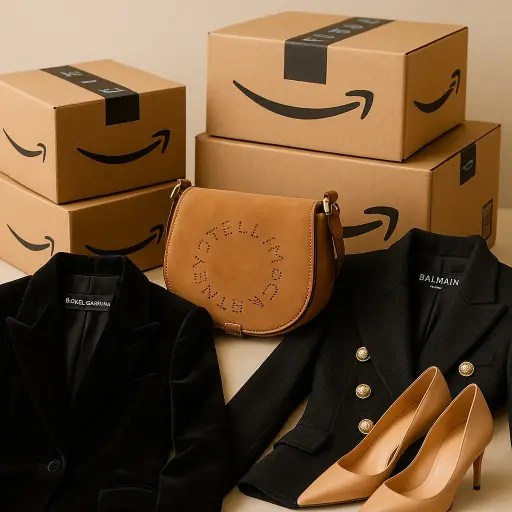
With brands such as Dolce & Gabbana, Stella McCartney and Balmain now onboard, Amazon accelerates its push into premium fashion through its Luxury platform

In a significant move for the luxury-retail landscape, Amazon.com, Inc. is stepping up its push into upscale fashion in the U.S., welcoming major labels such as Dolce & Gabbana, Stella McCartney and Balmain onto its “Luxury” platform. The strategy marks a departure from Amazon’s more mass-market positioning, highlighting its ambition to compete for higher-end shoppers and coveted designer brands.
A strategic pivot
Amazon’s luxury ambitions have been in development for some time. Its “Luxury Stores” initiative was launched in 2020 in an effort to provide a dedicated experience for premium fashion and beauty brands. The April 2025 launch of a dedicated storefront in partnership with Saks Global – parent to the venerable department store Saks Fifth Avenue – underscores the seriousness of the push. Through that storefront, Amazon offers a curated selection of approximately 110 fashion, makeup and skincare brands, including Stella McCartney, Balmain and Dolce & Gabbana.
By aligning with Saks, Amazon gains both an elevated brand halo and a route into luxury-retail infrastructure. As noted by one analyst: “Being able to use ‘Saks’ branding is expected to better establish credibility with luxury shoppers.”
Labels lining up
The addition of heavyweight designer names signals that Amazon’s offer is gaining traction among brands that once shunned the platform for its volume-driven, discount-friendly image. In the latest phase, Dolce & Gabbana, Balmain and Stella McCartney join the roster.
For consumers in the U.S., that means Amazon’s Luxury platform is becoming a true destination for high-end fashion — not merely the mass-market shopping site many associate it with. Amazon is offering designer goods alongside Prime-level convenience, bridging two retail worlds.
What’s new — and what remains
Amazon’s luxury push brings several distinguishing features:
- A dedicated luxury storefront designed to resemble a boutique experience, rather than a generic marketplace. For example, the Amazon-Saks storefront intentionally omits features typical to Amazon such as dynamic pricing, star ratings and “customers also bought” recommendations.
- Brand or retailer-controlled inventory and fulfillment in many cases. For the Amazon-Saks operation, Saks controls its own merchandise and fulfillment within Amazon’s environment.
- A more aspirational shopping experience targeted at affluent consumers — something luxury brands have demanded in order to maintain prestige and protect channel integrity.
That said, challenges remain. Amazon’s reputation as a mass-market platform still looms large, and luxury management will likely continue to scrutinize how their brand image is handled online. As one expert put it: “Luxury shoppers expect emotion, exclusivity, and connection — things that are hard to replicate online.”
Why now?
Several factors underpin the timing of this strategic shift:
- E-commerce penetration continues to rise for luxury goods, accelerated by changing consumer behaviour during and after the pandemic.
- Luxury brands are seeking new channels amid wholesale disruptions, and are increasingly open to alternative digital relationships as traditional department-store networks face challenges.
- Amazon sees luxury as a higher-margin growth area, helping it diversify beyond its predominantly value-oriented core and tap deeper into affluent consumers.
- Data sophistication and logistics maturity (including fast shipping, returns, and fulfilment) make Amazon more appealing as a partner to higher-end brands.
U.S. implications & competitive ripple
For the U.S. luxury-retail scene, Amazon’s expansion could reverberate in several ways:
- Traditional luxury platforms such as boutique e-commerce sites and standalone brand sites may face new competition from Amazon’s scale and reach.
- Department stores and luxury retailers may accelerate partnerships or alliances with Amazon-type models to retain relevance in an increasingly digital world.
- Consumers could benefit from improved access, faster shipping and easier returns for designer goods via Amazon’s logistics network.
- Brands will be watching closely whether listing on Amazon boosts volume without diluting exclusivity. The balancing act between reach and prestige is delicate.
Looking ahead
While major couture houses may remain cautious about Amazon for now, the platform’s curated luxury strategy appears to be gaining legitimacy. Additional brand launches are expected in coming months.
If Amazon can maintain a premium experience — both in presentation and customer service — while leveraging its unmatched reach, it may succeed in carving out a meaningful luxury niche in the U.S. market. But the question remains: will luxury shoppers embrace the world’s largest marketplace as a destination for their high-end purchases?
For now, Amazon’s move is a signal: luxury is no longer off-limits to the e-commerce giant. The stage is set for a new chapter in luxury retail, where scale meets exclusivity and high fashion meets the convenience of a “Buy Now” click.



 The Tower Post