
The European Union pledges to support Gaza’s recovery as MEPs charge the bloc with enabling the war and failing to act on human-rights abuses.
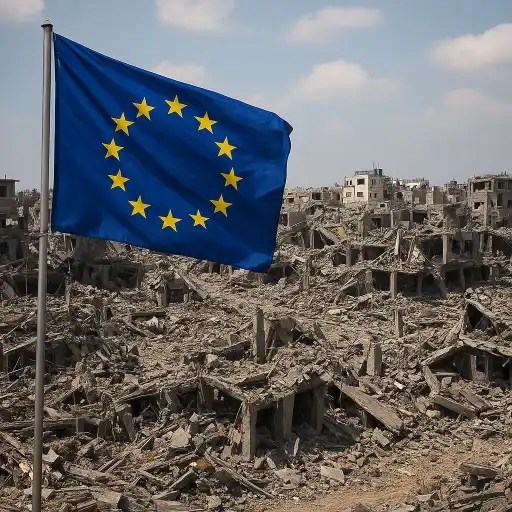
The European Union (EU) announced on Tuesday that it will lend its full backing to the recently brokered cease-fire arrangement in the Gaza Strip, offering to play what it called a “pivotal role” in the territory’s stabilization, humanitarian relief and reconstruction.
However, the move comes as several members of the European Parliament (MEPs) accused the bloc of complicity in the wider conflict — arguing that its longstanding ties with Israel and insufficient action to halt civilian suffering have rendered it morally compromised.
Cease-fire support and reconstruction role
According to an official press release, the EU “stands ready to contribute to the implementation of the Comprehensive Plan to End the Gaza Conflict through the variety of tools at its disposal.” That includes humanitarian aid, deployment of its civilian and security-missions (such as EUBAM Rafah and EUPOL COPPS), and reform support for the Palestinian Authority.
European Commission President Ursula von der Leyen and Council President António Costa have stressed that the EU’s contribution will also cover governance and institutional reforms in Gaza, aligned with a two-state solution.
At the same time, the EU’s foreign-affairs arm published an internal document urging the bloc to “maximise its influence on Gaza” and join a proposed international oversight body (the U.S.-led “Board of Peace”) as part of the post-hostilities transition.
Sharp criticism from within
Despite the public show of support, critics within the European Parliament have been vocal. Irish MEP Lynn Boylan of the Left Group said: “This cease-fire cannot be an excuse for the EU to sit on its hands. Now is the time for the EU to restore its credibility and to end its complicity in this genocide.”
Similar voices accused the bloc of embracing a “colonial mindset” and of having given Israel a “carte blanche” for alleged war-crimes whilst failing to hold it to account. Belgian MEP Marc Botenga claimed the EU was “financing and arming a genocide.”
At issue are longstanding EU trade and defence ties with Israel, the slow pace of humanitarian relief into Gaza and the perception that the bloc’s rhetoric has out-paced its substantive measures.
The stakes on the ground
The cease-fire follows a drawn-out military campaign which according to multiple sources caused catastrophic civilian suffering in Gaza. The EU press statement notes that the bloc will “continue to support the rapid, safe and unhindered delivery of humanitarian aid” in coordination with United Nations agencies and NGOs.
Another dimension is reconstruction. Gaza’s infrastructure has been severely damaged, humanitarian indicators remain dire, and the process of governance transition is far from settled. That means the EU’s role in financing, coordinating donor efforts and helping rebuild institutions is becoming central. The internal briefing warns the details of how Gaza will be governed long-term remain unresolved.
Internal EU fault lines and future questions
The internal EU split is evident. Some member-states favour robust action — sanctions, arms-embargoes, diplomatic pressure — while others are more cautious, viewing Israel as a key strategic partner. This divergence weakens the bloc’s capacity to act in unison.
Key questions now hinge on whether the EU can translate its pledge into credible action:
- Will Brussels condition its aid and reconstruction assistance on respect for international humanitarian law and accountability for war-crimes?
- Can the EU maintain a coherent line given member-state differences, and thus avoid being perceived as a passive back-seat actor?
- Will the bloc use its leverage — trade agreements, defence ties, diplomatic capital — to press Israel and parties in Gaza to comply with the cease-fire and reconstruction framework?
Several MEPs say unless the EU responds with tangible measures — suspension of arms exports, enforcement of trade commitments, visible engagement in Gaza’s governance — its role will be seen as cosmetic, at best. The accusation of complicity is sharp: though never stated in those words by the Commission, it echoes across parliamentary debate.
Looking ahead: whether support becomes substance
As donor meetings are scheduled (with the EU hosting coordination talks in November) and the first phases of reconstruction begin, Brussels has an opportunity to demonstrate leadership. Yet critics warn that if it fails to use its financial clout and institutional missions to hold actors to rights-based standards, the EU will meet the very scepticism its own officials hope to allay.
In a region marked by decades of conflict, the EU’s declared intent to play a “pivotal role” may be welcomed — but delivering on that requires more than words. With MEPs warning of the bloc’s “complicity” and civil society pressing for accountability, the next weeks will test whether EU support for Gaza can avoid being seen as mere façade.
As the cease-fire takes hold and reconstruction begins, the question remains: will the EU rise to the challenge — or will its credibility suffer from the gap between ambition and action?
 The Tower Post