Warsaw signals readiness to intercept Russian leader’s aircraft en route to Budapest summit amid ICC arrest warrant

In a sharply worded public statement, Poland’s Foreign Minister Radosław Sikorski warned that if Russian President Vladimir Putin attempts to fly through Polish airspace on his way to a scheduled summit in Hungary, his aircraft could be intercepted and he could be handed over to the International Criminal Court (ICC).
Sikorski told a Polish radio station that the country cannot guarantee that a Polish court would not order the government to escort Putin’s aircraft down for delivery to The Hague. The warning comes as the ICC’s 2023 arrest warrant, issued for alleged war crimes and the illegal deportation of Ukrainian children, remains outstanding.
“All ICC-member states are obliged to arrest President Putin if he sets foot on their territory,” Sikorski said, adding, “We cannot guarantee that an independent Polish court won’t order the government to escort such an aircraft to hand the suspect to the court in The Hague.”
Poland, a NATO member and staunch backer of Ukraine since the 2022 full-scale Russian invasion, says the legal obligation binds it — even if doing so would trigger a diplomatic storm or worse.
Legal fault lines and diplomatic ripples
The ICC warrant issued in March 2023 targets Putin over alleged war crimes connected to the conflict in Ukraine. Russia does not recognise the court’s jurisdiction and has dismissed the charges.
Poland’s warning highlights the stark legal trap facing Putin if he elects a flight path that crosses EU airspace. All EU members — with the exception of Hungary, which is in the process of leaving the court — are signatories to the ICC treaty and thus legally bound to detain him if he flies through their skies or lands on their territory.
Meanwhile Hungary has pledged safe passage for Putin, should the proposed meeting with former U.S. President Donald Trump go ahead in Budapest. That pledge sits uneasily with its status as an ICC member until June 2026, underscoring the diplomatic contradictions at play.
Air-route logistics become geopolitical chess
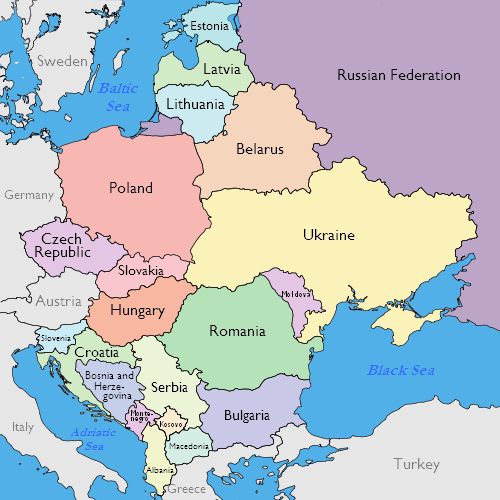
Reaching Hungary from Russia has become a logistical puzzle for Putin’s team. With Ukrainian airspace off-limits due to war, and much of EU airspace closed to Russian-registered aircraft under sanctions, the question of “how to fly” has become politically and legally fraught.
Analysts suggest the likely route would avoid Poland entirely, instead travelling via the Balkans through Serbia, Bulgaria or Romania. Poland’s warning may push such re-routing even further south and west, increasing costs, flight time and exposure.
In short: the flight plan has become a geopolitical statement.
Warsaw’s position: legal duty meets strategic posture
Polish officials make clear that the statement is rooted in legal obligation — but also serves as a message of support to Kyiv. Poland has emerged as one of Ukraine’s most committed Western backers, both politically and militarily.
By publicly drawing a line over Putin’s access to European airspace, Warsaw is signalling that legal frameworks — even ones aimed at the world’s most powerful statesmen — can matter. It also underscores Poland’s willingness to take hard stances in the broader Russia-Ukraine confrontation.
At the same time, there remains an element of strategic caution: Poland is not announcing a guaranteed interception, but emphasising that the legal chain could require it. Even the foreign minister admits there is no automatic guarantee.
What this means for the Budapest summit
If the summit between Putin and Trump proceeds in Budapest, the transit routes will be scrutinised intensely. Should the aircraft avoid Poland and other ICC-member states, questions will remain about the message sent to Ukraine and to the West.
If, however, the Russian leader were to land or fly through a state party to the ICC, the political consequences could be severe — for Putin, for the hosting state and for the architecture of European legal and diplomatic norms.
For Poland, the moment underscores a test of principle: will it act if the legal mechanism demands it? For Russia, it adds a tangible impediment to mobility and an added leverage point for critics.
Wider implications for international law and diplomacy
This episode brings into sharp relief the intersection of international law, air-transit rights and geopolitics. The ICC’s mandate — designed to hold the world’s worst perpetrators to account — is encountering on-the-ground realities of diplomacy, war and transit.
If states like Poland demonstrate that even a head of state may have to observe arrest warrants, the precedent could ripple beyond this case. On the other hand, the diplomatic cover offered by states like Hungary may expose the limits of international legal enforcement when powerful actors are involved.
The air above Europe is, for once, not just a physical space: it is a terrain of legal confrontation and diplomatic gamble.
Final tally: flight path or fault line?
As October 2025 unfolds, the question of how President Putin will reach Budapest — and whether that route will pass through Poland — is more than a matter of logistics. It is a test of legal obligation, alliance solidarity, state sovereignty and wartime diplomacy.
Poland has drawn the line in the sky. Whether Putin flies over it is now a matter of judgement — and perhaps, of consequence.



 The Tower Post