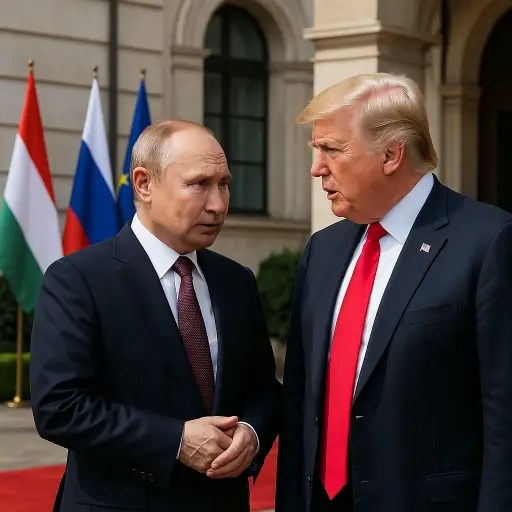
With legal red‑flags, Hungary’s Russia‑leaning posture and rising nervousness in European capitals, a planned Vladimir Putin–Donald Trump summit asks more questions than it answers.

The announcement of a forthcoming meeting between Russian President Vladimir Putin and U.S. President Donald Trump — to be hosted by Hungary — has stirred growing unease among Europe’s capitals. With the war in Ukraine still raging, an international criminal‑court warrant outstanding against Putin, and Hungary’s increasingly distinct attitude toward Russia, the stage for what might have been a diplomatic breakthrough now looks fraught with geopolitical risk.
A host with a difference
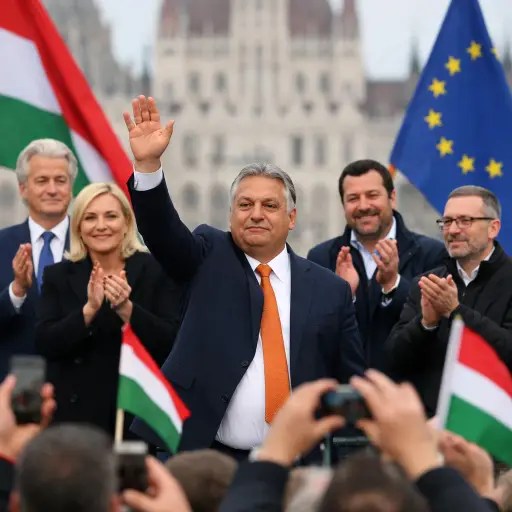
Hungary, led by Prime Minister Viktor Orbán, has carved a path strikingly different from many of its EU and NATO partners with regard to Russia and the war in Ukraine. The choice of Budapest as the meeting location may signal more than neutrality. Hungary has in recent years blocked arms transit to Ukraine, warmed relations with Moscow and resisted EU sanctions packages.
As the Hungarian foreign minister affirmed, Budapest is “ready to ensure” that Putin can arrive and depart safely. This particular guarantee raises red flags for European allies uneasy about giving the Russian leader safe passage when he is indicted by the International Criminal Court (ICC) for alleged war crimes.
Legal and logistical minefields
Putin faces an arrest warrant from the ICC for war crimes, including the forced deportation of Ukrainian children. For him to travel to Budapest, he must traverse one or more airspaces of EU or NATO countries — each legally bound to act should he enter their territory. Analysts say the flight route could require special derogations.
Poland has made clear it will not grant safe air‑transit without risking enforcement of the warrant. Meanwhile, Brussels voices cautious support for a U.S.–Russia summit so long as it advances peace — but emphasises that any deal must include Ukraine and preserve its territorial integrity.
European capitals on edge
For EU capitals, the very optics of a Putin–Trump meeting in Hungary are deeply uncomfortable. They fear the summit may undercut the bloc’s unified front toward Russia and send a message that some member states are willing to drift toward Moscow’s orbit. As one commentary put it, the summit is seen in Brussels as “a political nightmare” for European unity.
Germany, France and Lithuania are among those pressing for a format which includes Kyiv and Europe’s institutions — and not one where Washington and Moscow negotiate behind closed doors.
What’s in it for Trump and Putin?
For Trump, the summit is billed as a bold diplomatic step to end the “inglorious” war in Ukraine — a central theme of his campaign and administration’s early months. For Putin, it represents both access to the major world power of the United States and potential diplomatic normalisation — despite the ICC warrant and Western isolation. Analysts say the venue in Hungary may be a symbolic win for Moscow.
But neither side has yet committed to a substantial deal: the Kremlin says the date is “not yet fixed” and that much preparatory work remains.
Risks for Ukraine and the West
Perhaps the most immediate concern is what the summit could signal about Ukraine’s role in any negotiations. Kyiv has made clear it must be at the table — not sidelined. President Volodymyr Zelenskyy has said he would join if invited in the right format, but criticised the venue choice and Hungary’s record.
European leaders likewise reject any framework in which Ukraine must concede territory in order to achieve peace — yet that scenario has been floated. There is fear that negotiating a cease‑fire on current lines would effectively freeze Russian gains and damage Ukraine’s long‑term position.
What Europe watches now
Over the coming weeks, much attention will turn to procedural details: who sits at the table, what format the talks take, whether Ukraine is represented, and which path Putin uses to travel to Budapest. The atmosphere in Brussels is clearly one of restraint: welcome the idea of dialogue, but worry deeply about precedent and alliance cohesion.
If the summit proceeds without Ukraine, without transparent preparation and with Hungary acting independently, it risks fragmenting the Western diplomatic front.
Should the meeting deliver concrete commitments — perhaps a path toward ending hostilities — it could be historic. But for now, Europe is jittery, unsure whether this is a real opportunity for peace or a diplomatic gambit that undermines its own unity.

 The Tower Post