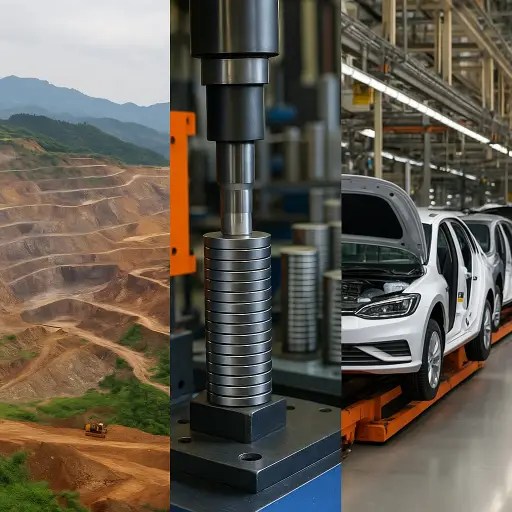
With supply chains under strain, the EU signals it will press Brussels’ trade negotiations with China’s commerce ministry to avert a rare‑earths squeeze that’s imperilling European industry.

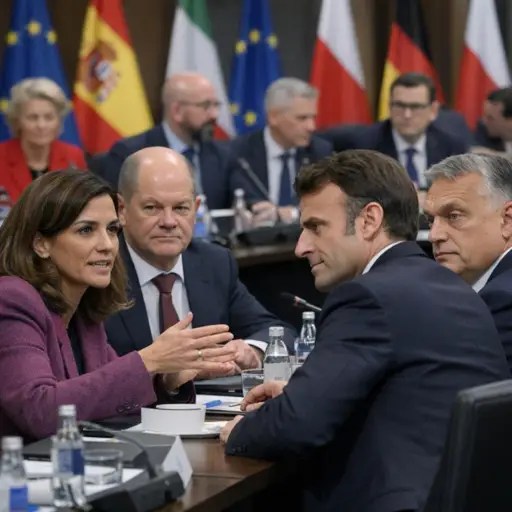
This Thursday, senior officials in Brussels will convene a crucial meeting between the European Union and China, raising the stakes in a dispute over rare‑earth minerals that many EU manufacturers say is already jeopardising their operations.
At the heart of the session sits Maroš Šefčovič, the European Trade Commissioner, who has formally invited China’s Commerce Minister, Wang Wentao, to the Belgian capital to discuss Beijing’s tightening export controls on critical rare‑earth elements and magnets. European industry stakeholders say these controls are disrupting both automotive and heavy‑machinery supply chains.
For Brussels, the message is clear and urgent: the bloc will use this high‑level engagement to urge China to streamline export licensing, end non‑transparent bottlenecks, and ensure stable access to raw materials essential for European production. According to EU sources, the meeting represents more than another diplomatic sit‑down — it may serve as a turning point in how Europe navigates its dependence on China for strategic inputs.
A System Under Strain
Europe’s heavy industries have become alarmingly exposed. China dominates the processing and refining of rare earth elements (REEs) — minerals critical for manufacturing everything from electric‑vehicle motors and wind‑turbine magnets to aerospace components and sophisticated machinery.
When Beijing introduced new licensing rules earlier this year, European assembly lines felt the impact: several auto‑parts plants reported output slow‑downs, and major manufacturers flagged the risks of supply disruptions.
The EU has repeatedly voiced concern. In a recent press‑release the European Commission noted China’s export controls had placed “significant strain” on European companies, and urged accelerated domestic capacity under the bloc’s own Critical Raw Materials legislation.
Meanwhile, Beijing defends the measures as legitimate controls over dual‑use goods and part of its international obligations. “These export controls are in line with international common practice,” a spokesperson from China’s Foreign Ministry said, while urging the EU to avoid politicising trade.
In July, during a summit in Beijing, EU and Chinese leaders agreed to create a mechanism to mediate rare‑earth supply bottlenecks — a signal that the issue is too large to ignore.
Why This Matters for Thursday’s Meeting
This week’s meeting brings several threads together:
- Brussels wants immediate clarity on the backlog of export‑licence applications lodged by European companies with Chinese authorities — delays that manufacturers say are harming operational planning and increasing costs.
- The EU is pushing to turn the existing supply‑chain agreement into a live operational mechanism, one where issues are flagged and resolved rather than let accumulate.
- The tone of the talks suggests the EU will explore escalation options if satisfactory progress is not made — but it’s likely to emphasise dialogue first, signalling it does not want a full decoupling from China, but rather a more balanced relationship.
According to local reporting, China expanded its rare‑earth export controls very recently, adding additional elements and tighter scrutiny of magnet manufacturing technology. That heightens urgency from the European side: delays are no longer theoretical.
For Europe’s automotive and machinery sectors — which rely on just‑in‑time supply lines and increasingly electrified production models — even modest disruptions can ripple through months of output. The EU side is aware that a failure to act now risks higher costs, delayed products and lost competitiveness.
The Stakes Are Broader Than Trade
Apart from immediate industrial concerns, the broader dimension of the meeting involves geopolitics and strategic supply‑chain resilience. As the EU diversifies its trade partnerships under initiatives like the Critical Raw Materials Act, it is implicitly signalling to China that access to key inputs will be subject to new rules and expectations.
Analysts argue that Europe is caught between the United States — which is pushing its own agenda on Chinese rare‑earth dominance — and the need to maintain commercial ties with Beijing. Brussels’ approach so far has sought to avoid the aggressive rhetoric seen in Washington but the underlying pressure is unmistakable.
The outcome of the Thursday meeting could ripple outward: if China offers a credible plan to speed up licence approvals and unblock supplies, it may restore confidence among European industrialists. If not, the EU may face a decision point: accelerate its independent sourcing, ramp up domestic capacity — or adopt more hard‑line trade measures.
Looking Ahead: What to Watch
Several indicators will shape how this story evolves:
- Speed of licence approvals: Whether China follows through with its stated promise to create a “green channel” for European firms.
- Operational output: Whether European vehicle and machinery makers report easing of supply‑chain disruptions in the weeks following the meeting.
- Diplomatic tone: Whether the meeting ends with a joint statement of intent, or a more cautious “we will continue discussions” communiqué.
- Strategic adjustments: Whether Brussels announces accelerated investment or incentives under its raw‑materials strategy to reduce dependence on China.
- Wider geopolitical response: How allies such as the U.S., Japan and other G7 members react—whether they coordinate responses to China’s rare‑earth dominance.
Conclusion
As Thursday’s meeting looms, Brussels is placing a big bet: namely, that high‑level diplomacy can still deliver practical industrial outcomes in a world of heavy economic interdependence. For European manufacturers — from car‑makers to machine‑tool operators — the tangible deliverable is clear access to rare‑earth inputs without unpredictable hold‑ups.
For China, the discussion represents a moment to balance its strategic leverage with the risk of pushing its key European trading partner into accelerated diversification. How smoothly the machinery of supply‑chain stability now turns may depend on less dramatic headlines than will meet the eye: permit approvals processed, shipments cleared, production lines kept rolling.
Viewed from Brussels, this is not only a trade negotiation — it’s a test of whether the EU can steady a key choke point in its industrial ecosystem before disruption becomes deeply embedded.


 The Tower Post