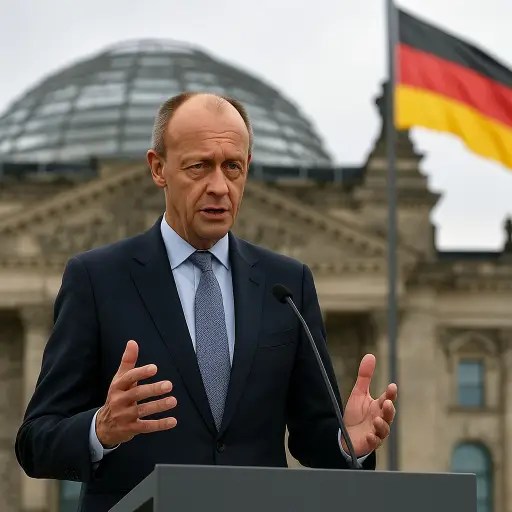
Three years into his tenure, the chancellor’s reform drive collides with slow growth, a far‑right surge, and coalition friction
The mood in Berlin is brittle. Three years after taking office, Chancellor Friedrich Merz faces a Germany that has grown more anxious, not less; more fractious, not more coherent.
What started as a pledge to unshackle the economy and refresh the country’s confidence has hardened into a test of political stamina. On Thursday, that test becomes more acute, with the governing alliance expected to square off over the next round of reforms—and over the credibility of the chancellor himself.
Merz entered the chancellery promising clarity: leaner rules for business, faster permitting, sturdier public investment, a tighter but fair welfare state, and a reset on energy, migration, and defense. He offered a language of adult supervision after years of grand coalitions and grand compromises. But the reforms have moved haltingly, tripped by legal snarls, fiscal strait‑jackets, and coalition partners with different priorities.
Each delay has chipped away at the aura of inevitability that once surrounded his agenda.
The economy has not helped. Growth is weak; industry is still digesting higher energy costs and a tougher export environment; consumers remain cautious. The government’s answer—streamline, digitize, mobilize—reads well on paper yet collides with an administrative culture famous for paper of a different sort. Merz’s allies say the machinery of the state is finally moving in the right direction; his critics say that by the time results arrive, voters will have already rendered their verdict.
The political geometry is no kinder. As frustration spreads, support for the far‑right keeps rising in regions where the traditional center‑right once looked unassailable. Local races that used to be quiet bookkeeping exercises have become warning lights on the national dashboard. Merz insists there will be no cooperation with extremists. That firewall remains a core piece of his identity. But it also narrows his room to maneuver, especially when restive backbenchers argue that the party is losing touch with voters it once presumed to understand.
Inside the coalition, fatigue is showing. Partners who once touted a pragmatic partnership now nurse a tally of slights and public spats. Merz’s camp complains that allies block sensible supply‑side measures and speak past the government’s economic message. The partners counter that the chancellor governs by headline, not by coalition craft, and too often leaves them to defend trade‑offs that he announces. Both can point to episodes that seem to prove the case.
The next phase is supposed to be about execution: accelerating infrastructure builds, delivering on tax and permitting simplifications, and offering a clearer plan for skills and labor shortages. The chancellery argues that these measures are already negotiated and that their impact will compound once they are implemented at scale. But the calendar is unforgiving. Germany’s political weather has turned sudden and changeable; even minor storms now look like squalls.
Merz’s supporters say the country still underestimates the breadth of his program. They point to overdue investments in rail and grid connections, procurement fixes, an industrial policy that is more targeted than subsidized, and a push to thin out the thicket of duplicative rules that slow building. If the coalition holds, they argue, the results will begin to surface—perhaps not spectacular, but sufficient to restore a sense of direction.
Skeptics reply that the issue is not the menu but the kitchen. The same bureaucratic bottlenecks that Merz promised to dismantle continue to sap momentum. Regional authorities move at different speeds; courts still scrutinize climate and budget frameworks; and cash‑strapped municipalities are wary of mandates that arrive without money attached.
Meanwhile, the national conversation has grown more caustic, reflecting deeper unease about the country’s place in a world that looks less dependable.
The chancellor’s message—discipline now, payoff later—lands awkwardly in this climate.
Austerity is a hard sell when growth is soft, and appeals to patience ring hollow when everyday frictions pile up: trains that miss, paperwork that multiplies, projects that take years. Even where the government has made progress, the advances are technical and hard to narrate. In politics, tangibility matters. Citizens want a bridge opened, not a briefing on procurement.
Thursday’s parliamentary choreography, then, matters less for any single vote than for whether the government can project a sense of momentum. Merz needs to show he can keep fissures from becoming fractures—inside his party and across the coalition. He must also persuade business that the state can still deliver, and convince households that stability does not mean stagnation. That is a lot to ask from a weeknight sitting, but politics often reduces to theater: viewers judge whether the lead looks in command of the stage.
The opposition, for its part, is torn between exploiting the government’s discomfort and proposing an alternative that is more than anger. It promises toughness on crime and border policy, swagger on energy security, and deference to local identity. These themes connect; they also risk deepening the very divisions that exhaust the country. Merz has chosen to fight on this ground too—insisting on order, insisting on limits—while trying to keep a pro‑growth center that is growing thinner.
Abroad, partners watch with the wary attention usually reserved for close relatives.
Europe needs a Germany that invests, integrates, and leads without hectoring. Merz has committed to that role, but commitments must be matched with budgets and bandwidth. If the coalition can steady itself, Germany could yet reclaim the reputation for methodical progress that once seemed second nature.
For now, the country sits between appetite and restraint: wanting speed, fearing risk; wanting clarity, fearing change. Merz embodies this tension. His brand is competence and certainty, his circumstance is drift. He remains a formidable political asset—disciplined, unflappable, and capable of speaking to conservative voters who are not ideological purists. But the longer the doldrums last, the more that asset depreciates.
Politics rarely offers perfect endings. More often, there is a muddling through until results arrive or patience runs out. The chancellor’s wager is that delivery—on infrastructure, on permitting, on skills—will arrive in time to hold the center together.
The counter‑wager is that voters have already made up their minds. Thursday will not settle the matter. It will, however, show whether Friedrich Merz can still bend events to his will—or whether events are now bending him.


 The Tower Post