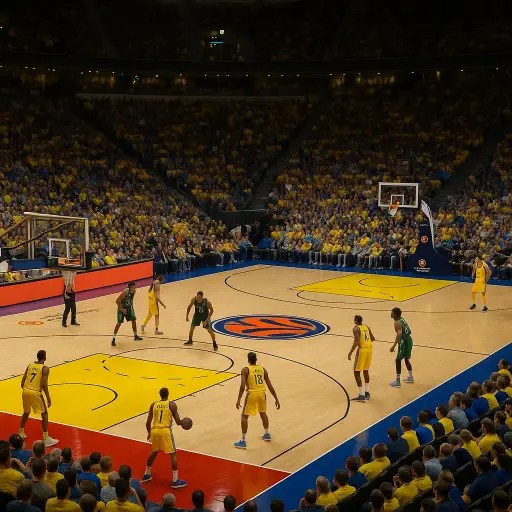
After more than two years of relocation, elite European club competition prepares to resume in Israel on December 1 — a landmark moment for sport, security and symbolism.

For the first time since early October 2023, Europe’s premier club‑basketball competitions — the EuroLeague and the EuroCup — will resume games in Israel from December 1 this season, a decision announced by organisers and confirmed by multiple outlets.
A Homecoming After a Long Absence
Israeli teams participating in Europe’s top leagues have been playing their “home” games at neutral venues since the conflict erupted in October 2023. With the new decision, clubs such as Maccabi Tel Aviv, Hapoel Tel Aviv (both EuroLeague participants) and Hapoel Jerusalem (in the EuroCup) will regain the chance to host games on Israeli soil.
Organisers emphasise that the return is conditional on security, monitoring and coordination with local authorities, as well as all teams and stakeholders.
Why Now? The Context and Catalyst
The move comes amid recent developments in the region — including cease‑fire arrangements, diplomatic efforts and a relative easing of security conditions around international sporting events in Israel. According to reports, the decision was taken by the league’s member clubs after deliberation on the situation and future steps.
In addition, Israeli clubs had formally requested to be allowed to host games domestically again, citing improved conditions and the important value of home‑support, travel logistics and local fan engagement.
Sporting, Economic and Symbolic Dimensions
Beyond the immediate logistical advantages, the decision carries multiple layers of significance:
- Sporting sense: For clubs and fans alike, returning to home arenas restores routine, local identity and the advantage of home crowds — a factor long missing for Israeli clubs in European competition.
- Economic and broadcast value: Domestic hosting often means better attendance, stronger local media rights and fan‑engagement opportunities. Indeed, the EuroLeague recently extended its Israeli broadcast partner deal through 2031, recognizing Israel’s basketball fanbase.
- Symbolic weight: Sport is often seen as a barometer of normalcy and reintegration. Hosting games in Israel again sends a message that the continent’s top clubs believe it is viable and safe enough to do so — while also placing emphasis on the values of unity, respect and competition beyond politics.
- Logistical relief: Previous seasons saw Israeli clubs forced into neutral venues, adding travel strain, reducing local fan access and sometimes affecting performance. The return to domestic games should ease those burdens.
Caveats & Watch‑Points
However, the announcement is not without provisos and potential risks:
- The organising body remains cautious, reaffirming it will keep the situation under review and reserves the right to adjust if conditions change.
- Security concerns persist: competing teams, visiting fans and broadcasters will keep their eyes on logistics, alarm systems, travel routes and emergency protocols. Some clubs have publicly cited unresolved issues in recent weeks.
- For some stakeholders, trust must be rebuilt. After two years of relocation, the return will also test whether visiting teams are comfortable, fans willing to travel, and local arenas fully prepared to meet continental competition standards.
- The broader geopolitical context remains fluid: While the pause in host game relocation is a positive sign, external events could force future disruption — making contingency planning essential.
What Comes Next: Practical Implications
From an operational standpoint, a few key outcomes immediately follow:
- Israeli clubs will begin scheduling home games in Israeli city venues, meaning local fans will finally again see EuroLeague/EuroCup opponents in person, in their own country.
- Visiting European clubs will have to resume travel to Israel — meaning coordination on visas, security briefings, travel advisories and local logistics will be high priority.
- Broadcasters and sponsors will likely recalibrate their plans: realizing the value of local crowd atmosphere, Israeli arena narratives and home‑story content for domestic markets.
- Ticketing and marketing will pick up momentum: With home games back, clubs will ramp up season‑ticket offers, corporate hospitality set‑ups and fan‑engagement campaigns locally.
- Monitoring will increase: Even as games resume, league officials will maintain heightened oversight of conditions and may retain the option to relocate or postpone if required.
Looking Forward: A Test Case for Sport & Stability
The December 1 restart marks more than just a scheduling note: it is an experiment in how elite sport can navigate sensitive geopolitical terrains while still retaining the integrity of competition. If successful, this could serve as a blueprint for other scenarios where conflicts impede normal club operations.
For Israeli basketball, the return of the EuroLeague and EuroCup home games signifies a reclaiming of normalcy — for fans, for clubs and for a sporting culture long rich in continental legacy. For the rest of Europe’s basketball ecosystem, it signals confidence that the region can again safely host elite club games in Israel.
As game day approaches, all eyes will be on arenas, airports and security briefings. Fans will watch whether the home‑court advantage truly returns. And for the sport itself, this move may well turn into one of the season’s most closely followed narratives.




 The Tower Post