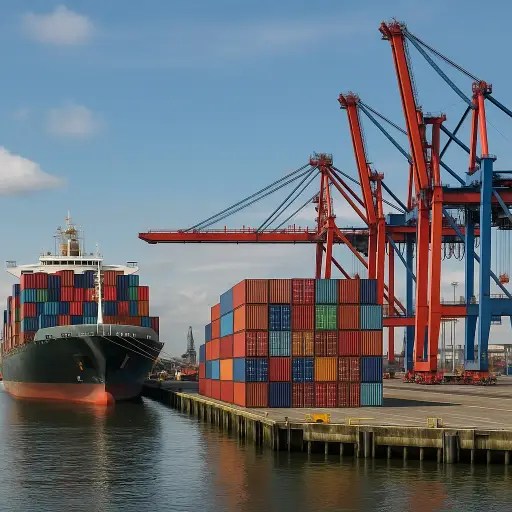
Beijing reclaims its place as Germany’s largest trading partner in the first eight months of 2025, as US‑imposed tariffs sap German exports and steer Berlin’s trade winds eastward.
In a striking reversal of fortunes, the People’s Republic of China has regained its position as the top trading partner of Germany, according to preliminary government data covering the first eight months of 2025. Bilateral goods trade between Germany and China reached approximately €163.4 billion, edging past trade with the United States at about €162.8 billion in the same period.
This development marks a significant pivot in global economic dynamics. China had held the lead until 2023, only to be overtaken by the United States in 2024 — the first time China was not Germany’s top partner since 2015. The shift this year signals renewed momentum in China–Germany trade and mounting pressure on German exports to the U.S. amid heightened tariff barriers.
A Perfect Storm: Tariffs, Export Slump and Import Surge
German exports to the United States have taken a clear hit. German industrial output is now at levels not seen since the early pandemic period. Exports to the U.S. fell 2.1 % in June vs. May, marking the third straight monthly decline. What’s more, Germany’s exports to the U.S. in the first eight months of 2025 dropped by 7.4% compared to last year, reflecting the impact of renewed U.S. tariffs.
On the flip side, imports from China soared. While German exports to China also declined — down 13.5% during the same period — imports from China grew by about 8.3%, lifting the total bilateral trade volume.
The combination of weakened export figures to the U.S., robust imports from China, and China’s recovering manufacturing and export base means Beijing is back in the ascendancy in Germany’s trade ledger.
What It Signals for Germany’s Industry
Germany’s manufacturing heartland now operates amid unsettling terrain. A recent policy brief warns of a “second China shock” for German industry — wherein the country’s long‑standing export model faces disruption as China pushes its own manufacturing capabilities and Germany struggles to regain momentum.
From a strategic angle, the rise in Chinese imports underscores Germany’s growing dependency on the Asian supply chain. As one German policy analysis put it, while trade and investment with China remain vital, “they must be under certain conditions” to safeguard European industrial capacity and geopolitical independence.
The US Factor and Tariff Pressure
The backdrop to this trade shift is unmistakably shaped by the Trump‑era tariff regime in the U.S. Germany’s exports — especially machinery, chemicals and vehicles — have been under increasing pressure. The U.S.’s assertive trade posture has not only throttled demand for German goods but has also nudged German firms to revisit production footprints and trading alliances.
An economic institute in Germany estimated that a full‑blown 25 % tariff conflict could shave over 1 % off Germany’s GDP and reduce employment by tens of thousands. The reality: amid the trade shock with America, China regained ground.
Looking Ahead: Risks, Rebalancing and the Supply‑Chain Question
The revival of the China‑Germany trade axis isn’t without its caution flags. Some economists warn that Germany’s increasing reliance on Chinese supply chains and markets heightens exposure to Beijing’s strategic ambitions and economic volatility.
In Berlin, the concept of “de‑risking” — reducing exposure to any single foreign market — remains alive. Germany’s new China strategy emphasises diversification and industrial resilience.
Meanwhile, with U.S. demand faltering, Germany must balance three imperatives:
- Regaining competitiveness in its traditional export markets (the U.S. above all) while navigating tariff regimes.
- Managing dependence on Chinese supply‑chain nodes without surrendering strategic autonomy.
- Strengthening intra‑European trade flows and regional resilience as part of its industrial strategy.
Final Word
For Germany, the news that China has climbed back to the top of its trading partner list is more than a statistical wrinkle. It reflects evolving global trade architectures and challenges the export‑led model that has powered the country’s economy for decades.
In a world of shifting alliances and tariff skirmishes, Germany finds itself at a crossroads: restore its footing in the U.S. market, deepen ties with China cautiously, and fortify its industrial base for the storms ahead. The next 12–24 months will be critical in determining whether this trade re‑orientation yields resilience or exposure.


 The Tower Post