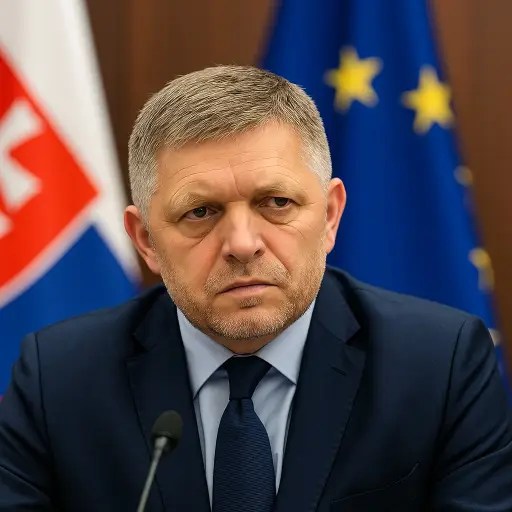
Prime Minister Robert Fico pledges support for the bloc’s next sanctions round—if Brussels addresses energy‑cost and automotive‑industry safeguards for Slovakia.

Bratislava — In a move that jolts the diplomatic balance within the European Union (EU), Slovak Prime Minister Robert Fico announced on 22 October 2025 that his country is “likely” to support the EU’s upcoming 19th sanctions package against Russia — but only if the bloc meets key Slovak conditions regarding energy security and its vital automotive sector.
For months, Slovakia has stood out as one of the few hold‑outs among the EU’s 27 member states. Early in June, Fico warned he would veto any sanctions measure that threatened Slovakia’s national interests — describing some planned energy cuts as “economic suicide.” But the new public indication of conditional backing signals a potential shift — one that diplomats say could unlock the long‑blocked sanctions round.
What Slovakia Wants in Return
According to multiple reports, Slovakia’s approval hinges on two main demands:
- Energy guarantees — Slovakia remains heavily dependent on imported energy, including Russian gas and nuclear fuel. Fico has repeatedly argued that new sanctions targeting Moscow’s energy revenues or supply routes must come with unequivocal protections for Bratislava’s supplies and the bloc must mitigate surging electricity and heating costs.
- Support for the car‑industry — Slovakia is home to a significant automotive manufacturing base, which faces headwinds from high energy prices and changing climate‑regulation demands. Fico insists that any sanctions package must include “realistic proposals” to align EU climate/industry policy with the needs of carmakers.
If those conditions are included in the summit conclusions this week, Fico says Slovakia will lift its veto and vote in favour of the sanctions.
Why This Matters for the EU
Because each sanctions package requires unanimity among member states, Slovakia’s prior resistance had blocked adoption of earlier rounds.
Now, if Bratislava gives its green light, the 19th package — reportedly targeting further Russian oil, liquefied natural gas (LNG), shadow‑shipping operations, and banks — can move ahead.
That would restore some momentum to the EU’s sanctions strategy at a time when internal unity has been eroding and enforcement challenges mounting.
Risks & Political Undercurrents
However, Fico’s conditional support also underscores deep fractures within the EU over how far the bloc is willing to go and at what cost.
- Some member states and EU institutions view Fico’s moves as blocking tactics, demanding concessions in exchange for alignment.
- Critics argue that Slovakia’s insistence on industry protections may set a precedent for other states to extract carve‑outs, weakening the collective sanctions regime.
- Domestically, Fico’s pro‑Russia‑inclined rhetoric and earlier vetoes stirred protests and raised concerns about Slovakia’s alignment with EU and NATO policies.
For Brussels, the challenge will be drafting summit language that addresses Slovakia’s concerns without opening the door to endless renegotiation or diluting the package’s punitive bite.
Looking Ahead
EU heads of state and government are meeting this Thursday, and Slovak diplomats say the wording in the summit conclusions will determine whether Slovakia shifts from blocker to supporter. Fico has stressed that unless his demands are visibly embraced, Slovakia will maintain its veto stance.
Should agreement be reached, the 19th sanctions package could be formally adopted by the end of October — restoring unity and enabling the bloc to present a firmer front against Russia. If not, the stalemate may continue, further undermining Brussels’ leverage over Moscow.
For Slovakia, it’s a delicate balancing act: aligning with an EU consensus on Russian aggression while safeguarding national interests in energy security and industrial competitiveness.
 The Tower Post