Brussels pushes forward a historic plan to use immobilized Russian central-bank funds to support Kyiv — sparking sharp warnings from Moscow.
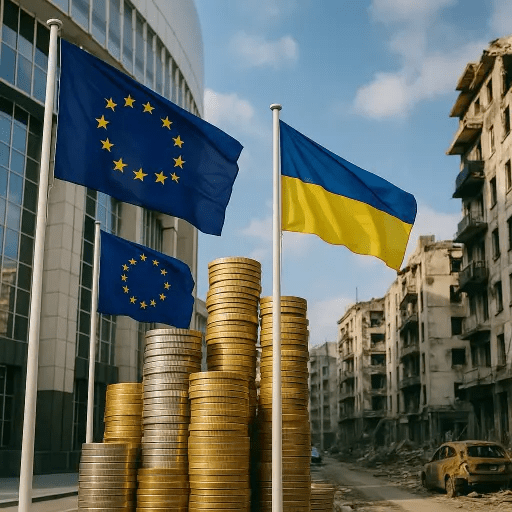
The European Union is preparing to take one of its most consequential financial steps since the start of Russia’s full-scale invasion of Ukraine: using frozen Russian central-bank assets to finance Ukraine’s war effort and reconstruction. The plan, which could unlock as much as €185 billion ($200 billion) in immobilized Russian reserves, has drawn praise in Kyiv — and outrage in Moscow.
A Historic Financial Shift
After months of negotiation, EU leaders reached a political consensus during their summit in Brussels this week. The proposal would direct the profits and interest earned from Russian central-bank assets — frozen across European financial institutions since February 2022 — toward a new Ukraine assistance fund.
While the principal assets will remain frozen to avoid immediate legal challenges, the accumulated returns are expected to generate billions of euros annually, enough to finance military aid, humanitarian relief, and reconstruction projects across Ukraine.
“This is about making Russia pay for the devastation it caused,” said European Commission President Ursula von der Leyen. “Every bomb dropped on Ukrainian soil has a price — and that price should not fall on European taxpayers.”
Ukraine’s Lifeline
For Kyiv, the move represents a potential financial breakthrough. With frontlines in the east still highly active and infrastructure damage now exceeding $500 billion, Ukraine’s government has been urging Western partners to find sustainable, long-term funding sources.
President Volodymyr Zelenskyy welcomed the EU initiative, calling it “an act of justice and leadership.” He noted that Ukraine’s budget gap for 2026 could exceed €40 billion and said European funds would help maintain essential services and support the military’s defensive operations.
“This isn’t charity,” Zelenskyy told reporters in Kyiv. “It is accountability.”
Russia’s Furious Reaction
Moscow wasted no time in condemning the EU’s plan. The Russian Foreign Ministry called it “a blatant violation of international law and sovereign immunity,” threatening “painful counter-measures” if the bloc proceeds. Russian officials also warned that such a precedent could erode global trust in Western financial institutions.
“This is theft disguised as justice,” said Maria Zakharova, Russia’s foreign-ministry spokeswoman. “Europe is destroying the foundation of global finance for short-term political gain.”
Despite the threats, the Kremlin has reportedly decided not to retaliate immediately by seizing European assets inside Russia, a move that could damage its already fragile investment climate. However, Russian state media have hinted that cyber-attacks and trade restrictions could follow.
Legal and Political Challenges
The proposal is not without hurdles. Under international law, sovereign assets held in foreign central banks typically enjoy immunity from confiscation. To sidestep this, the EU intends to use only the profits and interest generated, not the frozen capital itself.
Still, legal scholars warn that Russia could pursue lengthy litigation in international courts, potentially complicating implementation. Belgium — home to Euroclear, which holds the largest share of Russia’s reserves — has asked for EU-wide liability protections before releasing any funds.
Some member states, including Hungary and Slovakia, have also expressed reservations, fearing economic blowback or potential Russian retaliation in energy markets.
A Turning Point for Europe
Analysts say the move reflects a broader evolution in Europe’s strategic posture. After nearly four years of war, fatigue is growing among Western taxpayers, and leaders are under pressure to sustain support for Ukraine without further burdening domestic budgets.
“This marks a fundamental shift — from solidarity to accountability,” said French economist Cécile Durand. “Europe is saying that the aggressor should foot the bill, not the allies.”
Financial markets have so far reacted cautiously, with the euro stabilizing after early volatility. Still, experts warn the plan could have long-term implications for global reserve systems if non-Western nations begin to view Western institutions as politically risky custodians of state wealth.
What Comes Next
The European Commission will present a detailed framework in early November, outlining governance structures, audit mechanisms, and safeguards. Funds could begin flowing to Ukraine by early 2026, pending approval by national parliaments and the European Parliament.
For now, the decision underscores Europe’s determination to stay the course. As EU Council President Charles Michel put it, “This is not just about money. It’s about the principle that aggression must not pay.”
For Ukraine, the initiative offers a crucial lifeline at a time when U.S. funding remains uncertain and reconstruction needs continue to grow. For Russia, it is a stark reminder that its invasion carries economic consequences far beyond the battlefield.
As Brussels moves closer to turning frozen billions into a war-reparations engine, the stakes could not be higher — for Ukraine’s survival, for Europe’s unity, and for the integrity of the global financial order itself.

 The Tower Post