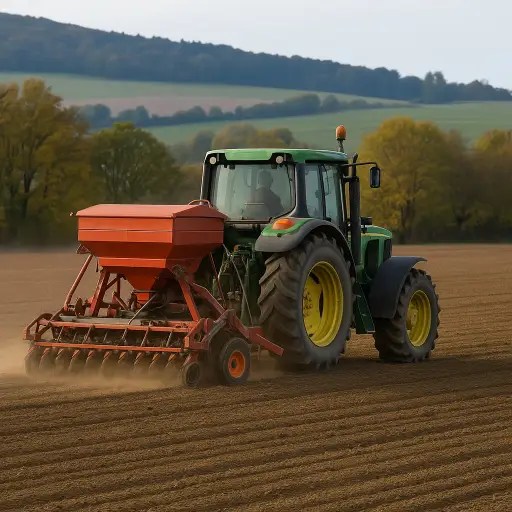
Favourable early‑October weather in France and Germany pushes sowing ahead of schedule, setting a positive tone for the 2025‑26 crop season.
As the autumn sun shines on European farmland, farmers across key grain‑producing regions have taken advantage of unusually dry conditions to fast‑track their winter sowing programs. In particular, in France and Germany the campaign for winter cereals is advancing at a pace not seen in the past two years.
According to a recent industry bulletin, the early October dry spell allowed sowing of winter grains — notably soft wheat and winter barley — to progress rapidly before wetter weather is expected to return. In France, figures from FranceAgriMer indicate that as of mid‑October, more than 27 % of the planned soft wheat area had already been drilled—up from just 10 % at the same time last year—and around 45 % of winter barley had been sown. In Germany, sowing is reported to be “nearly complete” in most regions, with analysts expecting little change in grain area, but a potential uptick in winter oilseed (rapeseed) plantings.
Favourable window—what it means
The dry start to October offered farmers in western Europe a timely opportunity. Soil conditions were favourable for drilling, field trafficability was good, and the risk of waterlogging was low — a contrast to the past two sowing seasons when rain and saturated soils delayed operations.
Analysts view the accelerated sowing as a strong positive: it reduces the risk of winter damage before plants establish, and gives crops a better start before the onset of winter dormancy and the spring growth phase.
At the same time, the impending wetter weather is not necessarily a negative. The forecast for increased precipitation later in autumn could help replenish soil moisture, supporting early growth of the sown crops. The timing therefore appears well‑balanced: sow early while soils are dry enough, then benefit from moisture for establishment.
Regional highlights: France and Germany
France: As the EU’s largest producer of cereals, the performance here matters significantly. The data show sowing is ahead of the five‑year average, which bodes well for the upcoming 2025‑26 season. The dry field conditions allowed farmers to advance drilling of both soft wheat and winter barley. However, heavy rains are forecast later this week which could slow or complicate fieldwork. Beyond cereals, the outlook for rapeseed (winter oilseed) is being watched closely: with improved margins reported, some increase in area may be possible even if grain area remains flat.
Germany: In Germany, the campaign is largely wrapped up in many zones, which is significant given the size and importance of German grain production in the EU. According to analysts, the area planted with winter cereals is expected to hold steady, but favourable conditions might prompt shifts in oilseed acreage. Germany’s position is strengthened by the smooth sowing window, but yield and area outcomes will still depend on how winter and spring weather evolve — especially given past years’ weather disruptions.
Broader implications: Outlook for the season
The timely start to sowing raises hopes for a relatively stable or slightly increased planted area of winter cereals across Europe, despite low market prices that might otherwise discourage plantings. In fact, the European Commission’s crop forecasts suggest that soft wheat production may reach a ten‑year high, driven by better plantings and improved yield prospects.
That said, caution remains warranted. Earlier in the year, dry soils and uneven rainfall in central and northern Europe had raised concerns about establishment and early growth of winter crops. Moreover, even though sowing is ahead, farmers will still face the usual risks: winter frost, disease pressure, and late‑season weather swings can impact crop performance. The strong start does not guarantee a flawless harvest.
From a market perspective, the better sowing rhythm may ease acreage concerns and help stabilise supply expectations, which in turn could moderate upward pressure on grain prices. But with global markets remaining competitive and input costs elevated, profitability will still be under scrutiny.
Looking ahead
Over the next few weeks, farmers in France, Germany and elsewhere will monitor weather developments closely. The key points to watch include:
- Whether the forecast wetter conditions arrive in sufficient quantity to support establishment without causing field delays or waterlogging.
- How soil moisture levels evolve over winter and into spring, influencing crop vigour when growth resumes.
- Whether crop area decisions hold firm — particularly for oilseeds versus cereals — as farmers finalise their rotations and budget plans.
- How markets respond: improved sowing may ease anxiety about supply, but yield outcomes remain uncertain until the crop is safely in the ground and through winter.
For the 2025‑26 European winter‑grain campaign, the early signs suggest a more favourable entry than the past two seasons. With sowing advanced and conditions decent, stakeholders will be cautiously optimistic — though the proof will come as the crops emerge, survive winter and head into next year’s growing phase.




 The Tower Post