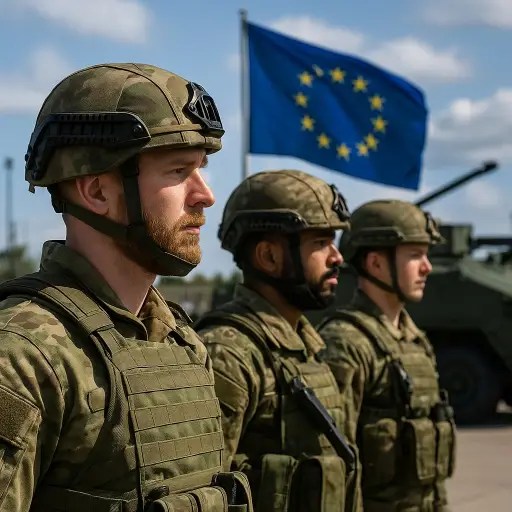
The 27‑nation bloc moves from words to commitment, pledging a major defence overhaul to deter threats and secure the future.
The European Union (EU) faces a turning point in its security posture. At a summit held earlier this week in Brussels, EU leaders formally endorsed the ambitious defence initiative known as Readiness 2030 — a strategy aimed at ensuring the bloc can defend itself from external attack by the end of the decade.
Strategic Context: Why Now?
Europe’s security environment has grown markedly more volatile over the last few years. With the ongoing war in Ukraine, rising Russian assertiveness and questions over extended U.S. military guarantees, EU leaders say the old assumptions no longer hold. As the White Paper accompanying the strategy states: “To be able to live in peace, we need much greater investment in European defence to ensure the security of all EU citizens today and for the future.”
Against that backdrop, Readiness 2030 aims to build a credible deterrent and defence architecture — not only by bolstering national armies, but also by pooling efforts across states, streamlining procurement, and strengthening the continent’s defence industry.
Key Elements of the Plan
The Readiness 2030 blueprint features several major components:
- Massive funding mobilization: The plan sets out to mobilise up to €800 billion in defence‑related investment across public and private sectors.
- New financial instruments: The Security Action for Europe (SAFE) instrument is designed to offer about €150 billion in loans for joint procurement and capability development.
- Joint procurement and European industry push: Member states are encouraged to buy more “made in Europe” equipment — the White Paper notes a target threshold of some 65 % European content for funded programmes.
- Capability and operational readiness: The strategy emphasises closing capability gaps, improving military mobility across borders, strengthening air and drone defences, and integrating new technologies (AI, cyber, space).
What the Summit Decision Adds
During the summit, EU leaders collectively committed to advance the Readiness 2030 agenda with concrete projects launching in 2026. The joint statement emphasised the urgency of strengthening eastern‑flank defence, counter‑drone systems and early delivery of key capabilities.
While the plan has been in public view for months, the summit endorsement gives it fresh momentum: national governments now face follow‑through obligations to deliver on capability targets and procurement commitments.
Challenges Ahead
Despite broad consensus, the road ahead is far from smooth:
- National budgets & fiscal rules: Some member states are wary of loosening fiscal constraints or taking on joint debt. The plan’s reliance on loans and national contributions may test political will.
- Industrial fragmentation: Europe’s defence industry remains divided across national lines. Pooling procurement and harmonising rules will demand deep coordination.
- Timeline & delivery risk: Setting a 2030 target is bold; experts caution that without early implementation, the ambition may outpace results.
Why This Matters for Sunday, October 26
As Europe turns the calendar to Sunday, October 26, 2025, the endorsement of Readiness 2030 signals more than a policy announcement: it marks a collective decision by the EU to shift from reactive defence to proactive readiness. For citizens, it means the defence of Europe is now being treated as a shared endeavour rather than national silos.
For policymakers, industry, and military planners, the coming days will be critical: project offices will open, budgets will be agreed, and schedules set — all to make good on the promise of being able to “defend Europe by 2030.”
Outlook
If the plan succeeds, Europe may emerge in less than a decade with a defence posture better suited to modern threats: drones, cyber‑attacks, space warfare, and hybrid aggression. It could reduce dependence on external guarantors and strengthen the EU’s strategic autonomy.
However, success hinges on sustained political will, harmonised funding, and visible capability deliveries — starting from 2026. The EU enters a new phase of defence ambition: bold in scope, but watched closely for turning ambition into action.


 The Tower Post