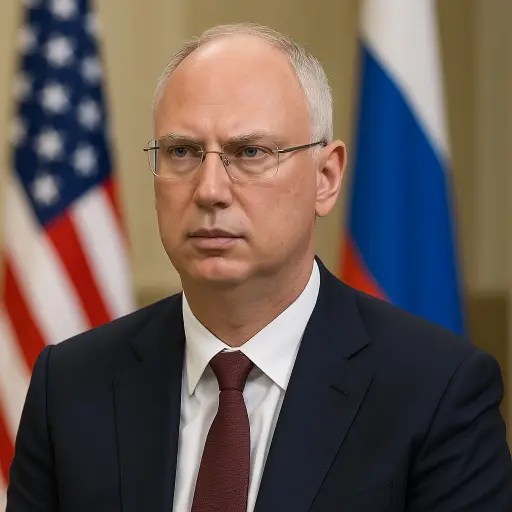
Kirill Dmitriev’s confirmed presence in the U.S. for a long‑planned meeting amid newly imposed sanctions highlights Moscow’s strategic decision: keep channels open despite war.
In a move that underscores the delicate but persistent interplay between diplomacy and geopolitics, Russia’s special presidential envoy for investment and economic cooperation, Kirill Dmitriev, confirmed Friday that he is in the United States for a “long‑planned” meeting. The announcement comes amid new U.S. sanctions on Russian oil giants and ongoing war with Ukraine, but Dmitriev’s presence in America signals one unambiguous fact: the U.S.–Russia channel remains open.
Dmitriev, who also heads the state‑controlled sovereign wealth fund Russian Direct Investment Fund (RDIF) and serves as a Kremlin envoy for foreign investment, emphasized that the timing of his visit was not coincidental. “This meeting of mine had been planned quite a while ago, and the American side did not cancel it despite a number of recent unfriendly steps. We will continue the dialogue,” he said.
The backdrop to this visit is notable. Earlier this week, the United States slapped sanctions on Russia’s two largest oil firms – a clear signal of pressure from Washington on Moscow’s conduct in the war in Ukraine. In spite of this, Dmitriev’s U.S. trip proceeds. Media reports indicate that U.S. special envoy Steve Witkoff is expected to meet Dmitriev in Miami on Saturday as part of the diplomatic engagement.
A strategic window, not a breakthrough
While the visit is being framed by Moscow as proof that U.S.–Russia dialogue is alive, officials caution it should not be misconstrued as a breakthrough. Dmitriev declined to name his counterparts in full or to confirm that arrangements for a summit between Russian President Vladimir Putin and U.S. President Donald Trump are on the table.
Instead, analysts say Dmitriev’s presence illustrates a defensive posture by Moscow: maintain communication even under pressure. And by travelling to the U.S.—despite recent sanctions and tensions—Russia broadcasts a message of relative normalcy in its relationship with Washington.
Why Dmitriev?
A U.S.-educated financier who studied at Stanford and Harvard, Dmitriev has emerged in recent years as one of the Kremlin’s most America‑savvy operatives. He is widely viewed as the bridge‑builder for Moscow in economic and investment relations with the West. His appointment in February 2025 as special envoy by Putin further elevated his role in Russia’s outreach.
His decision to travel to the United States now—despite sanctions and wartime hostilities—underscores his importance as a messenger and agent of continuity.
What’s at stake?
For Russia, Dmitriev’s U.S. visit serves multiple purposes:
- It signals to Western audiences that Moscow still seeks engagement, even amid war.
- It preserves investment‑diplomatic channels that may soften the long‑term impact of sanctions.
- It conveys a subtle message to Ukraine and Europe: Russia retains access to major interlocutors and is not wholly isolated.
For the U.S., hosting Dmitriev reflects a choice: maintain a strategic line of communication despite broader friction. Washington has not cancelled the visit, showing the value it places on keeping some lines open.
Yet, the meeting is unlikely to result in major concessions this week. Expectations are modest: exchanges on economic relations, investment guarantees, and possibly conditions under which Russia might engage further with U.S. counterparties.
Subtext in times of war
Many European capitals will watch this visit with caution. For them, U.S.–Russia dialogue carries implications not only for bilateral ties, but for the broader architecture of post‑war settlement in Eastern Europe. Russia’s prolonged war in Ukraine remains unresolved, and any sign of Moscow returning to the fold without resolving the conflict presents risks for Kyiv and its Western backers.
The fact that Dmitriev’s visit coincides with new oil sanctions adds complexity. Dmitriev has publicly warned that U.S. energy sanctions could “only lead to gasoline costing more at American gas stations.” The comment is both a direct critique of U.S. policy and a leveraged reminder of economic interdependence—even in a context of hostility.
Looking ahead: what to watch
- Whether Dmitriev’s U.S. meeting yields follow‑up visits, memoranda or public statements.
- Signals from Washington about investment or trade resumption with Russia, particularly if sanctions are reconsidered.
- How Europe reacts to the U.S.–Russia channel being maintained while the war remains ongoing.
- Whether this visit warms the ground for a possible summit between Putin and Trump—for which Russia claims preparation continues.
Bottom line
The world sees a subtle but meaningful shift: a high‑level Russian envoy in the United States, meeting despite war and sanctions. It may not herald an immediate thaw, but it serves as a diplomatic lifeline—the kind of quiet, strategic outreach that matters in long, uncertain conflicts. The visit reinforces a narrative Russia has long sought: that even at war, it remains capable of engaging with major powers on its terms.

 The Tower Post