
With the 2026 budget on the line, France’s Socialist Party forces the government’s hand, demanding a “billionaires’ tax” or face collapse.
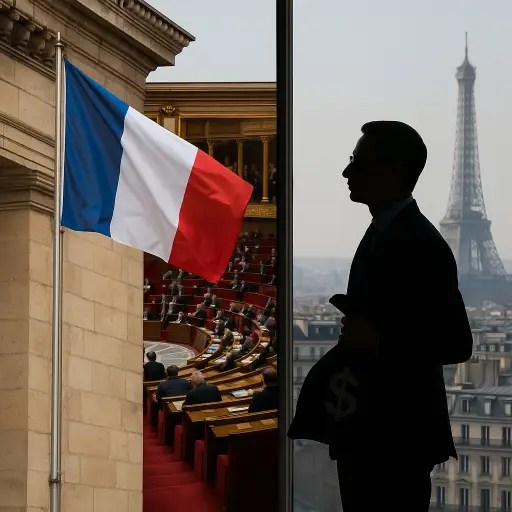
A solemn alarm bell is pulsing through the corridors of power in Paris as the minority government of Sébastien Lecornu faces a serious threat of collapse. The Parti Socialiste (PS), once the moderate centre‑left anchor of French politics, has made clear it will table a motion of no‑confidence unless the upcoming 2026 budget incorporates a tax on ultra‑wealthy individuals — colloquially dubbed the “billionaires’ tax.”
Right now, the stakes are high. With no single party holding a stable majority in the Assemblée Nationale, the government depends on intermittent support from opposition parties. In that landscape, the Socialists hold the power of the balance — and they are playing it hard.
A Demanding Gamble
The Socialists’ demand is explicit: full support for the 2026 budget hinges on the adoption of a new levy on fortunes at the very top end of the spectrum. Their proposal draws inspiration from the so‑called Taxe Zucman, developed by economist Gabriel Zucman, which would impose a 2 % annual tax on households with assets above €100 million.
The PS is signalling that if the government fails to act, a no‑confidence motion early next week will be unavoidable. “We have made an effort not to censure the Prime Minister, but so far we have not seen any sign of a willingness to compromise,” PS leader Olivier Faure told public media. “If there is no change by Monday, it’s all over.”
For the Socialists this is a calculated gamble: both a moral crusade and a political lever. They recognise the public mood in France is overwhelmingly supportive of taxing the top echelons of wealth — recent polling shows as much as 86 % backing among French citizens.
Government Under Pressure
The government’s position is precarious. Prime Minister Lecornu’s minority administration must thread a narrow path: deliver enough fiscal tightening to address the country’s high debt and deficit, yet persuade enough opposition parties to back the budget. Failure means either invoking constitutional bypasses — which risk triggering no‑confidence — or backing down.
So far, Lecornu has indicated a limited willingness to act — for example, proposing a tax on financial holdings of very wealthy individuals rather than the broad wealth tax the Socialists want. But the PS says that is insufficient. They argue the government’s alternative fails to target the bulk of ultra‑wealthy wealth accumulated via complex asset and holding structures.
Financial markets and business associations are watching nervously. The government must show it is both fiscally responsible and politically stable — and the Socialists are leveraging both to make their demand non‑negotiable. Analysts suggest the budget stalemate could even prompt a credit rating review for France if unresolved.
The Anatomy of the Demand
The Socialists’ demand for the 2026 budget can be broken down into three key elements:
- A clear tax on the ultra‑wealthy: Targeting the top 0.01% of households, the PS estimates the measure could raise up to €20 billion annually if implemented in full.
- No budget approval without it: The PS is making their participation in debates and votes conditional on the inclusion of this measure — otherwise they will shift from negotiation to confrontation.
- Link to fiscal justice narrative: By placing the tax at the centre of budget talks, the Socialists are emphasising not just economics but social equity — framing the ultra‑wealthy’s contribution as a responsibility, not a favour.
Broader Implications
If the PS forces the inclusion of the tax, it could mark a major shift in France’s fiscal policy and its social contract. It may signal a return to heavier taxation on wealth and reposition the Socialists as the political force best placed to champion inequality issues.
If, however, the government resists and the no‑confidence motion passes, France could face early elections or government re‑arrangement in the run‑up to the 2027 presidential race — injecting fresh political volatility into an already fragile environment. Either outcome would ripple into business confidence, investor sentiment and Europe‑wide economic perceptions.
Verdict and What Happens Next
Over the coming days — particularly Monday — all eyes will be on whether the government accedes to the Socialist demand or braces for the motion of no‑confidence. The Socialists have declared the moment one of existential importance: budget without billionaire tax = government collapse.
The question is no longer academic. It has become immediate and real: Will France’s fragile coalition yield to demands for wealth taxation, or will it pay the political price of defiance? The answer will reshape France’s budget, its politics — and potentially its future.



 The Tower Post