
Speaking at the Berlin Global Dialogue, Greece’s finance minister calls for a more integrated and effective European internal market in the face of shifting global economics.
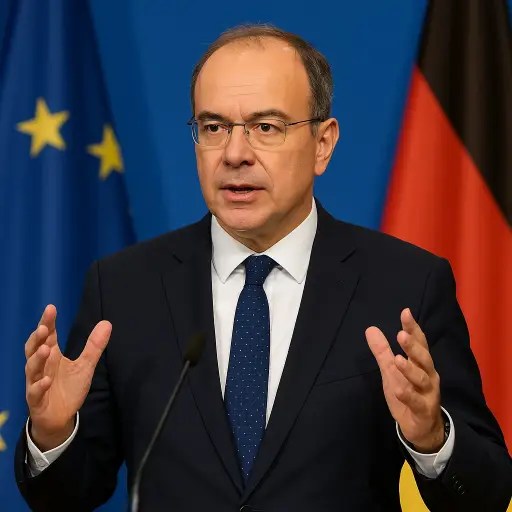
In a keynote address at the Berlin Global Dialogue in Germany’s capital, the finance minister of Greece — backed by mounting urgency across the bloc — sounded a clarion call for deeper integration of Europe’s internal markets. With global economic power shifting and new trade alliances emerging, Europe’s 27‑member internal market risks being left behind unless it moves swiftly to knit its parts into a more unified whole.
Speaking on Sunday, the Greek minister warned that while Europe has long claimed the promise of a borderless market, the reality remains a patchwork of national regulatory regimes, capital‑flows bottlenecks, and uneven competitive conditions. “We cannot afford a Europe of half‑open markets and fragmented capital flows,” he said. Instead, he urged member states and EU institutions to advance a more effective and unified market structure, capable of delivering scale, resilience and global reach.
Global shifts demand European cohesion
The backdrop to the remarks is stark. As the global economy tilts toward Asia, new regional trade blocs gain strength and the United States shifts its strategic priorities, Europe must reaffirm its internal strength before projecting external influence. The finance minister argued that internal market fragmentation weakens Europe’s hand on the world stage. He pointed to the need for concerted action on cross‑border mergers and acquisitions, deeper capital‑market integration, and removal of internal barriers that still raise costs for business and investment.
A recent Reuters report underscored the point: Greece’s finance minister emphasised the need for more cross‑border M&A across Europe to achieve the scale necessary for global competitiveness.
Structural blockages remain
Despite decades of effort, the internal market still bears structural obstacles. National regulatory regimes differ in tax, labour law and supervision; capital markets remain fragmented; and there is still hesitancy among large member states over ceding powers to a single European supervisory framework. For example, Germany’s chancellor recently called for a single European stock exchange to buttress the bloc’s capital‑markets union. The Greek minister insisted that such developments must be matched by political will and institutional reform.
He set out three core priorities for the internal market:
- Capital market unification – enabling companies across the EU to access deep and liquid capital without being forced to migrate to non‑European exchanges.
- Cross‑border business scale‑up – enabling firms in smaller member states to merge or expand across borders more easily and realise economies of scale.
- Regulatory harmonisation and enforcement – reducing national fragmentation, ensuring that rules are uniformly applied and that internal trade and investment barriers are lowered.
Why Greece is sounding the alarm
Greece may not be the largest economy in the EU, but its intervention reflects a broader southern‑and‑eastern Europe impatience with stagnation. Many economies in the region face the prospect of being the “low‑margin” end of Europe unless internal market reforms raise productivity and competitiveness. The minister argued that Greece stands to benefit from a unified market — as both a gateway to the East and a node for investment in infrastructure, energy and digital transition. In his remarks, he indicated that Greece hopes to play a central role in future cross‑border deals and pan‑European infrastructure networks.
Political headwinds and institutional inertia
The push for deeper unification does not come without political risk. Some member states remain wary of transferring further control to Brussels or a pan‑European authority. There are deep‑seated national interests at play: some want to retain national competitive advantages, others fear regulatory or fiscal disadvantage. The finance minister acknowledged this: “We must build trust among member states,” he said, pointing to the need for shared governance, clear rules and mechanisms that ensure fairness across the bloc.
Institutionally, the architecture of the internal market needs updating. The minister observed that the EU’s previous architecture was built in a different era of globalisation and must now adapt to new realities of supply‑chain disruption, digitalisation and geopolitical fragmentation. The dialogue at the Berlin event — which unites business, politics and academia under the banner of the Berlin Global Dialogue — provided an appropriate forum for these arguments.
Path forward: urgency and realism
The minister concluded with a message of urgency: Europe cannot wait years for incremental reform if it hopes to remain competitive. He called for a clear timetable of actions, including harmonised supervisory frameworks, incentives for cross‑border investment, and stronger enforcement of single‑market rules. He also suggested that the next phase of EU policy must be “more than words”: it must deliver measurable results in investment mobility, business scale‑up and regulatory convergence.
For markets in Europe, the implications are significant. Deeper unification would mean lower fragmentation costs for firms, larger pan‑European investment pools, easier movement of capital and talent, and greater resilience in the face of external shocks. For citizens, it could mean more job opportunities, more innovation and better‑priced services. But the path will require political leadership, institutional reforms and alignment among diverse member states.
As the world moves toward new trade patterns and regional blocs, Europe’s strength will increasingly depend on how well it unifies internally. The Greek minister’s call at the Berlin event signals that the push is no longer optional — if Europe hesitates, it risks being sidelined. Monday’s remarks in Berlin will likely be cited in the run‑up to EU policy meetings, and the coming months could signal whether member states are willing to turn rhetoric into action.

 The Tower Post